Oil-based or water-based is the whole decision, and the manufacturer answers it for you: Minwax specifies a natural bristle brush for one and a synthetic for the other. Ten finishes compared on base, recoat time, published coverage and what they do to pale wood.
Start with the admission. This site already tells you to skip brush-on polyurethane for your first project, and that verdict stands. A wiped finish is more forgiving, and most first projects do not need a film. This page is for the reader who is past that — who has a tabletop, a desk, a windowsill or a kitchen shelf that genuinely needs a hard surface, and wants to know which can to buy.
The decision is simpler than the shelf makes it look, because the manufacturer settles it. Minwax’s own instruction for its oil-based polyurethane is to “Apply a THIN coat… using a high-quality, natural bristle or foam brush”. For its water-based Polycrylic, the same company says to “Apply a thin coat… with a high-quality, synthetic bristle brush”. Same maker, opposite bristle. Pick the base first and everything else — the brush, the cleanup, the smell, the color shift, the schedule — follows from it.
The lens, in order of how much it changes the result. Base first: oil-based stays wet long enough to fix a mistake and ambers the wood; water-based sets fast, stays clear and needs a lighter hand. Recoat window second, because it decides whether the job takes one evening or three (2 hours for Polycrylic, 3 to 4 for the oil-based, 1 to 2 for the premium topcoat). Published coverage third— 125 sq ft a quart is normal, and the one-coat finish here publishes 50, which is the real cost of that convenience. Sheen last, because satin hides the brush marks that gloss magnifies and no beginner wants gloss on a first film finish.
Prices are live and the brackets in the prose are qualitative, because they move. Every spec on every card was read from that seller’s own listing on the date shown on the card, and these listings are unusually messy: one aerosol can tells you to apply it with a brush, one premium can calls itself “the hardest, most durable consumer polyurethane top coat on the market today” with no test behind it, and one spar urethane publishes no dry time at all. Where a listing states no figure, the card says “Not listed” instead of guessing. Here is exactly what we do instead of testing.
If you have already settled on water-based — because the wood is pale, the piece is painted, or the shop is attached to the house — the shortlist is three cans and a brush. Best water-based polyurethane compares them on recoat time, coat count and the yellowing warning one of them prints itself.
How this is funded: we earn a commission if you buy through our links, at no extra cost to you. It never changes which tool we recommend, and we’ll tell you plainly when to skip one. Full disclosure.
Quick picks
Ranked on the specs that matter for a beginner and honest buyer fit. Select a row to jump to the full write-up. We haven’t hands-on-tested these — here is exactly what we do instead.
Real polyurethane protection with none of the brush anxiety. Because it is thinned for wiping, each coat is thin enough that dust nibs and runs mostly cannot happen — you just build three or four coats instead of two.
The default brush-on polyurethane in American hardware stores, and the one most finishing advice is secretly written about. Oil-based, so it goes on slowly enough to fix a run, builds a genuinely tough film in two coats, and costs about what a single board costs. Buy this if you have decided you want a film finish and you want the forgiving version.
The water-based answer, and the right one over any light wood or any white-ish paint. Non-yellowing, low odor, recoat in two hours, soap and water cleanup - everything oil-based polyurethane is not. It pays for that with a thinner film and a faster set, which is why it needs a synthetic brush and a lighter hand.
The other mass-market water-based poly, and the only one on this page that publishes a touch-dry time: 30 minutes. If you are finishing in a cold garage and want the piece out of the way tonight, this is the fastest-cycling can here. The published coverage is the catch.
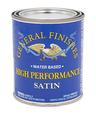
General Finishes High Performance Water Based Topcoat, Satin, 1 Pint
The upgrade can, sold through woodworking suppliers rather than hardware aisles, and the one furniture refinishers reach for over paint. It costs several times a hardware-store quart per ounce and the listing's headline durability claim is unproven marketing - but its one-to-two-hour recoat is the fastest published here, and a pint is the right size for one piece.
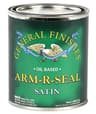
General Finishes Arm-R-Seal Oil Based Topcoat, Satin, 1 Quart
The finish serious hobbyists standardize on. It wipes on like the cheaper products, cures harder than most of them, and levels beautifully — the reason it appears on so many tabletops that get real use.
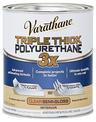
The one-coat idea, and it genuinely works on a flat horizontal surface: a self-leveling finish thick enough that one pass builds what three thin coats would. The trade is in the published coverage - 50 sq ft a quart against 125 for ordinary poly - and in what it does on a vertical face, which is run.
The only can on this page that belongs outdoors, and the reason it is here is that ordinary interior polyurethane fails outside in one season. A spar urethane is formulated softer on purpose so the film moves with the wood, and it carries UV blockers that interior poly does not.
Minwax Fast-Drying Polyurethane Spray, Clear Satin, 11.5 oz
The answer to the shapes a brush cannot reach: spindles, chair backs, turned legs, carved detail and the inside of a small box. Same oil-based polyurethane in an aerosol can, at a price that makes it worth owning alongside a quart rather than instead of one.
Homax Rhodes American #0000 Super Fine Steel Wool, 12 Pads
The consumable that makes a brushed finish look sprayed, and it costs less than a cup of coffee. #0000 steel wool knocks the dust nibs and brush marks off a cured coat without cutting through it, and it reaches into corners and mouldings that no sanding block will.
Real polyurethane protection with none of the brush anxiety. Because it is thinned for wiping, each coat is thin enough that dust nibs and runs mostly cannot happen — you just build three or four coats instead of two.
Strengths
+Genuine film protection against water rings and wear
+Wiping avoids the brush marks that ruin most first poly jobs
+Satin sheen hides small imperfections better than gloss
Trade-offs
−Needs three or more coats, with drying time between each
−Oil-based poly adds a permanent warm amber tint
Type
Wipe-on polyurethane
In the set
Single tool
Material / build
Oil-based polyurethane
Key spec
1 pint, satin
Best for
Best durable finish for a beginner
Worth knowing. The amber tint is not a flaw, it is chemistry — oil-based finishes yellow as they cure and continue to warm over years. On walnut it is lovely; on pale maple, use the water-based version instead.
Specs read from the product listing, on August 11, 2026. “Not listed” means the listing doesn’t state that figure.
The default brush-on polyurethane in American hardware stores, and the one most finishing advice is secretly written about. Oil-based, so it goes on slowly enough to fix a run, builds a genuinely tough film in two coats, and costs about what a single board costs. Buy this if you have decided you want a film finish and you want the forgiving version.
Strengths
+Oil-based, so it stays wet long enough to brush out a sag instead of setting while you look at it
+Minwax's own instruction is a thin coat with a natural bristle or foam brush, and the recoat window is 3 to 4 hours - one evening gets you two coats
+Published coverage of 125 sq ft per quart, which is several pieces of furniture, not one
+The sheen you want for a first project: satin hides brush marks and dust nibs that gloss magnifies
Trade-offs
−This quart is "Warm Satin", which is the amber one - it will push cherry and oak warmer and will visibly yellow maple, ash and birch
−Oil-based means mineral spirits cleanup, a real solvent smell, and 24 hours to dry rather than hours
−Minwax's own label says to put rags, steel wool and sanding residue "in a sealed, water-filled, metal container" immediately - this finish genuinely can self-ignite in a bin
−Three sheens, two tints and four can sizes share almost the same listing photo, so it is easy to order the wrong one
Worth knowing. The listing states that "The oil-based, clear top coat is one of the most durable coatings for wood protection against scratches, spills and more", that it is for "interior projects like woodwork, furniture, floors and cabinets", that it "allows for quick recoats after 4-6 hours" and to "Be sure to apply with a high-quality natural or foam brush". Product-info color "Satin", size "Quart"; part number and model 63010444; brand Minwax; 1 lb. NOTE THE FIGURE CONFLICT: the Amazon bullet says recoat after 4-6 hours while Minwax's own product page says 3 to 4 hours, gives dry time 24 hours, coverage 125 ft2/quart and 2 recommended coats, and adds "Stir ... before and during use" and "NEVER SHAKE" - both figures are recorded and the manufacturer's is the one used in the spec line. The listing does not state that "Warm Satin" is an ambering tint; that reading comes from the product name itself.
Specs read from the product listing, on November 6, 2026. “Not listed” means the listing doesn’t state that figure.
The water-based answer, and the right one over any light wood or any white-ish paint. Non-yellowing, low odor, recoat in two hours, soap and water cleanup - everything oil-based polyurethane is not. It pays for that with a thinner film and a faster set, which is why it needs a synthetic brush and a lighter hand.
Strengths
+Non-yellowing and non-ambering by the maker's own description, so pale woods stay pale
+Two-hour recoat and water cleanup - three coats in a day is realistic, which oil-based poly cannot do
+Rated by Minwax for use over all their oil-based AND water-based stains, so it is the safe topcoat whatever you colored the wood with
+Low odor, which is what makes it the only sane choice for finishing indoors in winter
Trade-offs
−Sets fast, so brush marks and a dry edge are permanent in a way they are not with oil-based poly - keep a wet edge or wipe it instead
−Needs a synthetic bristle brush; a natural bristle brush swells in water and ruins the surface, and the brush you bought for the oil-based can will not do
−Minwax recommends THREE coats here against two for the oil-based, so the labor saving is smaller than the recoat time suggests
−Milky in the can and slightly cool on the wood, so it will not give pine the amber glow people picture when they say "varnished"
Worth knowing. The listing states it "protects against scratches, spills, dirt and more", that the crystal clear finish "is ideal for use over all Minwax Oil-Based and Water-Based Stains and colors, as well as all wood species including light woods like maple, ash and birch", that it is "non-yellowing, non-ambering and low odor", that it "allows for quick recoats after 2 hours", and to "Be sure to apply with a high-quality synthetic bristle brush". Product-info color "Clear", size "32 fl oz"; part number and model 63333444; 2.25 lb. Minwax's own product page adds dry time "3 hour - 24 hour", coverage 125 ft2/quart, "Three coats are recommended" and "Stir well before and regularly during use. DO NOT SHAKE." No film-thickness or abrasion-test figure is published anywhere.
Specs read from the product listing, on November 6, 2026. “Not listed” means the listing doesn’t state that figure.
The other mass-market water-based poly, and the only one on this page that publishes a touch-dry time: 30 minutes. If you are finishing in a cold garage and want the piece out of the way tonight, this is the fastest-cycling can here. The published coverage is the catch.
Strengths
+Publishes both numbers that matter for scheduling - dry to the touch in 30 minutes, recoat after 2 hours
+Water-based formula with soap and water cleanup, same as Polycrylic, with the same non-yellowing behavior on light woods
+Sold as crystal clear interior protection for furniture, windows, cabinets and trim, which is exactly the small-shop list
+Satin sheen, which is the forgiving one on a brushed film
Trade-offs
−Published coverage is "up to 125 sq. ft." and the same listing photo sells half-pints, so check the size field before you buy
−Fast dry cuts both ways: the open time is short enough that brush marks set before you can go back over them
−The listing's only durability claim is "outstanding stain and scratch resistance" with no test, standard or film-thickness figure behind it
−No published coat count, so you are guessing at two or three - plan for three on a tabletop
Type
Water-based brush-on polyurethane
In the set
Single tool
Material / build
Water-based polyurethane
Key spec
Quart; satin; dry to touch 30 min, recoat 2 h; up to 125 sq ft
Best for
Best fast-drying water-based option
Worth knowing. The listing states it "Protects indoor wood surfaces such as furniture, windows, cabinets, trim and more", that the "Water based formula dries fast and cleans up with soap and water", that it "Dries to the touch in 30 minutes with coverage up to 125 sq. ft., recoat after 2 hours", and that the "Durable formula provides outstanding stain and scratch resistance with excellent clarity". Product-info color "Satin", size "Quart (Pack of 1)"; part number and model 200241H; warranty "Satisfaction Guaranteed"; 2.2 lb. No coat count, no film build and no abrasion standard is published, and no brush type is specified - the synthetic-bristle rule for a water-based finish comes from Minwax's Polycrylic page, not from this listing.
Specs read from the product listing, on November 6, 2026. “Not listed” means the listing doesn’t state that figure.
#5Best upgrade topcoat
General Finishes High Performance Water Based Topcoat, Satin, 1 Pint
The upgrade can, sold through woodworking suppliers rather than hardware aisles, and the one furniture refinishers reach for over paint. It costs several times a hardware-store quart per ounce and the listing's headline durability claim is unproven marketing - but its one-to-two-hour recoat is the fastest published here, and a pint is the right size for one piece.
Strengths
+Dry time between coats of only 1 to 2 hours, the fastest published recoat on this page
+Water-based and interior-rated, so it goes over water-based stains and paints without a barrier coat
+A pint is the right size for one piece of furniture - a quart of a premium finish usually skins over before you use it
+Sold in satin, flat and dead flat as well, so a low-sheen look does not mean rubbing out a gloss
Trade-offs
−"The hardest, most durable consumer polyurethane top coat on the market today" is the listing's claim with no test, standard or number attached, and nothing here verifies it
−The listing's own first bullet is a warning: do not apply clear topcoats over bright white paint "as yellowing may occur", and light paints may yellow too
−Interior use only, so it is the wrong can for a door, a bench or anything that sees weather
−Priced per pint about what a hardware-store quart costs, and stock read "Only 10 left" on the day it was checked
Type
Premium water-based topcoat
In the set
Single tool
Material / build
Water-based polyurethane (acrylic)
Key spec
1 pint; satin; dry between coats 1-2 h; interior only
Best for
Best upgrade topcoat for a tabletop or painted piece
Worth knowing. The listing's four bullets, in full: "Do not apply clear topcoats over bright white paint, as yellowing may occur due to a reaction to the substrate. Light color paints may also experience yellowing due to topcoat application, but it will less noticeable"; "The hardest, most durable consumer polyurethane top coat on the market today"; "Dry Time Between Coats is only 1 to 2 Hours"; "Interior use only". Product-info color "Satin", size "1 Pint"; part number and model PTHS; brand General Finishes; 1.2 lb. Availability read "Only 10 left in stock - order soon" when this entry was written. NOTHING on this listing supports the hardness claim - no abrasion test, no film thickness, no coverage figure, no coat count and no brush instruction - and this site does not repeat it as a spec.
Specs read from the product listing, on November 6, 2026. “Not listed” means the listing doesn’t state that figure.
#6Best wiping varnish
General Finishes Arm-R-Seal Oil Based Topcoat, Satin, 1 Quart
The finish serious hobbyists standardize on. It wipes on like the cheaper products, cures harder than most of them, and levels beautifully — the reason it appears on so many tabletops that get real use.
Strengths
+Cures notably harder than hardware-store wipe-on poly
+Levels out to a very even surface without brush work
+Widely regarded as forgiving despite the professional reputation
Trade-offs
−Twice the price of the supermarket equivalent
−Long recoat times — this is a weekend finish, not an evening one
Type
Wipe-on oil-based urethane topcoat
In the set
Single tool
Material / build
Oil-based urethane
Key spec
1 quart, satin
Best for
Best premium wipe-on topcoat
Worth knowing. Store wipe-on finishes upside down or squeeze the air out of the can. Oil-based products skin over from oxygen contact, and half a wasted quart costs more than the trick saves.
Specs read from the product listing, on August 11, 2026. “Not listed” means the listing doesn’t state that figure.
The one-coat idea, and it genuinely works on a flat horizontal surface: a self-leveling finish thick enough that one pass builds what three thin coats would. The trade is in the published coverage - 50 sq ft a quart against 125 for ordinary poly - and in what it does on a vertical face, which is run.
Strengths
+Self-leveling formula built for one-coat protection, which removes the two things beginners get wrong: thin coats and sanding between them
+Dries to the touch in 2 hours despite the film thickness, and it is water-based, so cleanup is soap and water
+The honest use case is real - a shelf, a bookcase top or a small tabletop finished in an afternoon with no recoat schedule
+Available in matte, satin, semi-gloss and gloss, so the sheen is a choice rather than a compromise
Trade-offs
−Published coverage is up to 50 sq ft per quart - roughly 40% of what an ordinary quart covers, so the cost per square foot is far higher than the shelf price suggests
−A thick self-leveling film sags on anything vertical: table legs, chair spindles and cabinet doors want ordinary poly instead
−A thick film takes much longer to fully cure than to dry to the touch, and the listing publishes no cure time at all
−Dust nibs and bugs land in a wet thick coat and stay there, and there is no second coat to bury them in
Type
Self-leveling one-coat polyurethane
In the set
Single tool
Material / build
Water-based polyurethane
Key spec
1 quart; semi-gloss; one-coat; dry to touch 2 h; up to 50 sq ft
Best for
Best for one-coat coverage on a flat top
Worth knowing. The listing states it is "Ideal for use on all interior wood surfaces including furniture, doors, trim and more", that the "One-coat coverage, water-based formula provides excellent scratch and stain resistance", that it "Dries to the touch in 2 hours and covers up to 50 sq ft", and claims "Ultimate durability and protection". Product-info color "Semi-Gloss", size "1 Quart (Pack of 1)"; part number and model 284472; 0.93 lb. No cure time, no film thickness, no recoat window and no brush type is published, and the "ultimate durability" line carries no test behind it.
Specs read from the product listing, on November 6, 2026. “Not listed” means the listing doesn’t state that figure.
The only can on this page that belongs outdoors, and the reason it is here is that ordinary interior polyurethane fails outside in one season. A spar urethane is formulated softer on purpose so the film moves with the wood, and it carries UV blockers that interior poly does not.
Strengths
+Contains UV blockers the maker says reduce the sun's graying and fading - the failure mode interior poly has no answer for
+Formulated with oils that let the film expand and contract with the wood as seasons change, which is what stops it cracking off a door
+Rated by Minwax for doors, windows, trim, bathroom cabinets, bar tops, countertops and outdoor furniture - the wet and the moving jobs
+Same quart size and roughly the same shelf price as its interior sibling, so going outdoor-rated costs almost nothing
Trade-offs
−Deliberately softer than interior polyurethane, so it marks and scuffs more easily - it is the wrong finish for a kitchen table
−Exterior clear finishes are maintenance, not a one-time job, and a sunny south-facing door will need recoating long before an indoor piece does
−The listing publishes no dry time, no recoat window, no coverage figure and no coat count, so there is nothing here to schedule against
−Oil-based, with the solvent smell, the mineral spirits cleanup and the spontaneous-combustion rag risk of the interior oil-based polys
Type
Exterior-rated spar urethane
In the set
Single tool
Material / build
Oil-based spar urethane
Key spec
Quart; satin; indoor/outdoor; UV blockers; dry and recoat times not listed
Best for
Best for outdoor furniture, doors and windows
Worth knowing. The listing states it is "specially formulated as a protective varnish for wood for interior and exterior projects", that "It contains special UV blockers that reduce the sun's graying and fading effects", that it "forms a protective barrier against rain and moisture" and that "Special oils allow the finish to expand & contract with the wood as seasons and temperatures change", and names "doors, windows, trim, bathroom cabinets, bar tops, kitchen countertops, outdoor furniture and more". Product-info size "Quart" (the color field also reads "Quart", which is a listing error); part number and model 63205444; 1 lb. NO dry time, recoat time, coverage figure or coat count is published on this listing, so none is stated here - the recoating-interval point in the cons is reasoning from the UV claim, not a manufacturer figure.
Specs read from the product listing, on November 6, 2026. “Not listed” means the listing doesn’t state that figure.
#9Best for spindles and carvings
Minwax Fast-Drying Polyurethane Spray, Clear Satin, 11.5 oz
The answer to the shapes a brush cannot reach: spindles, chair backs, turned legs, carved detail and the inside of a small box. Same oil-based polyurethane in an aerosol can, at a price that makes it worth owning alongside a quart rather than instead of one.
Strengths
+No brush marks at all, which on a turned leg or a fretwork panel is the whole reason to spray
+Cheapest entry on this page by a wide margin, so it is an easy second can rather than a commitment
+Same oil-based film as the brush-on quart, so it is compatible with it - spray the detail, brush the flats
+The can is the applicator, so there is no brush to clean in mineral spirits afterward
Trade-offs
−11.5 oz is about a third of a quart of liquid and costs most of a quart's price, so per square foot it is the most expensive poly here
−Needs real ventilation and overspray control - a garage with the door shut is not where to use it
−Builds a very thin film per pass, so a surface that takes two brushed coats takes several sprayed ones
−LISTING ERROR, worth knowing before you buy: one of its own bullets tells you to "apply with a high-quality natural or foam brush" - copied from the brush-on can, because there is no brush involved
Type
Aerosol polyurethane
In the set
Single tool
Material / build
Oil-based polyurethane
Key spec
11.5 oz aerosol; satin; recoat 4-6 h per listing; interior
Best for
Best for spindles, carvings and small parts
Worth knowing. The listing states the "Aerosol spray protects interior projects, including woodwork, furniture, floors and cabinets", that the "Clear finish provides long-lasting protection and warm beauty", that it "allows for quick recoats after 4-6 hours", and calls it the "Hardest of protective coatings". Product-info color "Satin", size "11.5 Ounce (Pack of 1)"; part number 33060000, model "MINWAX - 027426330603"; 0.9 lb. CONTRADICTION ON THE LISTING ITSELF: a feature bullet reads "Be sure to apply with a high-quality natural or foam brush", which is the brush-on product's instruction pasted onto an aerosol can - the brush instruction is recorded here as an error, not a spec. No coverage figure and no cure time is published.
Specs read from the product listing, on November 6, 2026. “Not listed” means the listing doesn’t state that figure.
#10Best between-coats consumable
Homax Rhodes American #0000 Super Fine Steel Wool, 12 Pads
The consumable that makes a brushed finish look sprayed, and it costs less than a cup of coffee. #0000 steel wool knocks the dust nibs and brush marks off a cured coat without cutting through it, and it reaches into corners and mouldings that no sanding block will.
Strengths
+Named by the listing for smoothing lacquer, varnish, shellac and polyurethane - which is exactly the between-coats job
+Flexible enough to reach into corners and around profiles, where folded sandpaper leaves facets
+Twelve pads for the price of a single sanding disc, and one pad does a whole small project
+Doubles as the de-glossing step on an old finish you are recoating rather than stripping
Trade-offs
−Steel wool sheds steel fibers, and any fiber left on bare oak or under a water-based finish will rust and leave a black spot - vacuum, do not brush
−Do NOT use it under a water-based topcoat for that reason; a synthetic abrasive pad is the right tool there
−A cured film only - used on a soft or recent coat it drags and tears the surface
−Super fine #0000 is the polishing grade only; it will not level a run or a sag, which needs real sandpaper
Type
Steel wool, grade #0000
In the set
12 pieces
Material / build
Steel wool, grade #0000 (super fine)
Key spec
12 pads; grade #0000 super fine; for smoothing cured varnish, lacquer, shellac and polyurethane
Best for
Best between-coats and final rub-out
Worth knowing. The listing states "Steel wool super fine grade #0000 used in cleaning, polishing, buffing and refinishing", "Uniform, high quality metal strands with gentle abrasiveness", "Flexible to reach in and around corners", and "Use to smooth wood, lacquer, varnish, shellac and polyurethane; remove finish and buff furniture; clean precision tools; DE gloss painted surfaces". Product-info size "12 Pads"; part number and model 10120000; listing release date 2017; brand Homax. The rust-under-water-based warning in the cons is NOT on this listing - it is the known behavior of steel fibers in water, and is stated here as reasoning rather than as a published spec.
Specs read from the product listing, on November 6, 2026. “Not listed” means the listing doesn’t state that figure.
Oil-based or water-based: what actually changes
Most advice on this subject is a preference dressed up as chemistry. Here is what the manufacturer publishes, which is more useful.
Oil-based polyurethane is the traditional can. Minwax gives it a 24-hour dry time, a 3 to 4 hour recoat window, coverage of 125 sq ft per quart and two recommended coats, and instructs you to use a natural bristle or foam brush. The practical consequence of the oil carrier is open time: the coat stays wet long enough that you can go back and brush out a sag you only noticed from a different angle. It also ambers. The quart listed here is sold as “Warm Satin”, and that warmth is the finish, not the wood — on oak and cherry it is what people mean when they say varnished, and on maple it looks like a mistake.
Water-based polyurethaneis the same company’s Polycrylic: a 2-hour recoat, 125 sq ft per quart, three recommended coats, soap and water cleanup, and a synthetic bristle brush. Minwax describes it as non-yellowing and non-ambering and rates it over all their oil-based and water-based stains, which is why it is the safe topcoat when you do not know what someone colored the wood with. It pays for all that with set time: the coat skins over fast enough that a dry edge is permanent. You keep a wet edge, or you wipe it on instead.
Two more things follow from the base and neither is on the front of the can. Oil-based poly needs mineral spirits and real ventilation, and its rags are a fire hazard — Minwax’s own label says to put rags, steel wool and sanding residue “in a sealed, water-filled, metal container” immediately, because oxidizing oil generates heat. A pile of poly rags in a bin genuinely can start a fire. Shop fire safety covers how to store them. And both products carry the same handling instruction, in capitals on the oil-based page: NEVER SHAKE. Stir. Shaking whips air into the finish and every one of those bubbles dries into the surface.
The three numbers that decide your weekend
Finishing is mostly waiting, so the published times are the specs that change your actual experience. Laid side by side from the makers’ own figures:
Recoat window.General Finishes High Performance, 1 to 2 hours. Minwax Polycrylic and Varathane Ultimate, 2 hours. Minwax Fast-Drying Polyurethane, 3 to 4 hours per Minwax’s page (the Amazon bullet says 4 to 6, and we record both rather than pick the flattering one). Minwax Helmsman spar urethane publishes nothing at all. On a three-coat job that spread is the difference between one evening and most of a weekend.
Coverage.125 sq ft per quart for the ordinary polys — which is four or five small pieces of furniture, not one. The exception is Varathane Triple Thick at up to 50 sq ft per quart, because it is laying down roughly three times the film in a pass. Per square foot it is the most expensive liquid here after the aerosol, and the aerosol is the most expensive of all: 11.5 oz is about a third of a quart at most of a quart’s price.
Coat count. Minwax recommends two coats of the oil-based and threeof the Polycrylic, so the water-based product’s faster recoat is partly spent on an extra coat rather than saved. Triple Thick is sold as one coat. Nothing on this page publishes a full cure time, which is the figure that decides when you can actually put a lamp on the table — assume considerably longer than the dry time, and longer again for a thick film.
Where a film finish goes wrong, and what fixes it
Four failures account for nearly every ruined film finish, and three of them are fixed before you open the can.
Dust. A wet film is flypaper. Vacuum the shop and let it settle before you start, not while you are brushing, and finish in the cleanest corner you have rather than next to the saw. A small shop’s dust problem is a finishing problem first.
Too thick.Both Minwax pages say the same word — a thin coat, and the oil-based page capitalizes it. Thick coats sag, stay soft, and trap solvent. Three thin coats is a better finish than two heavy ones in every respect except how long it takes.
No surface prep. A film finish shows every scratch you left, magnified, because it fills them with gloss. Sanding properly is most of finishing well, and the application routine itself is its own job.
Nothing between coats. This is the one people skip and it is the one that separates a brushed finish from a sprayed-looking one. Once a coat has cured, knock the dust nibs and brush ridges down with #0000 steel wool or a fine abrasive pad, vacuum the debris, and then recoat. It takes five minutes a coat. One important exception: do not use steel wool under a water-basedtopcoat, because any steel fiber left in the grain will rust and leave a black speck under the next coat — use a synthetic pad or fine sandpaper there instead.
And the brush matters more than the can. Minwax specifies natural bristle or foam for the oil-based and synthetic for the water-based, which means one good brush does not cover both jobs — which brush for which finish is the companion page to this one.
What to buy, in one paragraph
For a first film finish, buy Wipe-On Poly and a bag of rags. For brushed work on warm wood, buy the Minwax Fast-Drying quart and a natural bristle brush. For anything pale or painted, buy the Polycrylic quart and a synthetic brush. Add the #0000 steel wool either way, because it costs almost nothing and it is what makes the second coat look deliberate. Buy the aerosol only when you hit a shape a brush cannot reach, and the spar urethane only when the piece is going outside. Leave the premium pint until you have a kitchen table worth it.
Frequently asked questions
Is oil-based or water-based polyurethane better for furniture?+
Neither is better; they fail differently. Oil-based stays wet longer so brush marks flow out, and it ambers the wood, which looks right on oak, cherry, walnut and pine. Water-based (Minwax sells it as Polycrylic) is non-yellowing, recoats in 2 hours instead of 3 to 4, is low-odor and cleans up with soap and water, but it sets fast enough that a dry edge is permanent. Pick by the wood: warm species take the oil-based, pale species and painted work take the water-based.
How many coats of polyurethane do I need?+
Minwax recommends two coats of its oil-based Fast-Drying Polyurethane and three of its water-based Polycrylic. Varathane Triple Thick is sold as one coat because it lays down a much thicker film - and publishes coverage of only about 50 sq ft a quart against 125 for ordinary poly, which is the cost of that. For a tabletop or anything that sees wear, add a coat to whatever the can says. Thin coats always beat thick ones.
What brush should I use for polyurethane?+
The manufacturer answers this. Minwax's instruction for its oil-based polyurethane is a high-quality natural bristle or foam brush; for the water-based Polycrylic it specifies a high-quality synthetic bristle brush. The reason is water: natural bristle swells and goes limp in a water-based finish. That is why one brush does not cover both products, and why a shop that uses both owns two.
How long does polyurethane take to dry?+
Dry and recoat are different numbers, and recoat is the one that affects your schedule. Minwax publishes 24 hours dry and 3 to 4 hours recoat for the oil-based Fast-Drying Polyurethane (its Amazon listing says 4 to 6 hours - both figures are on the record). Polycrylic is 3 to 24 hours dry and 2 hours recoat. Varathane Ultimate states 30 minutes to touch and 2 hours to recoat. None of these listings publishes a full CURE time, which is longer again - wait longer than you think before putting weight on a fresh top.
Will polyurethane yellow my wood?+
Oil-based polyurethane ambers, and it keeps ambering slowly for years. On oak, cherry, walnut and pine that is usually welcome - the quart on this page is literally sold as Warm Satin. On maple, ash, birch and anything painted white or pale it reads as yellowing. Minwax markets Polycrylic as non-yellowing and non-ambering, naming maple, ash and birch specifically, which makes it the right can for those. Note the General Finishes listing's own warning too: clear topcoats over bright white paint may yellow because of a reaction with the substrate.
Do I need to sand between coats of polyurethane?+
You need to knock down the dust nibs and brush ridges, which is not quite the same thing as sanding. Once a coat has cured, a light pass with #0000 steel wool or a fine abrasive pad, then a vacuum, gives the next coat a clean surface to flow over - and it is what makes a brushed finish look sprayed. Do not use steel wool under a water-based finish: stray steel fibers rust in water and leave black specks. Use a synthetic pad or fine sandpaper there.
Can I use interior polyurethane on outdoor furniture?+
No - it fails, usually within a season, because it has no UV protection and it is too hard to move with the wood. Minwax's Helmsman Spar Urethane is the indoor/outdoor version: the maker says it contains UV blockers that reduce the sun's graying and fading, and that special oils let the film expand and contract with the wood as temperatures change. It is deliberately softer than interior poly, which is why it is the wrong finish for a kitchen table and the right one for a door.
Is polyurethane food safe for a cutting board?+
It is the wrong product for the job regardless. A board that gets cut on and washed will chip a film finish, and water gets in under the chip. Boards and utensils want a renewable finish - mineral oil, a board conditioner or a wax - that you re-apply rather than repair. Polyurethane belongs on the things around the kitchen, not on the thing you put a knife to.
Sources
Minwax — Fast-Drying Polyurethane (oil-based) — The manufacturer's own instruction for applying an OIL-BASED film finish, and the sourced basis for this site's bristle rule: "Apply a THIN coat of Minwax Fast-Drying Polyurethane using a high-quality, natural bristle or foam brush." Dry time 24 hours, recoat time "3 hour - 4 hour", coverage "125 ft2/quart", 2 recommended coats, mineral spirits cleanup. On handling: "Stir Minwax Fast-Drying Polyurethane before and during use to eliminate settling on the bottom of the can", and in capitals, "NEVER SHAKE." On waste, the label instruction a brush page has to carry: "Immediately place rags, steel wool, other waste soaked with this product and sanding residue in a sealed, water-filled, metal container" (accessed October 30, 2026)
Minwax — Polycrylic Protective Finish (water-based) — The same manufacturer's instruction for a WATER-BASED film finish, and the other half of the bristle rule: "Apply a thin coat of Polycrylic Finish with a high-quality, synthetic bristle brush." Dry time "3 hour - 24 hour", recoat time 2 hours, coverage "125 ft2/quart", "Three coats are recommended", water cleanup. On handling: "Stir well before and regularly during use. DO NOT SHAKE." Read against the oil-based polyurethane page, these two are the published reason a shop needs two brushes rather than one good one (accessed October 30, 2026)
NFPA — Safety with oily rags (tip sheet) — NFPA's own wording: never leave cleaning rags in a pile; take them outside to dry, spread out and weighed down; put dried rags in a metal container with a tight cover, kept cool and out of direct sunlight (accessed August 31, 2026)