Eight cans compared on the things that decide whether your first stained project looks like furniture: blotch control on pine, how long you get to wipe it back, and how many hours until you can put a finish over it.
Start with the uncomfortable part, because this site has said it before and nothing here changes it: most beginners who stain are trying to make cheap pine look like walnut, and it very rarely works. Our guide to wood finishes for beginners tells you to skip stain on your first few projects for exactly that reason, and that is still the honest default.
This page is for the moment after that — when you have a piece that genuinely needs color, or a project that has to match a room, or a bookcase you want darker without stripping it. In that case the difference between a good result and a patchy one is almost never which brand you bought. It is two things: whether you conditioned the wood first, and how long you left the stain on before wiping it back.
So the lens here, in order. Blotch control first, because pine, birch, alder and maple — which is most of what a first shop buys — drink stain unevenly and produce dark splotches that no second coat will even out. Dwell and wipe-back time second: a penetrating stain is darkened by waiting, which means the slow ones are the forgiving ones. Hours until you can topcoat third, because that is what decides whether a project finishes this weekend or next — and the range across this page is enormous, from two hours to forty-eight. What happens on a vertical surface fourth. And whether the product goes on bare wood or over a finish, last, because two of the eight below are not for raw wood at all and a reader who does not know that will ruin a tabletop.
One note on the numbers. An Amazon listing for stain tells you the color and the volume and essentially nothing else — no dry time, no recoat window, no coverage. Every figure on this page is therefore taken from the manufacturer’s own published product page, fetched on the date shown at the foot of this article. Where a manufacturer could not be read on the day — Rust-Oleum returned a 403 and General Finishes a 404 — the card for that product says so and claims nothing beyond its listing. Here is exactly what we do instead of testing.
How this is funded: we earn a commission if you buy through our links, at no extra cost to you. It never changes which tool we recommend, and we’ll tell you plainly when to skip one. Full disclosure.
Quick picks
Ranked on the specs that matter for a beginner and honest buyer fit. Select a row to jump to the full write-up. We haven’t hands-on-tested these — here is exactly what we do instead.
The default first can, and the product every piece of beginner staining advice on the internet is implicitly written about. It soaks into the wood rather than sitting on it, you control how deep the color goes by how long you leave it before wiping, and a quart is cheap enough to practice with. Buy it with the conditioner below, not on its own.
The cheapest thing on this page and the one that decides whether your first stained project looks like furniture. Pine, birch, alder and maple drink stain unevenly; this partly fills the thirsty parts first so the color lands flat. If you buy one stain and one other thing, buy this.
Varathane Premium Fast Dry Wood Stain, 1 Quart (Dark Walnut)
The one to buy when the thing standing between you and a finished project is the calendar. Its listing claims full color in one coat and a one-hour dry time, which on a Saturday afternoon is the difference between topcoating today and topcoating tomorrow. The speed is also the catch: less time to wipe back means less room to fix an uneven patch.
Minwax Gel Stain for Interior Wood Surfaces, 1 Quart (Aged Oak)
A stain with the consistency of pudding, which sounds like a gimmick and is actually the fix for two real problems: wood that blotches no matter what you do to it, and surfaces that are not horizontal. It sits on the wood instead of soaking in, so it colors evenly and does not run down a cabinet door.
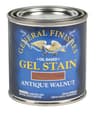
General Finishes Oil Base Gel Stain, 1/2 Pint (Antique Walnut)
The gel stain the furniture-refinishing world actually uses, sold in a half pint because that is enough for one piece and because nobody wants a quart of a color they have not tested. It costs several times the Minwax gel per ounce, and it is the pick when the piece matters more than the receipt.
Stain and polyurethane in one can, and the only product here you can brush straight over an existing finish. That makes it genuinely useful for darkening a tired bookcase without stripping it - and a poor choice for the raw tabletop you just spent a weekend sanding, because every brush mark stays where you put it.
The honest answer to "I want it black", and the thing to understand before buying is that solid color means mostly hiding the grain - a decision, not a stain strength. Water cleanup and low odor make it the friendliest can here to use in a garage with the door shut.
Every penetrating stain on this page is applied and removed with a cloth, which makes the cloth the applicator - and a paper towel or an old fleece will leave fibers stuck in your finish. Cotton t-shirt rag, cheap, and the only tool this job needs.
The default first can, and the product every piece of beginner staining advice on the internet is implicitly written about. It soaks into the wood rather than sitting on it, you control how deep the color goes by how long you leave it before wiping, and a quart is cheap enough to practice with. Buy it with the conditioner below, not on its own.
Strengths
+Penetrating oil stain: the color lives in the wood, so a scratch later does not expose a different color underneath
+Minwax publishes 500-600 sq ft per gallon and a 2-3 hour dry and recoat time, so a weekend project is comfortably in reach
+Minwax lists 36 colors, which means a color you can match to something rather than the nearest of four
Trade-offs
−Blotches on pine, birch, alder and maple unless you condition first - a second product and a second step most beginners skip
−Oil-based, so cleanup is mineral spirits and the used rags are a genuine spontaneous-combustion hazard that has to be handled properly
−Minwax states the dry time but no time-before-topcoat figure, saying only to let it "dry completely" - so the wait before your polyurethane is a judgment call
Type
Oil-based penetrating wood stain
In the set
Single tool
Material / build
Oil-based (alkyd) penetrating stain
Key spec
1 qt; 500-600 sq ft/gal; 2-3 hr dry and recoat
Best for
Best overall first stain - wipe-on, forgiving, cheap
Worth knowing. The listing states Dark Walnut, 1 quart. The coverage band (500-600 ft2/gal), the 2-3 hour dry and recoat time, the "Available in 36 beautiful colors" count, the "The longer you wait, the darker/richer the color" wiping instruction and the recommendation to "Apply Minwax Pre-Stain Wood Conditioner - especially on soft woods - for best, even color" all come from Minwax's own product page, fetched October 16, 2026. Minwax gives no per-quart coverage figure and states no wait before topcoating.
Specs read from the product listing, on October 16, 2026. “Not listed” means the listing doesn’t state that figure.
#2Buy this with your first can
Minwax 13407 Pre-Stain Wood Conditioner, 1/2 Pint
The cheapest thing on this page and the one that decides whether your first stained project looks like furniture. Pine, birch, alder and maple drink stain unevenly; this partly fills the thirsty parts first so the color lands flat. If you buy one stain and one other thing, buy this.
Strengths
+Minwax's own instruction is explicit that it is "especially necessary when working with soft or porous woods like pine, alder, birch, and maple" - which is most of what a beginner buys
+Fast: Minwax lists a 15-minute dry time, and the step is penetrate 5-15 minutes, wipe off, stain
+A half pint goes a long way - Minwax publishes 100-125 sq ft per quart, so this size covers several projects
Trade-offs
−It is for OIL-BASED stains - Minwax sells a separate water-based conditioner, and pairing the wrong one with the wrong stain wastes the step
−Minwax says to "Apply stain within 2 hours", and gives no guidance at all on what to do if you miss that window
−It reduces how dark the stain goes as well as how unevenly - so a conditioned board needs a longer dwell or a second coat to reach the same color
Type
Oil-based pre-stain wood conditioner
In the set
Single tool
Material / build
Oil-based conditioner (mineral spirits cleanup)
Key spec
1/2 pt; 100-125 sq ft/qt; stain within 2 hours
Best for
Buy it with your first can - stops blotching on pine
Worth knowing. The listing states Minwax 13407, clear, 1/2 pint. Everything quantitative here is from Minwax's own product page, fetched October 16, 2026: it "penetrates the grain of the wood to promote uniform acceptance of oil-based wood stain", helps "prevent streaking and blotching", is "especially necessary when working with soft or porous woods like pine, alder, birch, and maple", should "penetrate for 5 to 15 minutes" before being wiped off, "Quickly dries in 15 minutes", covers "100 ft2/quart - 125 ft2/quart", is for interior use with mineral spirits cleanup, and carries the instruction "Apply stain within 2 hours of Pre-Stain Wood Conditioner." That page states no rule for what to do if the 2-hour window is missed.
Specs read from the product listing, on October 16, 2026. “Not listed” means the listing doesn’t state that figure.
#3Best for a one-weekend project
Varathane Premium Fast Dry Wood Stain, 1 Quart (Dark Walnut)
The one to buy when the thing standing between you and a finished project is the calendar. Its listing claims full color in one coat and a one-hour dry time, which on a Saturday afternoon is the difference between topcoating today and topcoating tomorrow. The speed is also the catch: less time to wipe back means less room to fix an uneven patch.
Strengths
+The listing states "1 Coat Color" and "1 Hour Dry Time", the fastest figures of any stain on this page
+Oil-based and wipe-on like the Minwax, so the technique transfers exactly - nothing new to learn
+Sold in the same quart size and the same price bracket as the standard penetrating stains, so the speed costs nothing
Trade-offs
−Rust-Oleum's own product page returned HTTP 403 to us on the day, so we can state NO coverage figure, recoat window or time before topcoat for it - only what the listing says
−A one-hour dry time is a shorter window to even out a blotch or a lap mark, which is exactly the mistake a beginner makes on a large top
−Oil-based: mineral spirits cleanup, and the rags need the same careful handling as any other oil finish
Type
Fast-dry oil-based wood stain
In the set
Single tool
Material / build
Oil-based stain
Key spec
1 qt; listing states 1-coat color, 1 hr dry
Best for
Best for a one-weekend project - fastest to topcoat
Worth knowing. Everything claimed here is from the Amazon listing's own title and description, read October 16, 2026: "Varathane Premium Fast Dry Dark Walnut Wood Stain | Oil-Based, 1 Coat Color, 1 Hour Dry Time, Interior Wood Stain". Rust-Oleum's own Varathane product page returned HTTP 403 Forbidden when fetched on that date, so no coverage, recoat or topcoat-wait figure is quoted for this product and the card says so instead of estimating.
Specs read from the product listing, on October 16, 2026. “Not listed” means the listing doesn’t state that figure.
#4Best for blotchy wood and vertical surfaces
Minwax Gel Stain for Interior Wood Surfaces, 1 Quart (Aged Oak)
A stain with the consistency of pudding, which sounds like a gimmick and is actually the fix for two real problems: wood that blotches no matter what you do to it, and surfaces that are not horizontal. It sits on the wood instead of soaking in, so it colors evenly and does not run down a cabinet door.
Strengths
+Minwax calls the formula non-drip and "ideal for vertical applications like doors and molding" - the one stain here you can use on a standing carcass
+Because it sits on the surface it evens out blotchy woods, and it works on plywood and veneer where a penetrating stain shows every patch
+Minwax lists it for "wood, plywood, veneer, fiberglass, metal and molded fiberboard", so it covers repairs a wood stain cannot
Trade-offs
−Minwax's own dry time is 24 to 48 hours - a whole weekend before you can topcoat, against 2-3 hours for the penetrating stain
−Minwax's spec block says recoat at 6 hours while its application steps say 8 to 10 hours; we record both rather than picking one
−It covers grain rather than revealing it, which is the opposite of the reason most people stain wood in the first place
Worth knowing. The listing states Minwax Gel Stain, quart, Aged Oak, interior. The 200 ft2/quart coverage, the 24-48 hour dry time, the "Wait 3 minutes and remove the excess stain with a clean cloth, wiping in the direction of the grain" instruction, the non-drip and vertical-application claim and the surface list (wood, plywood, veneer, fiberglass, metal, molded fiberboard) come from Minwax's own product page, fetched October 16, 2026. That page's product-detail block gives a 6-hour recoat time while its own application steps say 8-10 hours; both figures are recorded here rather than resolved.
Specs read from the product listing, on October 16, 2026. “Not listed” means the listing doesn’t state that figure.
#5Best gel stain for a piece that matters
General Finishes Oil Base Gel Stain, 1/2 Pint (Antique Walnut)
The gel stain the furniture-refinishing world actually uses, sold in a half pint because that is enough for one piece and because nobody wants a quart of a color they have not tested. It costs several times the Minwax gel per ounce, and it is the pick when the piece matters more than the receipt.
Strengths
+The default recommendation among furniture refinishers, which matters when you want a color other people have already photographed on real wood
+A half pint is a sensible test quantity for one piece - you are not buying a quart of a color you have not tried
+Same gel behavior as the Minwax: even color on blotchy wood, no runs on a vertical door
Trade-offs
−By far the most expensive stain per ounce here - a half pint costs more than a quart of the Minwax gel
−General Finishes' own product pages could not be fetched on the day (every URL pattern we tried returned 404), so this entry claims nothing beyond its listing
−No dry time, recoat window or coverage figure appears on the listing, so plan around the Minwax gel's published figures and test on scrap
Type
Oil-based gel stain
In the set
Single tool
Material / build
Oil-based gel stain
Key spec
1/2 pint (8 fl oz) oil-base gel stain
Best for
Best gel stain for refinishing a piece you care about
Worth knowing. Everything here is from the Amazon listing, read October 16, 2026: "General Finishes Oil Base Gel Stain, 1/2 Pint, Antique Walnut". General Finishes' own site was reachable but every product-page URL pattern tried for the gel stain returned HTTP 404 on that date, so no dry time, recoat time or coverage figure is quoted for this product. The dry-time planning advice on the page is explicitly borrowed from the Minwax gel's published figures and labeled as such.
Specs read from the product listing, on October 16, 2026. “Not listed” means the listing doesn’t state that figure.
Stain and polyurethane in one can, and the only product here you can brush straight over an existing finish. That makes it genuinely useful for darkening a tired bookcase without stripping it - and a poor choice for the raw tabletop you just spent a weekend sanding, because every brush mark stays where you put it.
Strengths
+Minwax states it "Can be used over polyurethane finishes" - no stripping, no sanding back to bare wood
+One product, one pass: Minwax publishes 120-150 sq ft per quart and a 6-hour recoat, so two coats fit inside a day
+The satin sheen is in the same can, so a small refresh needs nothing else bought
Trade-offs
−It is brushed, not wiped - Minwax specifies a natural bristle brush and never mentions wiping, so lap marks and brush strokes stay
−Minwax recommends 2 coats (3 to deepen the color), which on a 6-8 hour dry time makes a bookcase a two-day job
−Minwax's own label warnings are the strongest of any product here: "VAPOR HARMFUL. Use only with adequate ventilation", rags that "may spontaneously catch fire if improperly discarded", and a California cancer and birth-defect warning
Best for recoloring an already-finished piece without stripping
Worth knowing. The listing states Minwax PolyShades, quart, Honey Pine, Satin. The over-polyurethane claim, the 6-8 hour dry time, the 6-hour recoat, the 120-150 ft2/quart coverage, the 2 recommended coats (3 to deepen), the natural-bristle-brush instruction and all four label warnings (vapor harmful / adequate ventilation, spontaneous combustion of soaked rags and sanding residue, combustible, California Proposition 65) come from Minwax's own PolyShades product page, fetched October 16, 2026.
Specs read from the product listing, on October 16, 2026. “Not listed” means the listing doesn’t state that figure.
The honest answer to "I want it black", and the thing to understand before buying is that solid color means mostly hiding the grain - a decision, not a stain strength. Water cleanup and low odor make it the friendliest can here to use in a garage with the door shut.
Strengths
+Water-based: water cleanup, low odor and no oily rags to dispose of - the only product on this page with none of those problems
+Minwax describes it as hiding "more wood grain while maintaining the wood texture", which is what a painted-furniture look actually needs
+Minwax lists 1 recommended coat with a second after 2 hours to darken, so the color decision happens the same afternoon
Trade-offs
−Minwax's own page contradicts itself on dry time - the detail block says 2-3 hours, a feature bullet says "One-coat color dries in 1 hour" - and we report both
−Coverage is 100 sq ft per quart, the thinnest figure of any stain here, so a quart does noticeably less work
−It pairs with Minwax's WATER-BASED pre-stain conditioner, not the oil-based one on this page, and it is "For interior use only. Not for use on floors"
Type
Water-based solid color wood stain
In the set
Single tool
Material / build
Water-based solid color stain
Key spec
1 qt; 100 sq ft/qt; solid opacity; water cleanup
Best for
Best when you want color rather than visible grain
Worth knowing. The listing states Minwax Wood Finish Water-Based Solid Color Wood Stain, True Black, 1 quart. The "Solid" opacity rating, the "hide more wood grain while maintaining the wood texture" wording, the "Solid color shows more color, less grain" note, the 100 ft2/quart coverage, the water cleanup, the 1 recommended coat with a second after 2 hours, the "For interior use only. Not for use on floors" limit and the recommendation to use Minwax's WATER-BASED pre-stain conditioner come from Minwax's own product page, fetched October 16, 2026. That page states both a 2-3 hour dry time (detail block) and a 1-hour one-coat dry time (feature bullet); both are recorded rather than resolved.
Specs read from the product listing, on October 16, 2026. “Not listed” means the listing doesn’t state that figure.
#8Best applicator
VALENGO Lint Free Rags, 100% Cotton T-Shirt Cloth
Every penetrating stain on this page is applied and removed with a cloth, which makes the cloth the applicator - and a paper towel or an old fleece will leave fibers stuck in your finish. Cotton t-shirt rag, cheap, and the only tool this job needs.
Strengths
+100% cotton t-shirt material per the listing, which is the standard wipe-on-finish cloth and sheds nothing into the stain
+Cheapest item on the page by a distance, and the one that most changes how the finish looks
+Works for the conditioner, the stain and a wipe-on topcoat, so one bag covers the whole sequence
Trade-offs
−The listing states no bag weight or piece count we could read, so you cannot tell in advance how many projects it covers
−Mixed-size offcuts rather than uniform pads - fine for wiping, less tidy than a purpose-made staining pad
−Used oil-stain rags are a spontaneous-combustion hazard and must be spread flat to dry or kept in a sealed metal can before disposal
Type
Lint-free cotton staining rags
In the set
Single tool
Material / build
100% cotton (t-shirt cloth)
Key spec
Lint-free cotton rags for wipe-on stain and finish
Best for
Best applicator - the cloth every wipe-on stain needs
Worth knowing. The listing states VALENGO Lint Free Rags, 100% cotton cloth, soft t-shirt rags, lint free cloth for staining wood and cast iron. It states no piece count or bag weight that we could read, so the card claims none. The oily-rag disposal warning is not from this listing - it is NFPA's own safety tip sheet, already cited on this site, and Minwax's PolyShades label carries the same warning in its own words.
Specs read from the product listing, on October 16, 2026. “Not listed” means the listing doesn’t state that figure.
Why pine blotches, and the cheap fix
Wood does not absorb stain evenly because wood is not evenly dense. In softwoods and in some pale hardwoods the earlywood and latewood differ enough that one soaks up several times the pigment of the other, and in pine there are also resin-rich patches that barely take stain at all. Put a dark walnut stain on a pine shelf and you get dark clouds against pale streaks. More coats makes it worse, because the thirsty areas keep taking more than the rest.
A pre-stain conditioner is a thin resin that soaks into the thirsty parts first and partially fills them, so the stain that follows lands closer to level. Minwax’s own instruction is explicit that it is “especially necessary when working with soft or porous woods like pine, alder, birch, and maple” — which, if you are buying lumber at a home center, is most of the rack. Our guide to wood species for beginners covers which boards are which.
Two details from Minwax’s page that nobody mentions. The conditioner wants 5 to 15 minutes to penetrate and then gets wiped off; and once it is on, you must “apply stain within 2 hours”. Minwax states no rule at all for what to do if you miss that window, so treat the conditioner as the start of the stain job rather than a step you do the night before.
The second honest consequence, which the marketing never leads with: a conditioned board takes less color as well as less blotch. The same can on conditioned pine comes out lighter than on raw pine. That is the trade, it is a good trade, and it is another reason to test on scrap rather than on the top.
Penetrating, gel, or one-step: the three things in the aisle
Almost everything sold as “wood stain” for interior work is one of three products, and they behave so differently that choosing the wrong family matters more than choosing the wrong brand.
Penetrating stain (the Minwax Wood Finish, the Varathane). Thin, soaks in, wiped back after a few minutes. The color lives inside the wood, so a scratch later does not reveal a different color underneath, and the grain shows through clearly. It is also the family that blotches, which is what the conditioner is for.
Gel stain (the Minwax gel, the General Finishes gel). Thick, barely penetrates, sits as a thin colored layer. Because it does not soak in, it does not care how uneven the wood’s thirst is — which makes it the fix for blotch-prone boards, plywood and veneer. Minwax calls its formula non-drip and “ideal for vertical applications like doors and molding”, which is the other reason to own one.
One-step stain and polyurethane (PolyShades). Color and topcoat in one can, brushed on. The site already tells you to skip these on raw wood, and we are not reversing that — doing two jobs at once means you cannot correct either one independently. It has exactly one job it is good at, covered below.
And then the odd one out: a solid color stain, which is closer to a thin paint. Minwax’s own water-based version is rated “Solid” for opacity and described as hiding “more wood grain while maintaining the wood texture”. If you want a black side table, that is the honest product for it. If you want to see the grain, it is the wrong aisle entirely.
The hours-to-topcoat problem
This is the spec that actually decides your weekend, and the spread across this page is bigger than anybody expects. All figures below are the manufacturers’ own published numbers:
Minwax Wood Finish: 2 to 3 hours dry and recoat. Minwax gives no time-before-topcoat figure at all, saying only to “let dry completely”.
Varathane Premium Fast Dry: the listing claims a 1 hour dry time and one-coat color. Rust-Oleum’s own page returned HTTP 403 to us, so we cannot confirm a recoat or topcoat window for it.
Minwax Water-Based Solid Color: the detail block says 2 to 3 hours, a feature bullet on the same page says one-coat color dries in 1 hour. We report both because Minwax publishes both.
Minwax PolyShades: 6 to 8 hours dry, 6 hour recoat, and 2 coats recommended.
Minwax Gel Stain: 24 to 48 hours before topcoating. A full weekend, for one coat of color.
Read that last line against the first. Choosing the gel stain because it solves blotching costs you a day and a half of waiting that the penetrating stain plus a conditioner does not. Both are reasonable answers; only one of them finishes on Sunday.
And a warning about rushing it: a topcoat applied over stain that has not fully released its solvent can stay soft, wrinkle or never harden. That failure looks identical to a bad topcoat and gets blamed on the polyurethane. The routine in how to apply a wood finish assumes the stain underneath is dry.
Sanding is the other half of the color
Stain makes sanding mistakes larger, not smaller. Every scratch that runs across the grain holds extra pigment and turns into a dark line you cannot sand out afterwards without removing the color around it, and a patch sanded finer than the rest of the board takes less stain and shows up pale.
Two rules, both of which are in how to sand wood properly. Sand the whole surface to the same grit — Minwax’s own gel stain instructions specify #220-grit along the grain — and do not go finer than that before staining, because a burnished surface stops accepting pigment. Then get the dust off. Dust left in the grain mixes into the first wet coat and dries as grit under your finish.
Filled repairs are the sharpest version of this problem. Filler never takes stain the way the wood beside it does — Minwax’s own page for its stainable filler tells you to test the stain on scrap with the filler in it first — so a repair that was invisible on bare wood can reappear as a pale blob the moment color goes on. Which filler to use, and when a non-hardening putty after finishing is the better answer, is the subject of our wood filler roundup.
The fire risk nobody warns a beginner about
Rags soaked with an oil-based stain can self-heat as the oil cures and catch fire with no ignition source at all. This is not a theoretical hazard and it is not limited to boiled linseed oil — Minwax’s own PolyShades label states that rags, steel wool and sanding residue soaked with the product “may spontaneously catch fire if improperly discarded”, alongside “VAPOR HARMFUL. Use only with adequate ventilation”.
The handling is simple and takes ten seconds: spread used rags out flat on a non-combustible surface outside until they are stiff and dry, or put them in a sealed metal container. Never leave them balled up in a bin or a pile in the corner of a garage. Our page on shop fire safety covers the oily-waste can and the extinguisher that belongs on the wall next to it, and five of the eight products on this page are oil-based.
The one exception worth knowing: the water-based solid color stain cleans up with water and generates no oily rags at all. If you are working in an attached garage in winter with the door shut, that is a real argument in its favor beyond how it looks.
Buy these alongside it
Live prices, from the same feed as the cards above. A stain job is four things, and only one of them is the can of color.
Tool
Why you need it
Price
Minwax 13407 Pre-Stain Wood Conditioner, 1/2 Pint
Goes on first on pine, birch, alder and maple - the step that decides whether the color lands flat
Live Amazon prices as of October 21, 2026; they change, and we don’t display stale numbers — a tool with no live price shows “Check price” and is left out of the subtotal. #adHow we’re funded.
Where stain is the wrong answer
Four jobs where the can is a mistake rather than a choice:
Making pine look like walnut. It reads as stained pine, every time, because the grain pattern and the pore structure give it away no matter what color sits in it. Buy a cheaper species and finish it clear, or buy the hardwood.
Anything that will see heavy wear unprotected. Stain is color, not protection. A stained tabletop with no topcoat will mark the first time a wet glass stands on it.
Cutting boards and anything food-related. None of these products belongs on a food surface. Our cutting board guide uses a food-contact conditioner instead.
Hiding a bad glue-up or a gappy joint. Color makes both more obvious, because squeeze-out seals the wood against stain and the sealed patch stays pale. Fix the joint first — how to fill gaps in wood joints covers the repair that survives being stained.
The verdict
Buy Minwax Wood Finish and the conditioner for a first stained project on bare wood. It is cheap, it is wiped on and wiped back so the technique is forgiving, the color lives in the wood, and at 2 to 3 hours to recoat you can stain in the morning and topcoat the same evening.
Buy the Varathane if the schedule is the constraint and the piece is small. A claimed one-hour dry time and one-coat color is a real advantage on a Saturday — just know that we could not verify a single figure beyond its listing, because Rust-Oleum’s site refused us.
Buy a gel stain — the Minwax for value, the General Finishes for a piece you care about — if your wood is pine, birch or maple and your first test board came out cloudy anyway, if you are coloring plywood or veneer, or if the thing you are staining is standing up and cannot be laid flat. Then clear your weekend: 24 to 48 hours before a topcoat is Minwax’s own number.
Buy PolyShades only for recoloring something already finished — the dated orange bookcase, the chair that does not match the table. That job genuinely does not need stripping, and no other product here can do it.
Buy the solid color stain when you want color rather than wood: black, white, a painted-furniture look with the texture still showing. Water cleanup, low odor, no oily rags.
And whichever you buy: condition the softwood, test the full sequence on an offcut, and spread the rags out flat when you are done.
Frequently asked questions
What is the best wood stain for furniture?+
For bare wood furniture, an oil-based penetrating stain used with a pre-stain conditioner is the best starting point - Minwax Wood Finish is the standard one, and both sit in the cheapest bracket of this category. The color soaks into the wood rather than sitting on it, the grain still shows, and Minwax publishes a 2-3 hour dry and recoat time so a project can be stained and topcoated in a day. If your wood is pine, birch or maple and still comes out blotchy with a conditioner, switch to a gel stain instead.
Do I really need a pre-stain wood conditioner?+
On pine, birch, alder and maple, yes - Minwax's own instructions call it "especially necessary" on exactly those woods, which is most of what a home center sells. Those species absorb stain unevenly and produce dark clouds that extra coats make worse rather than better. On dense, even-grained hardwoods like oak or walnut it matters much less. Two things to know: Minwax says to apply the stain within 2 hours of the conditioner, and a conditioned board takes slightly less color, so test the sequence on an offcut first.
What is the difference between gel stain and regular wood stain?+
A regular penetrating stain is thin, soaks into the wood and gets wiped back, so the color lives inside the wood and the grain shows clearly. A gel stain is thick, barely penetrates and sits as a thin colored layer on the surface - which means it does not care how unevenly the wood absorbs, so it fixes blotching on pine and works on plywood and veneer. Minwax also calls its gel non-drip and ideal for vertical surfaces like doors. The cost is time: Minwax publishes 24 to 48 hours of dry time for the gel against 2 to 3 hours for the penetrating stain.
How long should wood stain dry before polyurethane?+
It depends entirely which product you used, and the spread is large. Minwax publishes 2 to 3 hours of dry and recoat time for Wood Finish but gives no stated figure for topcoating, saying only to let it dry completely. Its Gel Stain is 24 to 48 hours. PolyShades is 6 to 8 hours and needs no separate topcoat. Varathane's listing claims a 1 hour dry time but Rust-Oleum's own page was unreachable, so we cannot quote a topcoat window for it. Topcoating too early is a real failure mode - the finish can stay soft or wrinkle - so when in doubt, wait longer than the recoat figure.
Can you stain over an existing finish?+
Not with a normal stain, no - penetrating stain needs bare wood to soak into, and on top of polyurethane it simply sits there and wipes off. The product designed for that job is a one-step stain-and-polyurethane like Minwax PolyShades, which states it can be used over polyurethane finishes and changes the color of finished wood without stripping. It is brushed rather than wiped, so brush marks are permanent, Minwax recommends 2 coats at 6 hours apart, and it is the right choice for a tired bookcase rather than for a raw tabletop.
Why did my stain come out blotchy?+
Because the wood absorbed it unevenly, which is a property of the wood rather than a fault in the can. Softwoods and pale hardwoods have alternating dense and open growth, and pine also has resin-rich patches that barely take stain at all. Three fixes, in order of how well they work: use a pre-stain conditioner on soft or porous woods, switch to a gel stain which sits on the surface instead of soaking in, or skip stain and let a clear finish show the wood's own color. Extra coats of stain will not even out a blotch - they make it worse.
Is water-based or oil-based stain better for furniture?+
Oil-based is more forgiving for a beginner on bare wood, because it stays workable longer and gives you a bigger window to wipe it back evenly - which is where most blotches are created or fixed. Water-based wins on everything around the job: water cleanup, low odor, and no oily rags, which can self-heat and catch fire if they are left balled up. If you are working in an attached garage with the door shut, that last point is worth more than it sounds. Note that water-based stains need the water-based pre-stain conditioner, not the oil-based one.
How much wood stain do I need for a project?+
Far less than people buy, and the manufacturers publish the figures. Minwax lists Wood Finish at 500 to 600 square feet per gallon - roughly 125 to 150 square feet per quart - and its Gel Stain at 200 square feet per quart. A side table is a few square feet; a quart is enough for several pieces of furniture. The exception is the water-based solid color stain at 100 square feet per quart, the thinnest figure here. Buying the smallest size of a color you have not tested is usually the smarter move.
Sources
Minwax — Wood Finish Oil-Based Penetrating Stain — The manufacturer's own page for the default beginner stain. Dry time "2 hour - 3 hour" and recoat time "2 hour - 3 hour". Coverage "500 ft²/gal - 600 ft²/gal" - no per-quart figure is published. "Available in 36 beautiful colors." The preparation step reads "Apply Minwax® Pre-Stain Wood Conditioner — especially on soft woods — for best, even color." On dwell before wiping the page gives no time, only "The longer you wait, the darker/richer the color." On topcoating it says "If happy with the color, let dry completely before applying a protective topcoat" and states no wait figure (accessed October 16, 2026)
Minwax — Pre-Stain Wood Conditioner — The conditioner that decides whether a pine project blotches. It "penetrates the grain of the wood to promote uniform acceptance of oil-based wood stain" and helps "prevent streaking and blotching", and is "especially necessary when working with soft or porous woods like pine, alder, birch, and maple" (the application steps also name fir, aspen and birch). Method: let it "penetrate for 5 to 15 minutes", then wipe off with a clean dry cloth. It "Quickly dries in 15 minutes"; dry and recoat times are both listed as 15 minutes. Coverage "100 ft²/quart - 125 ft²/quart", 1 recommended coat, interior, mineral spirits cleanup, "Do not thin." The critical instruction: "Apply stain within 2 hours of Pre-Stain Wood Conditioner." The page states no rule for a missed window and no re-application guidance (accessed October 16, 2026)
Minwax — Gel Stain for Interior Wood Surfaces — The gel stain's own page. It "adds natural colors and accentuates the beauty of a wide range of wood and non-wood surfaces including wood, plywood, veneer, fiberglass, metal and molded fiberboard", interior. "The non-drip formula makes it ideal for vertical applications like doors and molding." Method: apply by brush or clean cloth, then "Wait 3 minutes and remove the excess stain with a clean cloth, wiping in the direction of the grain." Coverage 200 ft² per quart, 1 recommended coat. Preparation: bare or stripped wood sanded with #220-grit along the grain, and "Apply Minwax® Pre-Stain Wood Conditioner — especially on soft woods — for best, even color." Dry time is given as 24 to 48 hours, and the application steps say to let it dry 24 hours before topcoating. NOTE A DISCREPANCY ON THE PAGE ITSELF: the product-detail block lists a 6-hour recoat time while the application steps say to recoat after 8 to 10 hours to darken the color; both are recorded here rather than resolved (accessed October 16, 2026)
Minwax — PolyShades Oil-Based Stain & Polyurethane Finish — The one-step product, and the only one here that goes over an existing finish: it "Can be used over polyurethane finishes" and can change the color of finished wood without removing the existing finish. Dry time "6 hour - 8 hour", recoat time "6 hour", coverage "120 ft²/quart - 150 ft²/quart", 2 recommended coats with a third suggested to deepen the color. Application is by brush - the page specifies a "natural bristle brush" and never mentions wiping. Oil-based, mineral spirits cleanup. Its label warnings are the strongest of any product cited here: "VAPOR HARMFUL. Use only with adequate ventilation"; rags, steel wool and sanding residue soaked with the product may "spontaneously catch fire if improperly discarded"; the product is combustible and must be kept away from heat and open flame; and it contains chemicals known to the State of California to cause cancer and birth defects (accessed October 16, 2026)
Minwax — Wood Finish Water-Based Solid Color Stain — The water-based opaque option. Opacity is listed as "Solid"; the description says it helps "hide more wood grain while maintaining the wood texture" and the color section adds "Solid color shows more color, less grain." Coverage "100 ft²/quart", 1 recommended coat, with the application steps saying a second coat can go on "after 2 hours" to darken. Water cleanup. "For interior use only. Not for use on floors." Preparation recommends Minwax's WATER-BASED Pre-Stain Wood Conditioner, "especially on soft woods" - not the oil-based conditioner. Recoat time is listed as "N/A". NOTE A DISCREPANCY ON THE PAGE ITSELF: the product-detail block lists a dry time of "2 hour - 3 hour" while a feature bullet says "One-coat color dries in 1 hour"; both are recorded here rather than resolved (accessed October 16, 2026)
Minwax — Stainable Wood Filler — The filler sold on its stain compatibility, with the limits its own maker prints. It is "a stainable and paintable latex formula" for cracks, small gouges, nail holes and knot holes in unfinished indoor and outdoor wood, and is "specially formulated to accept all Minwax® penetrating stains" - naming Wood Finish, Gel Stain and WaterBased Stain, and "designed for use with oil-based and water-based wood stains". The page advises testing stain on scrap wood with the filler first. Size limit: holes must be "no larger than 3/4 inch", with Minwax® High Performance Wood Filler named for anything larger; deep holes are filled in layers of about 1/4 inch at a time. Dry time 2 to 6 hours - most shallow repairs within 2 hours. Rated Interior/Exterior, water cleanup, and it can be topcoated directly with a clear finish or painted. Rotted wood should be treated with Minwax® Wood Hardener first. No coverage figure and no stated sanding wait are published (accessed October 16, 2026)
NFPA — Safety with oily rags (tip sheet) — NFPA's own wording: never leave cleaning rags in a pile; take them outside to dry, spread out and weighed down; put dried rags in a metal container with a tight cover, kept cool and out of direct sunlight (accessed August 31, 2026)