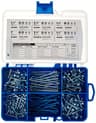
The fastest strong-enough joint a beginner can cut with nothing but a drill - six jigs compared, what independent strength testing actually shows, and the screw rule that decides whether the joint holds.
Almost everyone who starts woodworking hits the same wall in the same week. You have two boards. You want them joined at a right angle. You own a drill and not much else. Glue alone on that end grain is a joint that comes apart in your hands, cutting a mortise and tenon is a month of practice away, and screwing straight through the face leaves a row of holes down the outside of the thing you just made.
A pocket-hole jig is the answer to exactly that problem, and it is the reason it sells so well. It guides a stepped drill bit into the edge of one board at a shallow angle, leaving a long angled hole with a flat shoulder at the bottom. A screw dropped down that hole runs into the second board, pulls the joint tight, and holds it there while the glue cures — so you frequently need no clamps at all. The holes end up on the inside face, where nobody looks.
Here is the lens we compare on, in order. How many drill guides — one means you reposition the jig for the second hole of every pair, two means you do not, and over a cabinet that difference is an hour. How it is held to the work — the single biggest usability gap in this category, because a jig with no clamp in the box is not a finished purchase. What is actually in the box — the stepped bit, the stop collar, the driver bit and the thickness gauge are all required, and the cheap jigs are cheap partly because they leave some out. And whether the extra money buys a better joint — it does not. Every jig here drills the same hole. What you pay more for is speed, comfort and dust.
One thing this page is not: a claim that we have run these tools. We have not. Every specification below was read either from the seller’s own listing or from the manufacturer’s published spec sheet, on the date shown on each card, and where neither states a figure the card says “Not listed” rather than guessing. The strength numbers further down are somebody else’s test, cited and linked, not ours. Here is exactly what we do instead of testing.
How this is funded: we earn a commission if you buy through our links, at no extra cost to you. It never changes which tool we recommend, and we’ll tell you plainly when to skip one. Full disclosure.
Quick picks
Ranked on the specs that matter for a beginner and honest buyer fit. Select a row to jump to the full write-up. We haven’t hands-on-tested these — here is exactly what we do instead.
#
Product
Best for
Price
1
Kreg Pocket-Hole Jig 320 with Classic 2 in Face Clamp (KPHJ320-22)
The version of this tool a first shop should own: two drill guides so a pair of holes needs one setup, a case that keeps the bit and the collar together, and — in this bundle — the face clamp that every cheaper jig makes you buy separately.
The cheapest honest way into pocket-hole joinery: one drill guide, three thickness stops, and none of the mechanism you are paying for further up the range. The joints it makes are identical to the ones the expensive jigs make.
The complete-kit answer, and the one to look at if you would rather not start a Kreg habit: twin guides and a face clamp arrive together, so a single purchase gets you to a finished joint with nothing else to order.
The jig clamps itself. That is the whole upgrade, and on a project with a hundred holes in it that upgrade is worth real money — but it buys you speed and comfort, not a stronger joint.
The bench station: it clamps automatically to whatever thickness you feed it, supports the board with wings and pulls the shavings away to a vacuum. Genuinely excellent, and genuinely not what a first shop needs to spend its money on.
A single steel-lined guide block with no fence at all, which sounds like a downgrade until you meet a repair the other jigs cannot reach. It is the cheapest thing here and the one that goes where nothing else fits.
Kreg Pocket-Hole Jig 320 with Classic 2 in Face Clamp (KPHJ320-22)
The version of this tool a first shop should own: two drill guides so a pair of holes needs one setup, a case that keeps the bit and the collar together, and — in this bundle — the face clamp that every cheaper jig makes you buy separately.
Strengths
+Two drill guides with material thickness stops — drill both holes of a joint without repositioning
+Rated for material from 1/2 in to 1 1/2 in thick, which covers nearly all beginner stock
+This part number ships with the Classic 2 in face clamp, the accessory that decides whether a jig is usable
+Carrying case, drill bit, stop collar, thickness gauge, driver bit and 40 sample screws included
Trade-offs
−It clamps to the workpiece for every joint — slower than a bench-mounted jig once you are drilling dozens of holes
−Roughly twice the price of the 310, and the second drill guide is most of what the money buys
−No dust collection: shavings come out of the guide onto your work
Type
Portable pocket-hole jig with face clamp
In the set
Single tool
Material / build
Not listed
Key spec
2 drill guides; material 1/2 in to 1 1/2 in thick
Best for
Best first pocket-hole jig for most beginners
Worth knowing. The guide count and box contents come from Kreg's own spec page for the 320, which lists (2) drill guides with material thickness stops, a drill guide spacer, an Easy-Set drill bit and stop collar, a material thickness gauge/hex wrench, a 6 in square-drive bit, a carrying case and 40 sample screws. The -22 suffix on this listing is the version bundled with the Classic 2 in face clamp; the Amazon listing's own dimensions block gives 2.16 lb.
Specs read from the product listing, on September 4, 2026. “Not listed” means the listing doesn’t state that figure.
#2Best budget
Kreg Pocket-Hole Jig 310 (KPHJ310)
The cheapest honest way into pocket-hole joinery: one drill guide, three thickness stops, and none of the mechanism you are paying for further up the range. The joints it makes are identical to the ones the expensive jigs make.
Strengths
+About the smallest sum that buys a real, supported jig rather than an unbranded one
+Thickness stops at 1/2 in, 3/4 in and 1 1/2 in cover the three commonest stock sizes
+Small and reconfigurable, so it reaches into repairs a bench-mounted jig cannot get near
+Lives in a toolbox instead of taking up bench space
Trade-offs
−One drill guide, so you reposition the jig for the second hole of every pair
−No clamp in the box — without a C-clamp or a face clamp this is a three-hands job
−No case and no screws, so the real cost is higher than the sticker
Type
Portable pocket-hole jig
In the set
Single tool
Material / build
Not listed
Key spec
1 drill guide; stops at 1/2, 3/4 and 1 1/2 in
Best for
Best budget — the least you can spend and still be fine
Worth knowing. The Amazon listing states the jig works with material between 1/2 in and 1 1/2 in thick and contains 1/2 in, 3/4 in and 1 1/2 in thickness stops. Kreg's own spec page for the 310 lists the box as (1) drill guide with material thickness stop, an Easy-Set drill bit and stop collar, a material thickness gauge/hex wrench, a 6 in square-drive bit and the manual — no clamp, and none is included.
Specs read from the product listing, on September 4, 2026. “Not listed” means the listing doesn’t state that figure.
#3Best complete kit
Milescraft Pocket Hole Jig 200 XT (7331)
The complete-kit answer, and the one to look at if you would rather not start a Kreg habit: twin guides and a face clamp arrive together, so a single purchase gets you to a finished joint with nothing else to order.
Strengths
+Twin drill guides and a 2 in face clamp in the same box — nothing else needed to cut the first joint
+Recessed clamp pocket with a rare-earth magnet keeps the clamp put as you work down a board
+Built-in imperial and metric scales for reading stock thickness, plus a built-in depth setting for the bit
+Hardened steel drill bushings rather than bare cast guide holes
Trade-offs
−Kreg's accessory ecosystem — screws, plugs, clamps, bench mounts, plans — is far larger, and this jig sits outside it
−The listing does not state an overall material thickness range, so check your stock against the jig's own scale
−A spring-loaded sled is one more thing to set correctly than a fixed guide is
Type
Portable twin-guide pocket-hole jig kit
In the set
Single tool
Material / build
Not listed
Key spec
Twin drill guides; included 2 in face clamp holds up to 2.25 in
Best for
Best complete kit without buying into Kreg
Worth knowing. The listing states the included 2 in Milescraft face clamp handles material up to 2.25 in (57 mm), a recessed clamp pocket with a rare-earth magnet, hardened steel drill bushings, a spring-loaded sled adjust button, a built-in depth setting and built-in imperial and metric scales. It does not state a material thickness range for the jig itself, so that row is left unclaimed.
Specs read from the product listing, on September 4, 2026. “Not listed” means the listing doesn’t state that figure.
#4Best step-up
Kreg Pocket-Hole Jig 520PRO (KPHJ520PRO2)
The jig clamps itself. That is the whole upgrade, and on a project with a hundred holes in it that upgrade is worth real money — but it buys you speed and comfort, not a stronger joint.
Strengths
+Integrated pump-action clamping — the jig grips the work itself, so there is no separate clamp to chase
+GripMaxx anti-slip clamping surface, on an impact-resistant polymer body over a steel frame
+Set up for 1/2 in, 3/4 in and 1 1/2 in material, the three thicknesses most projects use
+60 Kreg screws, the Easy-Set bit, stop collar, driver bit and thickness gauge in the box
Trade-offs
−Around twice the price of the 320 for convenience only — the holes, and therefore the joints, are the same
−Still a hold-it-to-the-work jig, not a bench station, so long boards still need supporting
−No dust collection at this level of the range
Type
Pocket-hole jig with integrated clamp
In the set
Single tool
Material / build
Impact-resistant polymer over a steel frame
Key spec
Integrated VersaGrip clamp; material 1/2, 3/4 and 1 1/2 in
Best for
Best step-up if you know you will build a lot
Worth knowing. The Amazon listing describes GripMaxx anti-slip clamping, a 360-degree VersaGrip rotating handle, an impact-resistant polymer and steel build and material from 1/2 in to 1 1/2 in thick. Kreg's own spec page adds the box contents — jig, Easy-Set drill bit, 6 in #2 driver bit, Easy-Set stop collar, material thickness gauge and 60 pocket-hole screws — and states the setup thicknesses as 1/2 in, 3/4 in and 1 1/2 in.
Specs read from the product listing, on September 4, 2026. “Not listed” means the listing doesn’t state that figure.
#5Best bench-mounted
Kreg Pocket-Hole Jig 720PRO (KPHJ720PRO)
The bench station: it clamps automatically to whatever thickness you feed it, supports the board with wings and pulls the shavings away to a vacuum. Genuinely excellent, and genuinely not what a first shop needs to spend its money on.
Strengths
+Automaxx dual-action clamping adjusts to the material thickness by itself, so setup between stock sizes is nearly nothing
+Docking station with material support wings holds long boards level with the guides
+Chip ejection port and a vacuum adapter — the only jig here that keeps the bench clean
+Comes with 160 Kreg screws, both driver bits, the Easy-Set bit, the stop collar and a thickness gauge
Trade-offs
−Three times the price of the 320, for joints that are no stronger
−9.45 lb and a permanent bench footprint, which a shared garage bench may not have to give
−Its advantages only show up in volume — for a shelf and a workbench it is a lot of jig doing very little
Type
Bench-mounted pocket-hole jig
In the set
Single tool
Material / build
Not listed
Key spec
Automaxx auto-clamping; material 1/2 in to 1 1/2 in; dust port
Best for
Best bench-mounted jig — for the shop that has outgrown a clamp
Worth knowing. Kreg's own spec page lists Automaxx dual-action clamping, a GripMaxx anti-slip clamping surface, a chip ejection port with a shop-vac adapter, and a box containing the jig, Easy-Set drill bit, 3 in and 6 in #2 driver bits, Easy-Set stop collar, material thickness gauge, dust collection vacuum adapter, docking station with material support wings, a clamp, one downloadable plan and 160 screws. The 9.45 lb weight is from the Amazon listing's own dimensions block.
Specs read from the product listing, on September 4, 2026. “Not listed” means the listing doesn’t state that figure.
#6Best for repairs
Kreg Mini Jig Kit (MKJKIT)
A single steel-lined guide block with no fence at all, which sounds like a downgrade until you meet a repair the other jigs cannot reach. It is the cheapest thing here and the one that goes where nothing else fits.
Strengths
+Cheapest way to make a real pocket hole, and it arrives with the stepped bit, stop collar and hex wrench
+No positioning fence means no thickness limit — the listing states it fits any material thickness
+Small enough to reach inside an assembled cabinet or under a wobbling chair rail
+A sensible second jig to keep in the toolbox once you own a bigger one
Trade-offs
−No fence also means no automatic positioning: you mark the hole and set the drill depth yourself every time
−Needs its own clamp, and holding a small block square on a workpiece is fiddly
−Wrong tool for building a cabinet — this is a repair jig, not a production one
Type
Mini pocket-hole guide block
In the set
Single tool
Material / build
Steel-reinforced drill guide holes
Key spec
Single guide, no fence; any material thickness
Best for
Best for repairs, odd thicknesses and tight corners
Worth knowing. The listing states steel-enforced drill guide holes, that it does not contain a positioning fence and so fits any material thickness, and that the kit includes a stepped drill bit, stop collar, hex wrench, the jig and a manual. The listing's own dimensions block gives 0.4 lb.
Specs read from the product listing, on September 4, 2026. “Not listed” means the listing doesn’t state that figure.
What a pocket hole actually is
A pocket hole is a two-diameter hole drilled at a shallow angle — a wide bore that stops partway, and a narrow pilot that carries on out through the end of the board. The step between the two diameters is the shoulder the screw head seats against, and that shoulder is the whole trick. It is what lets a screw driven at an angle pull two boards together squarely instead of sliding them apart.
The jig does two jobs and only two. It holds the bit at the right angle, and it positions that angle correctly relative to the thickness of your board. Everything else in the category — clamping mechanisms, dust ports, docking stations, carrying cases — is convenience wrapped around those two functions. That is why the cheapest jig on this page and the most expensive one produce a joint of the same strength, and why the honest question when you are choosing is not “which one is best” but “how much convenience is my time worth right now.”
The joint that results is a reinforced butt joint. Our guide to wood joints puts it in context alongside the eight other joints a beginner meets, and the short version is that a pocket-hole joint sits in the middle of that list: much stronger than glue on end grain, meaningfully weaker than a dowel or a mortise and tenon. If you are still deciding whether to go the screw route at all, joinery vs fastening compares the two approaches on cost, learning time and tested strength before you buy anything.
How strong is it, honestly
This is where most pocket-hole content goes quiet, so here is a real number from a test we did not run. Matthias Wandel at Woodgears built a screw-jack rig, mounted spruce samples 17 mm by 59 mm, loaded them 15 cm from the joint and broke them. His pocket-hole samples failed at 95, 120, 75 and 105 pounds — an average of 99. Dowel joints in the same rig averaged 156 pounds. Mortise-and-tenon samples with yellow glue averaged 222.
He also tested whether adding glue to a pocket-hole joint helps. It averaged 111 pounds, and his conclusion was that glue does not make these joints meaningfully stronger — which makes sense, because the glue surface is end grain against long grain and end grain has very little to give.
Read those numbers correctly. A pocket-hole joint is roughly half a mortise and tenon in that test, and that is a real limitation you should respect when you build a chair. It is also about a hundred pounds of resistance at a fifteen-centimeter lever arm on a single joint in softwood, and a shop shelf built from six of them, screwed to a wall, will never see anything like that. The right conclusion is not “pocket holes are weak.” It is “pocket holes are strong enough for casework and shop furniture, and not the joint for something that gets racked and sat on.”
One more honest note on the glue finding: we still put glue in the joint, because it costs nothing, it stiffens the assembly and it stops the seam creeping. It just is not the thing carrying the load. What wood glue does and does not do covers why an end-grain glue line disappoints.
The five things that separate these jigs
Guide count. One guide or two. A standard pocket-hole joint uses two screws, so two guides halve your setups. The 310 and the Mini have one; the 320 and the Milescraft have two.
How it clamps. Three approaches: you supply a clamp (310, Mini), a face clamp comes in the box (320 bundle, Milescraft), or the jig clamps itself (520PRO, 720PRO). This is the difference you will feel most on the first project.
Thickness handling. Kreg’s jigs at this level are rated for material from 1/2 in to 1 1/2 in thick, with stops at 1/2 in, 3/4 in and 1 1/2 in. That covers 3/4 in plywood, nominal 1x lumber and doubled-up stock — which is very nearly everything a first shop cuts.
Dust. Only the 720PRO has a chip ejection port and a vacuum adapter. Every other jig here empties long ribbons of shavings onto your workpiece, which is annoying rather than dangerous.
Whether it arrives complete. A pocket hole needs a stepped bit and a stop collar, and the screw needs a long square-drive or #2 driver bit to reach down the hole. Every jig on this page includes those. A generic jig from an unnamed brand often does not, and a stepped bit bought separately erases the saving.
The screws are not an afterthought
Pocket screws are a specific fastener, not a wood screw you happen to own. The head is flat-bottomed so it seats on the shoulder of the bore rather than wedging into it, the shank is designed to be self-tapping so the second board does not split, and the length is chosen from the material thickness rather than from what is in the jar.
Kreg publishes the rule and it is worth following even if you buy another brand’s screws. On thread: coarse thread for softwoods like cedar, pine and fir, and for sheet goods such as plywood and MDF; fine thread for hard, dense hardwoods like cherry, maple and oak, where an aggressive coarse thread tears the fibers instead of gripping them. On coating: zinc for indoor work where moisture is not a concern, Blue-Kote for damp or wet conditions and treated lumber, stainless for genuinely corrosive exposure.
On length, Kreg’s own wording is the clearest statement of why this is not a preference: each length “is designed to provide the strongest possible joint in each different wood thickness by optimizing thread purchase without the risk of screw breakthrough.” Too short and the threads never reach far enough into the second board; too long and the tip comes out through the face of the piece you just built. If you are not sure which species you are holding, our guide to beginner species will tell you whether you are in coarse-thread or fine-thread territory.
What you need alongside the jig
The jig is not the whole purchase, and the cheapest jig is not the cheapest way in. Here is the budget route priced honestly — the entry-level jig, plus the clamp it does not include, plus screws, plus the drill that does the actual work.
Tool
Why you need it
Price
Kreg Pocket-Hole Jig 310 (KPHJ310)
The budget jig. One guide, three thickness stops, and it makes exactly the same joint as the expensive ones.
Live Amazon prices as of October 21, 2026; they change, and we don’t display stale numbers — a tool with no live price shows “Check price” and is left out of the subtotal. #adHow we’re funded.
Now compare the first two rows against the 320 bundle above, because that is the real decision. The 320 folds a second drill guide, a carrying case and the Classic 2 in face clamp into one purchase, and it commonly costs no more than the budget jig plus a clamp bought separately. That is the entire argument for the top pick: not that it is better made, but that it is the cheaper way to end up with the same things in the drawer.
You can substitute a plain C-clamp for the face clamp and save real money — it is slower and less comfortable, and it works. What you cannot skip is having some clamp, because otherwise you are holding the jig, the board and the drill with two hands. The general-purpose clamps we recommend elsewhere are worth owning anyway, and a couple of them will get you through a pocket-hole project at a pinch.
Drilling a pocket hole that does not blow out
Set the collar from the gauge, every time. The stop collar on the stepped bit sets how deep the bore goes, and it is set from the thickness of your material, not from memory. Measure the board — nominal 3/4 in plywood is routinely thinner than 3/4 in.
Drill at full speed and let the bit clear. Pocket holes are long, and the flute packs with a surprising volume of shavings. Pull the bit back out once or twice on the way in rather than forcing it through.
Clamp the joint before you drive the screw, not after. The screw pulls the boards together along the angle of the hole, which also means it can slide them out of alignment. A face clamp holding the two faces flush is what stops the finished joint from stepping at the seam.
Use a clutch, not an impact driver. Pocket screws are easy to overdrive, and an overdriven screw strips the softwood around it and loses most of its hold. Our note on drills versus impact drivers explains why the clutch is the feature that matters here.
Check square before the second screw. One screw is a hinge. Put a square on the joint after the first screw and before the second, and the whole carcass comes out true.
A carcass is also where a jig stops being the whole answer: the cut that decides whether a cabinet is square happens before the jig comes out. Best tools for building cabinets puts this jig in the order it actually belongs in.
Wear eye protection. The stepped bit throws chips back along its own axis, which is to say towards your face, and the basics are cheap.
Where pocket holes are the wrong answer
Three places, and they are worth knowing before you build something that fails later.
Across the grain of a wide solid panel. A solid wood tabletop changes width with the seasons. Screwing a fixed apron hard to it through pocket holes gives the panel nowhere to go, and it splits — not immediately, but in the first dry winter. Wood movement is the single most common cause of a beginner project quietly destroying itself, and pocket holes make it easy to do by accident. Plywood does not move like this, which is one reason pocket holes and sheet goods get along so well.
In anything that gets racked and sat on. A chair works its joints in every direction, and the strength test above is exactly the kind of load a chair applies. Build the chair with real joinery.
In thin stock, MDF edges or particle board. A pocket hole needs enough material around the bore to leave a shoulder. Below about 1/2 in you are drilling most of the board away, and the crumbly edge of MDF gives a screw very little to bite.
What the whole category costs
This is one of the cheaper corners of a shop. A budget jig, an assortment of screws and a clamp together come to less than a mid-range power tool, and the jig has nothing in it to wear out. The most expensive item on this page is the bench-mounted 720PRO, and it is expensive because of how fast it works rather than how well the joint holds.
Which is the argument for starting at the bottom of the range. Our standing position on the tools beginners do not need makes the pocket-hole jig a deliberate exception in the other direction — buy one early, buy the small one, and step up only when you find yourself drilling hundreds of holes. The step up costs a hundred dollars and saves you nothing at all until then.
The one to buy first
Buy the Kreg 320 in the bundle with the face clamp. Two guides, a case, everything you need to drill, and the clamp that most people discover they need on day one. It is the version of this tool that does not send you back to the checkout.
If you want to spend as little as possible and you already own a clamp, buy the 310 instead and lose nothing but time. If you would rather not buy into the Kreg ecosystem, the Milescraft 200 XT arrives complete with its own clamp for about the same money as the 320.
Then build something with it. A simple workbench or a set of garage shelves is exactly what this joint is for, and building one will teach you more about where pocket holes belong than any amount of reading about them.
Frequently asked questions
What is the best pocket hole jig for a beginner?+
A two-guide portable jig that comes with a face clamp - the Kreg 320 bundle or the Milescraft 200 XT kit are the two obvious versions of that. Two guides mean you drill both holes of a joint in one setup, and a clamp in the box means the jig is usable the day it arrives rather than after a second order. The bench-mounted jigs are excellent and are not what a first shop needs.
How strong is a pocket hole joint really?+
In an independent bench test at Woodgears, pocket-hole samples in spruce failed at 95, 120, 75 and 105 pounds loaded 15 cm from the joint - an average of 99 pounds. Dowel joints averaged 156 pounds in the same rig and mortise-and-tenon joints with yellow glue averaged 222. So roughly half a mortise and tenon: strong enough for shelving, cabinets and shop furniture, and not the joint for a chair.
Do you need glue with pocket hole screws?+
Use it, but do not rely on it. The same test found that adding glue to a pocket-hole joint took the average from 99 to 111 pounds, which is close to noise - the glue line is end grain against long grain, and end grain gives very little. Glue still costs nothing, stiffens the assembly and keeps the seam from creeping, so it is worth putting in.
Coarse or fine thread pocket hole screws?+
Kreg's own guidance: coarse thread for softwoods like cedar, pine and fir and for sheet goods such as plywood and MDF; fine thread for hard, dense hardwoods like cherry, maple and oak, where a coarse thread tears the fibers rather than gripping them. If you buy one assortment to start, get one that contains both.
What screw length do I need for a pocket hole?+
It is set by the thickness of your material, not by preference. Kreg's wording is that each length is designed to give the strongest possible joint in that thickness by optimizing thread purchase without the risk of screw breakthrough - too short and the threads never reach far enough into the second board, too long and the tip comes out through the face. Follow the manufacturer's chart for the thickness you measured, not the thickness printed on the lumber.
Can you use a regular drill bit in a pocket hole jig?+
No. A pocket hole needs a stepped bit, which cuts a wide bore that stops partway and a narrower pilot that continues out the end of the board. The step between the two diameters forms the shoulder the screw head seats on, and that shoulder is what makes the joint work. Every jig on this page includes the correct stepped bit and a stop collar to set its depth.
Do I need a face clamp for pocket hole joinery?+
Practically, yes - unless your jig clamps itself. A face clamp does two things: it holds the jig to the board while you drill, and it holds the two boards flush while you drive the screw. Without it, the screw pulls along the angle of the hole and slides the joint out of alignment, which is why beginner pocket-hole joints so often step at the seam. A plain C-clamp will do the job more slowly.
Is the expensive Kreg jig worth it over the cheap one?+
Not for a first shop. Every jig here drills the same hole and produces the same joint - what the extra money buys is an integrated clamp, a docking station, dust collection and speed. Those matter when you are drilling hundreds of holes for cabinets. For a shelf, a bench and a couple of boxes, the cheap jig makes an identical joint and leaves the difference in your pocket for lumber.
Where should you not use pocket holes?+
Three places. Across the grain of a wide solid-wood panel, because the panel changes width seasonally and a screwed-down apron will split it. In anything that gets racked and sat on, like a chair. And in thin stock, particle board or the edge of MDF, where there is not enough material to leave a proper shoulder and not enough fiber for the screw to bite.
Sources
Woodgears — Testing pocket holes against mortise and tenon and dowel joints — An independent bench test on spruce, loaded 15 cm from the joint: pocket-hole samples failed at 95, 120, 75 and 105 lb (99 lb average), dowel joints at 160, 160 and 149 lb (156 lb), and mortise-and-tenon samples with yellow glue at 235, 235 and 195 lb (222 lb). A follow-up adding glue to the pocket-hole joints averaged 111 lb, and the author's conclusion was that glue does not make these joints stronger (accessed September 4, 2026)
Kreg Tool — Selecting the right pocket-hole screw — The manufacturer's own thread guidance: coarse thread for softwoods like cedar, pine and fir and for sheet goods such as plywood and MDF; fine thread for hard, dense hardwoods like cherry, maple and oak. Zinc is for indoor projects where moisture is not a concern, Blue-Kote for damp or wet applications and treated lumber, stainless for extreme, corrosive exposure (accessed September 4, 2026)
Kreg Tool — Choosing the correct pocket-hole screw length — Kreg's own wording on why length is not a preference: screw length is chosen from the thickness of the material, and each length is designed to provide the strongest possible joint in that thickness by optimizing thread purchase without the risk of screw breakthrough (accessed September 4, 2026)
Kreg Tool — Pocket-Hole Jig 320 specifications — The manufacturer spec sheet used for the guide counts and box contents on this page: (2) drill guides with material thickness stops, a drill guide spacer, an Easy-Set drill bit and stop collar, a thickness gauge/hex wrench, a 6 in square-drive bit, a carrying case and 40 sample screws, for materials 1/2 in to 1 1/2 in thick (accessed September 4, 2026)
Kreg Tool — Pocket-Hole Jig 310 specifications — The 310's box is (1) drill guide with material thickness stop, an Easy-Set drill bit and stop collar, a thickness gauge/hex wrench, a 6 in square-drive bit and the manual — no clamp is included. Material thickness stops are at 1/2 in, 3/4 in and 1 1/2 in (accessed September 4, 2026)
Kreg Tool — Pocket-Hole Jig 720PRO specifications — Automaxx dual-action clamping that adjusts to the material thickness automatically, a GripMaxx anti-slip clamping surface, a chip ejection port with a shop-vac adapter, and a docking station with material support wings — for materials 1/2 in to 1 1/2 in thick (accessed September 4, 2026)