Japanese hand tools are not a style choice. They are built on two structural decisions that a Western tool does not make, and both of them happen to suit a beginner: they cut on the pull stroke, and their blades are laminated — a very hard steel layer forge-welded onto a soft, tough body.
Pulling matters because a blade in tension cannot buckle. That means the steel can be much thinner, which means a narrower kerf, less effort, and far less of the wandering that makes a beginner’s first Western saw cuts look drunk. Lamination matters because you get an edge that takes and holds a keener angle than a single-alloy tool can, on a body that still absorbs a mallet blow without cracking.
The trade-offs are honest ones. Thin hard blades chip if you twist them or hit a nail. Saw teeth are usually impulse-hardened and cannot be resharpened, so blades are replaced rather than filed. And a kanna is adjusted with a hammer, which is a genuine skill rather than a knob.
We compare on what the tool is for (some Japanese tools are simply better at a job, others are just different), how forgiving it is of a beginner’s first month, and what it costs to keep working — replacement blades, stones and time. Nothing here is chosen for looking traditional.
How this is funded: we earn a commission if you buy through our links, at no extra cost to you. It never changes which tool we recommend, and we’ll tell you plainly when to skip one. Full disclosure.
Quick picks
Ranked on the specs that matter for a beginner and honest buyer fit. Select a row to jump to the full write-up. We haven’t hands-on-tested these — here is exactly what we do instead.
#
Product
Best for
Price
1
Suizan Ryoba Double-Edge Japanese Pull Saw (9.5 in)
The hand saw that makes beginners feel capable overnight. It cuts on the pull stroke, so the thin blade stays straight and tracks your line — far more forgiving than a Western push saw, with a rip edge and a crosscut edge in one tool.
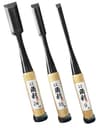
Kakuri Japanese Wood Chisel Set, 3-Piece Bench Chisels
Three laminated-steel bench chisels in the Japanese pattern: a hard cutting layer forge-welded to a softer body, hooped handles built to be struck. Fewer sizes than a Western set, and a keener edge from each of them.
King KW65 1000/6000 Grit Combination Whetstone with Base
The default Japanese water stone. One thousand grit to reset an edge, six thousand to polish it, a plastic base so it does not slide across the bench, and a price that makes the whole debate academic.
The joinery saw. A stiffened spine keeps the very thin blade dead straight, and pull-stroke cutting means it tracks a knife line instead of wandering off it. This is the saw that makes a beginner's dovetails and tenons stop looking homemade.
Suizan Kanna Japanese Wood Planer, 1.7 in Single Blade
A wooden-bodied pull plane. There is nothing to adjust but a hammer and your judgment, which is either the appeal or the problem depending on the evening you are having.
Kakuri Japanese Woodworking Hand Tool Set for Beginner, 7 Pieces
The rare 'set' that is actually a woodworking set: a Japanese plane, chisels, a saw and a hammer, all made for cutting wood rather than for filling a blister pack. If you want one box that starts a hand-tool shop, this is the honest version of that box.
Suizan Ryoba Double-Edge Japanese Pull Saw (9.5 in)
The hand saw that makes beginners feel capable overnight. It cuts on the pull stroke, so the thin blade stays straight and tracks your line — far more forgiving than a Western push saw, with a rip edge and a crosscut edge in one tool.
Strengths
+Cuts on the pull stroke — easier to track a straight line
+Two edges: rip teeth and crosscut teeth in one saw
+Fine kerf and a clean cut that flatters new hands
Trade-offs
−Replaceable blade rather than resharpenable
−Pull-saw technique takes a few cuts to click
Type
Japanese pull saw (ryoba)
In the set
Single tool
Material / build
Steel blade, wood handle
Key spec
9.5 in, rip + crosscut edges
Best for
Best first hand saw
Worth knowing. If a power saw feels like too much too soon, a good pull saw lets you make accurate cuts by hand from day one. It's the tool that convinces nervous beginners they can actually do this.
Specs read from the product listing, on July 24, 2026. “Not listed” means the listing doesn’t state that figure.
#2Best chisels
Kakuri Japanese Wood Chisel Set, 3-Piece Bench Chisels
Three laminated-steel bench chisels in the Japanese pattern: a hard cutting layer forge-welded to a softer body, hooped handles built to be struck. Fewer sizes than a Western set, and a keener edge from each of them.
Strengths
+Laminated construction gives a very hard edge on a shock-absorbing body
+Steel hoop at the handle top is designed for mallet work
+Three sizes cover most beginner joinery without buying six
Trade-offs
−Hollow-ground backs need the right flattening technique, not just lapping
−The hoop has to be seated before first use, which nobody tells you
Type
Japanese bench chisel set
In the set
3 pieces
Material / build
Laminated Japanese steel blade
Key spec
3-piece oire nomi pattern with hooped handles
Best for
The Japanese route into chisel work
Worth knowing. The hollow on the back of a Japanese chisel is deliberate: you flatten only a narrow land around the edge, so the back comes flat in minutes rather than an evening.
Specs read from the product listing, on August 19, 2026. “Not listed” means the listing doesn’t state that figure.
#3Best sharpening stone
King KW65 1000/6000 Grit Combination Whetstone with Base
The default Japanese water stone. One thousand grit to reset an edge, six thousand to polish it, a plastic base so it does not slide across the bench, and a price that makes the whole debate academic.
Strengths
+Two useful grits in one stone, which is all a beginner needs
+Cuts fast because the binder releases fresh abrasive as you work
+Plastic base doubles as a holder, so no separate stone pond
Trade-offs
−Needs soaking before use and dishes faster than a diamond plate
−Must be kept from freezing — a real consideration in an unheated garage
Type
Combination water stone
In the set
Single tool
Material / build
Not listed
Key spec
1000 / 6000 grit combination, plastic base
Best for
Sharpening Japanese blades as they were designed to be sharpened
Worth knowing. Soft water stones cut quickly and wear quickly, which is a feature: the surface constantly renews itself. Flatten it periodically on sandpaper over glass and it lasts for years.
Specs read from the product listing, on August 19, 2026. “Not listed” means the listing doesn’t state that figure.
#4Best for joinery
Suizan Dozuki Dovetail Saw, 6 in Crosscut
The joinery saw. A stiffened spine keeps the very thin blade dead straight, and pull-stroke cutting means it tracks a knife line instead of wandering off it. This is the saw that makes a beginner's dovetails and tenons stop looking homemade.
Strengths
+Back (spine) stiffens the blade so the cut stays straight without skill
+Extremely thin kerf removes almost no material — easier to split a pencil line
+Replaceable blade: when it finally dulls you swap the blade, not the saw
Trade-offs
−The spine limits depth of cut — it cannot cut deeper than the blade below the back
−Thin Japanese blades kink if you twist or force them; they demand a light hand
Type
Japanese backed saw (dozuki)
In the set
Single tool
Material / build
Japanese steel blade, rattan-wrapped wood handle
Key spec
6 in blade, crosscut, replaceable
Best for
Dovetails, tenons and any cut that has to land on a line
Worth knowing. A dozuki is the Japanese equivalent of a Western dovetail saw. Pull-stroke saws can use a much thinner blade because the steel is in tension, not compression, which is exactly why they track a line so well for beginners.
Specs read from the product listing, on August 11, 2026. “Not listed” means the listing doesn’t state that figure.
#5Best plane to try
Suizan Kanna Japanese Wood Planer, 1.7 in Single Blade
A wooden-bodied pull plane. There is nothing to adjust but a hammer and your judgment, which is either the appeal or the problem depending on the evening you are having.
Strengths
+Costs less than most metal block planes
+Pull stroke is easier to control at the end of a cut, so less blowout
+Nothing mechanical to break or wear out
Trade-offs
−Setting the blade is done by tapping with a hammer, and it takes practice
−The wooden sole needs conditioning and occasional truing
Type
Japanese pull plane (kanna)
In the set
Single tool
Material / build
Wooden body, laminated steel blade
Key spec
1.7 in single blade
Best for
Trying the Japanese approach without spending much
Worth knowing. A kanna is tuned rather than adjusted: tap the blade forward to deepen the cut, tap the rear of the body to retract it. Expect a frustrating first hour and a rewarding second one.
Specs read from the product listing, on August 19, 2026. “Not listed” means the listing doesn’t state that figure.
#6Best all-in-one kit
Kakuri Japanese Woodworking Hand Tool Set for Beginner, 7 Pieces
The rare 'set' that is actually a woodworking set: a Japanese plane, chisels, a saw and a hammer, all made for cutting wood rather than for filling a blister pack. If you want one box that starts a hand-tool shop, this is the honest version of that box.
Strengths
+Every piece is a woodworking tool — no sockets, no padding
+Japanese pull saw and chisels suit a beginner learning to cut to a line
+Comes as a coherent kit rather than a random assortment
Trade-offs
−Costs several times what a household kit costs
−A Japanese plane (kanna) needs setup and is genuinely hard to learn
Type
Japanese woodworking tool set
In the set
7 pieces
Material / build
Steel blades, wooden bodies and handles
Key spec
Plane, chisels, saw and hammer
Best for
The only set here made for woodworking
Worth knowing. Buy it for the saw and chisels; treat the kanna as a long-term project. Setting up a Japanese plane — tuning the sole, tapping the blade — is a skill in its own right and not the place to start.
Specs read from the product listing, on August 11, 2026. “Not listed” means the listing doesn’t state that figure.
Where Japanese tools genuinely win
Saws: not a close contest for a beginner
A Western saw is pushed, so the plate must be thick enough to resist buckling, which means a wide kerf and real effort per stroke. A Japanese saw is pulled, so the plate can be a fraction of the thickness. The practical result is that a beginner cuts straighter, sooner, with less fatigue.
The catch is what happens when you twist. A thin plate kinks, and a kinked plate never cuts straight again. The technique is simple — let the saw find its own line, do not steer it mid-cut — but it is a habit to build early. How to use a Japanese pull saw covers the grip, the start and which edge of a ryoba to use, which is the other thing almost nobody is told.
Chisels: harder edges, different maintenance
A Japanese bench chisel — oire nomi — has a hard steel cutting layer laminated to a soft iron body, and a hollow ground into the back. That hollow is the underrated part: because you are only flattening a narrow land around the edge rather than the whole back, the initial flattening takes minutes instead of an evening.
What you give up is forgiveness. Very hard steel is brittle, so levering waste out sideways — a thing every beginner does with a Western chisel and mostly gets away with — will chip a Japanese edge. The hooped handle also needs seating before first use, which almost nobody tells you: tap the hoop down and peen the wood over it, or the hoop works loose the first time you strike it.
Water stones: the system the tools were designed for
Japanese blades were designed around soft water stones, and the pairing is not accidental. A water stone’s binder releases spent abrasive as you work, so the surface is constantly renewing and cutting fast. That is exactly what very hard laminated steel needs.
The cost is maintenance. Water stones dish, so they need flattening; they need soaking; and they must not freeze, which is a real consideration in an unheated garage. Our sharpening stone guide covers diamond plates as the low-maintenance alternative, and heating and cooling a garage workshop covers the freezing problem.
The kanna: the hardest one to recommend honestly
A Japanese plane is a wooden block with a laminated blade wedged into it, pulled rather than pushed, and adjusted by tapping with a hammer. In skilled hands it takes shavings a Western plane struggles to match.
In a first month it is frustrating. There is no depth knob and no lateral lever; blade projection is set by feel, and the wooden sole has to be conditioned and periodically trued. It is a wonderful tool and a poor first plane. Buy one because you are curious, not because you need to flatten a board this weekend — for that, see best hand planes for beginners and how to use a hand plane.
Ryoba or dozuki: which saw first?
Both, eventually. First, almost always the ryoba.
Ryoba — two edges, rip and crosscut, no back. Cuts to any depth. This is the general-purpose saw, and the one that replaces a Western panel saw.
Dozuki — a stiff brass or steel spine along the back, very fine teeth, cuts only as deep as the spine allows. This is the joinery saw: dovetails, tenon shoulders, anything where the cut has to be exactly where you put it.
If dovetails are the reason you are here, buy the dozuki first and work through how to cut a dovetail by hand. Otherwise the ryoba does more of your work.
Living with impulse-hardened teeth
Most affordable Japanese saws have induction-hardened teeth: harder, so they stay sharp several times longer than a filed tooth, but too hard to file when they finally dull. You replace the blade rather than sharpen it.
For a hobby shop this is fine economics — a replacement blade costs a fraction of the saw and lasts years — but check before you buy that your saw takes replacement blades. A saw with a non-replaceable hardened blade is a disposable tool at a non-disposable price.
How to not ruin these in the first month
Never twist a saw mid-cut. If the cut is wandering, stop, reset, and start a new kerf. Steering a thin plate kinks it.
Start the cut on the pull, with light pressure. Let the teeth bite before you use any force. Pushing a Japanese saw hard on the return stroke is how the teeth get damaged.
Seat the chisel hoops before first use. Tap them down and peen the wood over, or they loosen the first time you use a mallet.
Never lever with a Japanese chisel. Chop and pare. Levering chips the hard layer.
Dry everything before it goes away. Laminated blades rust readily, and a water stone means water on the bench. Our guide to stopping tools rusting in a garage covers the routine.
The one to buy first
The ryoba, and nothing else, until you have used it for a month. It is cheap, it is the tool where the Japanese approach is most clearly better rather than merely different, and it will tell you honestly whether the pull stroke suits you before you commit to a chisel set and a stone.
If it does suit you, add the water stone next — not the chisels. Sharpening is the skill that makes every other tool here work, and the stone will improve the Western tools you already own at the same time.
Frequently asked questions
Are Japanese woodworking tools good for beginners?+
The saws are excellent for beginners — the pull stroke makes a straight cut markedly easier to achieve. The chisels are good but less forgiving, because very hard laminated steel chips if you lever with it. The planes are genuinely difficult to set up and are a poor first plane. Start with a saw.
Why do Japanese saws cut on the pull stroke?+
Because a blade in tension cannot buckle, which allows a much thinner plate. A thinner plate means a narrower kerf, less waste, less effort per stroke and less tendency to wander. A pushed saw has to be thick enough to resist bending, which is why Western saw plates are heavier.
Can you sharpen a Japanese saw?+
Traditional filed teeth can be sharpened; most affordable modern saws have impulse-hardened teeth that are too hard to file and are designed for blade replacement instead. Check before buying — a saw that takes replacement blades stays economical for decades, and one that does not is effectively disposable.
Do Japanese chisels need a different sharpening technique?+
Similar technique, one important difference. The back is hollow-ground, so you flatten only the narrow land around the edge rather than the whole back — which is much faster. Do not grind through that land, and keep the bevel angle a touch higher than you would on a soft Western chisel, because very hard steel chips at low angles.
Is a kanna better than a Western hand plane?+
Not better, different — and harder to start with. A kanna can take exceptionally fine shavings, but everything is adjusted by tapping with a hammer, and the wooden sole needs conditioning and truing. A metal block plane with a depth knob and a lateral lever is far more forgiving for a first plane.
Do Japanese tools rust more easily?+
The hard laminated steel used in blades has little chromium, so yes — it rusts more readily than a stainless or heavily alloyed Western tool. Wipe blades dry after use, keep a light oil or wax on them, and be careful with water stones on the same bench.
Sources
The Wood Database — Reference data on species, hardness, workability and movement (accessed July 24, 2026)