Heating and Cooling a Garage Workshop
Glue and finish have minimum temperatures, and a garage in February does not meet them. What to do about winter, summer and the condensation between.
How this is funded: we earn a commission if you buy through our links, at no extra cost to you. It never changes which tool we recommend, and we’ll tell you plainly when to skip one. Full disclosure.
Nobody plans their shop around temperature, and then in January they discover that a garage at 38 degrees is not simply uncomfortable — it is a place where glue does not cure, finish stays tacky for a week, and the cordless drill loses half its run time.
This is the constraint that quietly decides how many months a year you actually get to use a garage shop. It is also cheaper to fix than most people expect, as long as you fix the right thing.
Why temperature matters more than comfort
Four things in a shop have real temperature limits, and only one of them is you.
- Glue. Every wood glue prints a minimum application temperature on the bottle, and it applies to the glue, the wood and the room. Below it the adhesive cannot form a continuous film, and the joint may look fine and fail months later. Read your bottle — the numbers differ between products — and see wood glue explained.
- Finish. Water-based finishes are the least forgiving: below their minimum the film does not coalesce properly and stays soft, cloudy or both. Oil-based products cure by a chemical reaction that slows dramatically as it gets colder. This is why an evening coat in an unheated garage is still tacky at the weekend.
- Batteries. Lithium cells lose usable capacity in the cold and charge badly below freezing. Bring packs indoors; do not leave them on a charger in a cold garage. See cordless tool battery platforms.
- Water stones. A soaked stone that freezes will usually crack. Bring them in, or use diamond plates — our stone guide covers the trade-off.
And you. Cold hands are clumsy hands, and clumsy hands around edge tools is the part of this that is genuinely a safety issue rather than an inconvenience.
Winter: heat the shop, or heat yourself
These are two different projects with two different budgets, and most people should start with the second.
Heating yourself
A radiant heater aimed at where you stand warms your body directly rather than the whole volume of air. It is dramatically cheaper to run, it works immediately rather than after an hour, and in an uninsulated bay it is often the only thing that makes economic sense.
What it does not do is warm the wood, the glue or the finish. So it makes you able to work on a cold day — it does not make a cold day suitable for a glue-up.
Heating the shop
For actual glue and finish work you need the air, the wood and the tools warm, and warm for the duration of the cure — not just while you were applying it.
A fan-forced electric heater mounted at ceiling level, on a thermostat, is the standard answer for a garage. It produces no combustion products, there is nothing at floor level to knock over or set fire to, and a thermostat lets you hold a low background temperature rather than blasting it up twice a week. The larger units need a 240-volt circuit, which is an electrician’s job — see garage shop power and extension cords.
The pattern that works best is steady and low: hold the shop somewhere modest all winter rather than heating hard from cold. It costs less than it sounds in an insulated bay, it keeps everything above the thresholds that matter, and it avoids the condensation problem below.
The combustion question
Propane and kerosene heaters are cheap to buy and cheap to run, and a woodworking shop is the worst room in the house for them.
Unvented combustion puts carbon monoxide and a large amount of water vapor into the air — the water vapor then condenses on your cold cast iron, which is exactly the problem you were trying to avoid. And an open flame in a room that contains airborne sanding dust or solvent vapor from a finish is a genuine ignition risk, not a theoretical one.
If you use one anyway: never while sanding, cutting or finishing; ventilate properly; and fit a carbon monoxide alarm. The same caution applies to any heater and finishing rags — OSHA 1910.107(g)(3) requires rags impregnated with finishing material to go into an approved metal waste can immediately after use, because they generate their own heat as they cure.
The condensation trap
This is the counter-intuitive one, and it catches people who have just bought a heater.
Warming the air quickly does not warm a cast iron table saw top quickly. For the first hour you have warm, relatively humid air in contact with cold metal — which is precisely the condition that puts water on it. Heat hard once a week and you may find your machines rustier than before you bought the heater.
Two fixes, and they work together: keep steady low background heat rather than cycling, and protect the metal itself with wax or a drying corrosion inhibitor. Our guide to stopping tools rusting in a garage covers the full routine.
Insulation: the part that pays back
Heating an uninsulated garage is heating the neighborhood. Before spending on a bigger heater, spend on losing less of the heat you have.
- The garage door. Usually the single biggest hole in the envelope: a large, thin, poorly sealed panel. Door insulation kits and new bottom weatherstripping are cheap and make an immediate difference.
- The ceiling. Heat rises, and a garage ceiling often has little or nothing above it. This is usually the best value per dollar after the door.
- Air leaks. Around the door frame, the service door, and where pipes and cables pass through. A tube of sealant and an afternoon.
- The floor. You will not insulate it, but sealing the concrete cuts the moisture wicking up through it, which helps both heating and rust.
Be aware that an attached garage often has fire-separation requirements between it and the house, so what you can put on shared walls and ceilings is not entirely your choice. Check local requirements before adding materials to those surfaces.
Summer: move air, shift hours
Cooling is a harder problem than heating, because you cannot meaningfully air condition an uninsulated box with a large uninsulated door. What you can do is make the heat bearable.
- A high-velocity fan. Moving air across skin is most of what “cooler” means in practice. A 20-inch shop fan changes a garage from unusable to workable on a hot afternoon.
- Point it out of the open door. A fan blowing outward pulls cooler air in behind you and, usefully, drags fine airborne dust out with it — the cheapest air filtration a small shop has. It is not a substitute for a respirator while cutting.
- Work early. A garage lags the outside temperature, so early morning is often the coolest part of the day inside it.
- Insulate the ceiling. The same insulation that keeps heat in during winter keeps solar gain out in summer. It is the one improvement that works in both directions.
Humidity matters too: in a humid summer, wood takes on moisture and moves. Boards machined flat in August can cup in a dry winter, which is why wood movement is a design problem rather than a storage problem.
Working around the weather instead of fighting it
The cheapest strategy of all is scheduling. Sawing, planing, chiseling, assembly with screws and layout work are all temperature-indifferent — you can do them at any time of year with a jumper and a radiant heater.
Glue-ups and finishing are the temperature-sensitive operations. Batch them. Do your cutting and joinery through the cold months, and bring the parts indoors — a spare room, a utility room, a warm hallway — for the glue-up and the finish. It costs nothing and removes the constraint entirely.
What to buy
| Tool | Why you need it | Price |
|---|---|---|
 | Fan-forced, ceiling mounted, thermostat controlled. No combustion, and nothing on the floor to knock over. | $108.19 |
 | The summer answer, and it doubles as dust clearance when pointed out of the open door. | $49.69 |
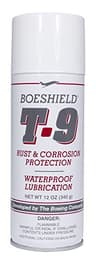 | Because heating a cold shop causes condensation before it causes comfort. Protect the metal first. | $22.99 |
| Starter kit subtotal | $180.87 | |
Live Amazon prices as of October 21, 2026; they change, and we don’t display stale numbers — a tool with no live price shows “Check price” and is left out of the subtotal. #ad How we’re funded.
The short version
Insulate the door and the ceiling before you buy a heater. Hold steady low heat rather than blasting it. Keep combustion out of a dusty room. In summer, move air and work early. And batch the glue-ups and finishing for whenever the shop — or the spare room — is within the range printed on the bottle.
Get that right and a garage becomes a twelve-month shop instead of a seven-month one, which is a bigger upgrade than any tool on this site.
One safety note. Power tools deserve respect, not fear. Read the manual, keep the guards on, wear ANSI-rated eye protection every time, and never rush a cut. When something feels wrong, stop and reset — there is no deadline in a home shop.
Frequently asked questions
How cold is too cold for wood glue?
Every glue states a minimum application temperature on its own bottle, and it applies to the glue, the wood and the room — all three. Below it, the glue cannot form a proper film and the joint may never reach full strength even after it looks dry. Read the label rather than guessing, and remember that a board that has been in a cold garage all week is colder than the air you just heated.
Can you apply a wood finish in a cold garage?
Not below the finish's stated minimum. Cold slows or stops the cure, and water-based products can fail outright — the film does not coalesce and stays soft or cloudy. It is also the reason a finish applied on a cold evening can still be tacky days later. Warm the shop, the wood and the can, and keep it warm for the full cure time, not just the application.
What is the best heater for a garage workshop?
For heating the space, a fan-forced electric unit mounted out of the way, on a thermostat — no combustion, no fumes, and nothing at floor level to be knocked over. The larger ones need a 240-volt circuit, which usually means an electrician. For heating yourself rather than the room, a radiant panel aimed at the bench uses far less energy.
Is a propane heater safe in a woodworking shop?
It carries risks a wood shop specifically amplifies. Unvented combustion adds carbon monoxide and a lot of water vapor to the air, and an open flame in a room with airborne dust and solvent vapor from finishes is a genuine hazard. If you use one, never run it while sanding, cutting or finishing, ventilate properly, and fit a carbon monoxide alarm.
Does heating a garage make tools rust?
Intermittent heating can. Warming the air quickly while heavy cast iron stays cold is exactly the condition that causes condensation on metal. Steady low background heat is much kinder to tools than a blast for two hours once a week. Protecting the metal with wax or a corrosion inhibitor matters more than either.
How do you cool a garage workshop in summer?
Move air, and shift your hours. A high-velocity fan makes a large difference to how bearable a shop feels, and pointed out of the open door it also clears fine dust. Working early in the day, insulating the ceiling and keeping the sun off the door are the other levers. Air conditioning an uninsulated garage is throwing money outside.
Sources
- OSHA — 1910.107, Spray finishing using flammable and combustible materials — Paragraph (g)(3): rags impregnated with finishing material must go into approved metal waste cans immediately after use (accessed August 11, 2026)
- The Wood Database — Wood and moisture — How boards take on and give up moisture, and why lumber must acclimate before it is built with (accessed August 19, 2026)
- USDA Forest Products Laboratory — Wood Handbook (FPL-GTR-190) — The U.S. government reference on wood as an engineering material (accessed July 24, 2026)
Keep reading
How to stop tools rusting in a garage
The condensation problem in detail, and the three-layer routine that prevents it.
Read the guideHow to apply a wood finish
Temperature, dust and cure times — the finishing side of everything on this page.
Read the guideWood glue explained
Open time, clamp time and why a cold glue-up can fail months later.
Read the guideGarage shop power and extension cords
A 240-volt heater is an electrician's job. What the rest of your circuit can handle.
Read the guideDust collection for a small shop
Airborne dust and heaters are a bad combination. What to do about the dust first.
Read the guideSet up a garage woodworking shop
The wider setup — layout, storage, lighting and power for a shared garage bay.
Read the setup guide