Laminated steel that takes a frighteningly keen edge, against softer steel you can sharpen in two minutes flat. Which tradition belongs in a first shop, and the hidden cost nobody mentions.
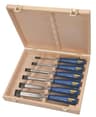
Buy Western chisels first — the Narex 6-piece bench chisel set is the pick. Not because Japanese chisels are worse. Because a Japanese chisel is a sharpening commitment before it is a cutting tool, and a beginner who cannot yet sharpen will get more work done, and enjoy it more, with a softer European-pattern blade that comes back to keen in two minutes on a cheap stone. This is the set for anyone cutting their first joints.
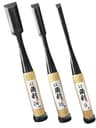
If you already sharpen confidently, buy Japanese — the Kakuri 3-piece bench chisel set is the way in. Laminated construction puts a very hard steel edge on a soft, shock-absorbing body, which is why these take an edge that genuinely feels different in end grain. That is the pick for someone who has flattened a stone, owns a honing guide, and wants to know what the fuss is about without spending a week’s wages.
That is the whole decision, and it is not really about steel quality. Both traditions make excellent tools and bad ones. The question is which trade-off you want to live with, because the two patterns load their cost in different places: a Western chisel is cheap to buy and quick to maintain, and a Japanese chisel is slower to set up, fussier to sharpen, and better at the moment of the cut.
One thing to get out of the way first. “Japanese chisel” on a marketplace covers everything from a laminated bench chisel to a single-steel import with a Japanese-looking handle. The laminated construction is the thing that matters, and it is the thing a listing either states or does not. Everything below assumes the real article.
How this is funded: we earn a commission if you buy through our links, at no extra cost to you. It never changes which tool we recommend, and we’ll tell you plainly when to skip one. Full disclosure.
Quick picks
Ranked on the specs that matter for a beginner and honest buyer fit. Select a row to jump to the full write-up. We haven’t hands-on-tested these — here is exactly what we do instead.
#
Product
Best for
Price
1
Narex 6-Piece Bench Chisel Set
Czech-made chromium-manganese chisels that punch far above their price — crisp bevel edges and a solid feel that reads more like a mid-tier tool than a beginner one. The value pick for someone who wants to sharpen once and get to work.
Kakuri Japanese Wood Chisel Set, 3-Piece Bench Chisels
Three laminated-steel bench chisels in the Japanese pattern: a hard cutting layer forge-welded to a softer body, hooped handles built to be struck. Fewer sizes than a Western set, and a keener edge from each of them.
The chisel set most experienced woodworkers point beginners to: six honest sizes, blue-chip steel that takes a keen edge, and struck-capable handles. It is the safe default, and it is genuinely all you need for years.
Woodcraft's own-brand bench chisels: chrome-vanadium blades hardened to a stated RC 59-63, bubinga handles and a fitted wooden box. Overkill for a first week, but a lovely 'I'm sticking with this' upgrade once you know you enjoy it.
Czech-made chromium-manganese chisels that punch far above their price — crisp bevel edges and a solid feel that reads more like a mid-tier tool than a beginner one. The value pick for someone who wants to sharpen once and get to work.
Strengths
+Chrome-manganese steel holds an edge well for the price
+Fine bevel edges get into dovetails and corners cleanly
+Six metric sizes that map closely to the common imperial widths
Trade-offs
−Metric widths (6-26 mm) instead of fractional inches — a non-issue in practice
−Backs still need lapping before first use
Type
Bench chisel set
In the set
6 pieces
Material / build
Chrome-manganese steel, hornbeam handles
Key spec
6 widths: 6, 10, 12, 16, 20, 26 mm
Best for
Best value if you'll learn to sharpen
Worth knowing. Narex is the enthusiast community's favorite value chisel. The bevels are ground finer than most budget sets, which is exactly what you want for the paring and dovetail work a beginner grows into.
Specs read from the product listing, on July 24, 2026. “Not listed” means the listing doesn’t state that figure.
#2Best way into Japanese chisels
Kakuri Japanese Wood Chisel Set, 3-Piece Bench Chisels
Three laminated-steel bench chisels in the Japanese pattern: a hard cutting layer forge-welded to a softer body, hooped handles built to be struck. Fewer sizes than a Western set, and a keener edge from each of them.
Strengths
+Laminated construction gives a very hard edge on a shock-absorbing body
+Steel hoop at the handle top is designed for mallet work
+Three sizes cover most beginner joinery without buying six
Trade-offs
−Hollow-ground backs need the right flattening technique, not just lapping
−The hoop has to be seated before first use, which nobody tells you
Type
Japanese bench chisel set
In the set
3 pieces
Material / build
Laminated Japanese steel blade
Key spec
3-piece oire nomi pattern with hooped handles
Best for
The Japanese route into chisel work
Worth knowing. The hollow on the back of a Japanese chisel is deliberate: you flatten only a narrow land around the edge, so the back comes flat in minutes rather than an evening.
Specs read from the product listing, on August 19, 2026. “Not listed” means the listing doesn’t state that figure.
#3Best budget Western set
Irwin Marples 6-Piece Bench Chisel Set (M444)
The chisel set most experienced woodworkers point beginners to: six honest sizes, blue-chip steel that takes a keen edge, and struck-capable handles. It is the safe default, and it is genuinely all you need for years.
Strengths
+Six common widths (1/4 to 1 1/2 in) cover almost every beginner cut
+Chrome-vanadium blades sharpen easily and hold an edge
+Impact-resistant handles are rated for mallet blows, not just hand pressure
Trade-offs
−Backs need flattening and honing out of the box (true of every chisel)
−Costs more than the ultra-budget sets — but you buy it once
Type
Bench chisel set
In the set
6 pieces
Material / build
Chrome-vanadium steel, impact-resistant handles
Key spec
6 widths: 1/4, 3/8, 1/2, 3/4, 1, 1 1/2 in
Best for
The one set to buy if you buy one
Worth knowing. Marples is the beginner benchmark for a reason — the steel is easy to sharpen (which matters most when you're learning), and the handles take a mallet, so the set grows with you instead of getting replaced.
Specs read from the product listing, on July 24, 2026. “Not listed” means the listing doesn’t state that figure.
#4Best Western upgrade
WoodRiver 6-Piece Bench Chisel Set (WR-151268)
Woodcraft's own-brand bench chisels: chrome-vanadium blades hardened to a stated RC 59-63, bubinga handles and a fitted wooden box. Overkill for a first week, but a lovely 'I'm sticking with this' upgrade once you know you enjoy it.
Strengths
+Six widths — 1/4, 3/8, 1/2, 5/8, 3/4 and 1 in — so nothing is missing later
+Blades hardened to RC 59-63 per the listing, harder than the budget sets use
+Bubinga handles and a fitted wood storage box, which is what the premium buys
Trade-offs
−Costs several times what a budget set does, and you do not need it to cut cleanly
−Harder steel holds an edge longer but takes more time on the stone to bring back
−The listing does not state whether the handles are rated for mallet blows
Type
Bench chisel set
In the set
6 pieces
Material / build
Chrome-vanadium steel, bubinga handles
Key spec
6 widths: 1/4, 3/8, 1/2, 5/8, 3/4, 1 in
Best for
A treat-yourself upgrade set
Worth knowing. This is a want, not a need. If a $30 set would keep you woodworking and a premium set would sit in a drawer feeling too precious to use, buy the $30 set. But if nice tools make you show up, this is a genuinely nice one.
Specs read from the product listing, on August 27, 2026. “Not listed” means the listing doesn’t state that figure.
The two traditions, side by side
Every row below is a structural difference rather than a brand difference — it holds whichever maker you buy.
Japanese laminated bench chisels compared with Western bench chisels across the differences that affect a beginner
Japanese (laminated bench chisel)
Western (bevel-edge bench chisel)
Blade construction
Laminated: a thin layer of very hard high-carbon steel forge-welded to a soft iron or mild steel body.
One piece of through-hardened alloy steel, typically chrome-vanadium or a carbon tool steel.
Edge in use
Harder, so it stays keen noticeably longer in clean hardwood and pares end grain beautifully.
Softer, so it dulls sooner, but it rolls rather than chips when it meets something it dislikes.
Failure mode
Chips. A hard edge that meets a hidden nail, or a dropped chisel on a concrete floor, loses a crescent of steel.
Dents and rolls. Ugly, but a dozen strokes on a stone usually takes it out.
Sharpening
The hard layer is slow on anything but a decent waterstone or diamond plate, and the hollow back has to be kept flat.
Quick on almost any abrasive, including a cheap combination stone or sandpaper on glass.
Out-of-the-box setup
Expect work: the back needs flattening and, on hooped chisels, the hoop needs seating before you strike it.
Usually usable after honing the bevel and flattening the first inch or so of the back.
Striking
A steel hoop on the handle is designed to take a steel hammer; some patterns are not meant for striking at all.
A wood or plastic handle takes a wooden or dead-blow mallet. Never a steel hammer.
Sizes in a starter set
Often three, in metric widths that sit near 1/4, 1/2 and 1 in.
Usually six, covering 1/4 in through 1 in or wider.
Cost to start
More per chisel, fewer chisels, plus a stone that can actually cut hard steel.
Less per chisel, more of them, and whatever stone you already own.
How we judged these
We own none of these chisels and we do not run a test lab, so nothing here is a measured result. Specs come from the listing or the manufacturer’s published page, and the ranking is an argument about beginner fit — here is exactly what we do instead of testing. The criteria:
How much setup the tool needs before it cuts. A chisel you have to spend an hour on is a different purchase from one you hone and use, and beginners consistently underestimate this.
Whether the edge survives a beginner’s mistakes. Hitting a hidden nail, prying with the tip, levering out waste — these happen, and they punish a hard edge far more than a soft one.
What stone the steel demands. A chisel that only sharpens properly on an expensive waterstone has a hidden price, and that price belongs in the comparison.
Sizes included. A six-piece set covers nearly every beginner joint; a three-piece set is a taste of a tradition rather than a kit.
Handle and striking method. Mismatching a mallet to a handle splits handles, and a hooped Japanese handle is a different contract from a lacquered Western one.
The sharpening consequence, which is the real decision
Japanese chisel steel is harder, and harder steel cuts slower on an abrasive. On an inexpensive combination waterstone a Western chisel comes back to a working edge in a couple of minutes; the same stone on laminated Japanese steel feels like it is polishing rather than cutting. That is why people who use these tools seriously run diamond plates or harder waterstones, and why the honest price of a Japanese chisel includes the stone.
The second difference is the back. A Japanese chisel has a hollow-ground back with a narrow flat land around the edge, and that land is what you polish. It is a clever design — you are only ever lapping a thin rim instead of a whole face — but it is also unforgiving: lap through the land and the chisel needs the hollow re-established, which is beyond a first-year skill. A Western chisel back is simply flat, and flattening it is the dull, obvious job it appears to be. If you have never flattened a back, read our sharpening stones guide before deciding which tradition you are buying into.
Either way, the single best purchase alongside a first set of chisels is a honing guide. It removes the one variable — holding a consistent angle — that makes beginner sharpening unreliable, and it costs less than one good chisel.
What each tradition is genuinely better at
Japanese chisels win at paring and at dovetails
Where a very hard, very keen edge pays off is a cut that slices rather than chops: paring a tenon cheek to a line, cleaning the baseline of a dovetail socket, trimming end grain where a dull edge crushes fibers instead of severing them. The thin, flat sides of a Japanese bench chisel also get into a dovetail corner better than many Western chisels, whose side bevels are often ground thicker than the pattern implies. If dovetails are why you are here, see how to cut a dovetail by hand.
Western chisels win at everything a beginner does most
Chopping a mortise, levering out waste, cleaning up a saw cut that went wrong, trimming a plug flush: this is what a first year of chisel work actually consists of, and it is exactly the work that chips hard steel. A Western set also comes in more sizes for less money, and having the right width available matters more than having a superior edge on the wrong width.
Does the handle difference matter? Yes, for one reason
Many Japanese bench chisels carry a steel hoop at the end of the handle, which exists so the chisel can be struck with a steel hammer. On a new chisel that hoop is often proud of the wood and has to be seated — compress the wood over it with a hammer before use — or it works loose. A Western chisel handle takes a wooden or dead-blow mallet and nothing harder; a steel hammer on a lacquered handle destroys it. Our mallet guidecovers which striking tool goes with which handle, and OSHA’s hand tool standard is blunt about the general principle: a tool with a split, loose or mushroomed handle is not a tool you keep using.
Frequently asked questions
Are Japanese chisels better than Western chisels?+
They hold a keener edge for longer, and they are harder to sharpen and more likely to chip. That is the whole trade. For paring and fine joinery in clean hardwood a laminated Japanese chisel is genuinely better at the moment of the cut; for chopping, levering and general shop work a softer Western chisel is the more practical tool because it comes back to sharp in two minutes on any stone.
Should a beginner buy Japanese or Western chisels?+
Western, in almost every case. A Japanese chisel is a sharpening commitment first: the hard laminated steel is slow to sharpen on a cheap stone, and the hollow back has to be kept flat without lapping through the land around the edge. Learn to sharpen on a forgiving European-pattern set, then buy a Japanese chisel once sharpening is a habit rather than a project.
Why do Japanese chisels chip?+
Because the cutting layer is very hard high-carbon steel, and hard steel fails by fracturing rather than bending. A Western chisel that meets a hidden nail or gets used as a pry bar dents and rolls its edge; a Japanese chisel in the same situation loses a crescent of steel that has to be ground out. Nothing is wrong with the tool - it is the cost of the edge.
Do Japanese chisels need special sharpening stones?+
Effectively yes. The hard laminated layer cuts slowly on inexpensive combination waterstones, which is why people who use these tools seriously run diamond plates or harder waterstones. Budget for the stone as part of the chisel purchase, because a Japanese chisel you cannot sharpen is worse than a Western chisel you can.
Can you hit a Japanese chisel with a steel hammer?+
A hooped bench chisel is designed for exactly that - the steel ring at the end of the handle exists to stop the wood splitting under a steel hammer. Seat the hoop before first use by compressing the wood over it. A Western chisel with a wood or plastic handle takes a wooden or dead-blow mallet only.
Sources
OSHA — 1926.301, Hand tools — Paragraph (a): unsafe hand tools must not be issued or used. Paragraph (d): the wooden handles of tools must be kept free of splinters and cracks, and kept tight in the tool — which is the standard behind fitting a handle to a bare rasp tang (accessed August 31, 2026)