Joinery vs Fastening for Beginners
Cut joints, or screws and glue? The honest strength numbers, what each one really costs a beginner in tools and time, and which to learn first.
How this is funded: we earn a commission if you buy through our links, at no extra cost to you. It never changes which tool we recommend, and we’ll tell you plainly when to skip one. Full disclosure.
The short answer
Fasten now, learn joinery in parallel. Screws and a drill will build every piece of shop furniture you need this year, and a beginner who waits until they can cut a dovetail builds nothing. But a screwed joint is roughly half as strong as a cut one in the test numbers below, it looks like what it is, and it will let you down on anything that gets racked or sat on. So use fasteners where they belong, and learn one cut joint at a time so that in a year the choice is yours rather than your tool drawer’s.
This page is the fork you hit immediately after deciding you want woodworking rather than carpentry. Everyone hits it, almost nobody explains it honestly, and the wrong turn costs you either a year of not building or a shelf of furniture that comes apart.
What each word actually means
Joineryholds two pieces together with the shape of the wood itself. You cut interlocking geometry — a tenon into a mortise, tails into pins, a tongue into a groove — and glue the surfaces that touch. Where those surfaces are long grain against long grain, modern wood glue is stronger than the wood around it, so the joint effectively becomes one piece.
Fasteningholds two pieces together with hardware driven through them: screws, nails, brads, pocket screws, dowel pins, plates and brackets. The wood is not reshaped to carry the load; a piece of metal carries it instead. That is not cheating — a deck, a wall and most of the cabinets in your kitchen are fastened, not joined — but it is a different mechanism with different limits. If fastening is the route you take, it is worth knowing which screws to buy and what pilot hole each one wants, because a stripped head or a split board is the usual way this route goes wrong. Nails are the same story one gauge at a time — brad nailer vs finish nailer covers which thickness holds what, and why in furniture the nail is usually a clamp rather than the structure.
The confusing middle case is the dowel, which is a wooden fastener. It behaves more like joinery than a screw does, because the pin and the hole walls are both long grain and the glue has something real to hold, which is exactly why it tests between the two.
Joinery vs fastening, side by side
| Joinery (cut joints) | Fastening (screws and nails) | |
|---|---|---|
| How it holds | Interlocking wood geometry plus long-grain glue surfaces | A metal fastener driven through or into the parts |
| Tested strength | Mortise and tenon averaged 222 lb; dowels 156 lb (Woodgears, spruce) | Pocket-hole screws averaged 99 lb in the same rig |
| Tools to start | Chisels, a saw that cuts to a line, a square, and clamps | A drill and a jig - often nothing else |
| Time to first result | Weeks of practice before a joint closes cleanly | About twenty minutes, including reading the instructions |
| How it looks | The joint is the decoration - visible tails, pins, through-tenons | Hardware you hide, plug or put on the inside face |
| Handles wood movement | Well, when designed for it - a frame and panel floats by design | Badly across a wide solid panel; a fixed screw resists the movement and splits it |
| Repairability | Glue and clamp it again, or cut the joint out and replace the part | Back the screw out and drive a new one, often in the same afternoon |
| Belongs on | Chairs, tables, drawers, doors, anything racked or looked at closely | Shop shelves, garage cabinets, jigs, bench bases, hidden carcasses |
The strength numbers, honestly
Most articles on this question assert that joinery is stronger and leave it there. Here are figures from a test we did not run. Matthias Wandel at Woodgears built a screw-jack rig, mounted spruce samples 17 mm by 59 mm, loaded them 15 cm from the joint and broke them:
- Pocket-hole screws: failed at 95, 120, 75 and 105 pounds — an average of 99.
- Dowel joints: 160, 160 and 149 pounds — an average of 156.
- Mortise and tenon with yellow glue: 235, 235 and 195 pounds — an average of 222.
He also tested whether adding glue helps a pocket-hole joint. It moved the average to 111 pounds, which is close to noise, and his conclusion was that glue does not make these joints meaningfully stronger. That is not an argument against glue — it costs almost nothing and it stops a seam creeping — it is an argument against believing the glue is what holds a screwed joint together. Our note on what wood glue actually does explains why an end-grain glue line disappoints and a long-grain one does not.
Read those numbers the right way round. Roughly two to one is a real difference and it decides a chair. It is also about a hundred pounds of resistance on a single small softwood joint at a long lever arm, and a garage shelf built from a dozen of them, screwed back to a wall, will never see anything close to that. “Weaker” is not the same as “not strong enough.”
The cost and time difference nobody prices
Strength is the argument people have. Cost and time are the reason they actually choose. Fastening is close to free if you already own a drill: a jig and a box of screws, and you are building the same day. Joinery costs more in tools you keep forever — chisels, a saw that tracks a line, a square you trust, clamps to hold the glue-up — and considerably more in practice before your first joint closes without a gap.
The honest framing is that fastening buys you finished projects and joinery buys you capability. A beginner needs both, and the order that works is fasteners first so that something exists, joinery alongside so that in a year the ceiling is higher.
What each route costs to start
Here is the shortest honest version of both, priced from the live retail feed rather than from memory.
| Tool | Why you need it | Price |
|---|---|---|
 | The fastening route in one purchase. Two guides and a face clamp; strong enough for every shop project. | $49.00 |
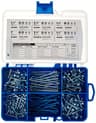 | Pocket screws are a specific fastener, not a wood screw you own. Coarse and fine thread in one box. | $22.97 |
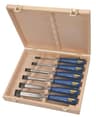 | The joinery route starts here. Six widths, handles rated for a mallet, steel that sharpens easily. | $69.99 |
 | A saw that tracks a line. Cutting to the line accurately is the skill every cut joint depends on. | $42.80 |
| Starter kit subtotal | $184.76 | |
Live Amazon prices as of October 21, 2026; they change, and we don’t display stale numbers — a tool with no live price shows “Check price” and is left out of the subtotal. #ad How we’re funded.
Note what that table shows and what it does not. It is not a “buy all four” list — it is two routes side by side, and the first two rows will build you a workbench this weekend while the last two are the ones you still own in twenty years. If you are only buying one thing today, buy the one that matches the project in front of you.
Which to use, project by project
- Shop shelving, garage cabinets, a workbench base: fasten. These are hidden, statically loaded and want to exist now. Our simple workbench build is exactly this case.
- Boxes, drawers, small cases: either, and this is the best place to practice. A rabbet or a dado is a real cut joint that a beginner can manage, and the piece is small enough that a failure costs an afternoon.
- Anything with legs that gets sat on or leaned on: joinery. A chair works its joints in every direction, which is the exact load the test above applies, and it is the classic place a screwed frame eventually racks loose.
- A wide solid-wood top with a frame under it: joinery principles, whichever hardware you use. A solid panel changes width with the seasons, and fixing it hard along its width gives it nowhere to go. Wood movement is the quiet cause of more beginner failures than weak joints are.
- Outdoor structure — a deck, a shed, a frame: fasten, with hardware rated for it. This is carpentry rather than furniture, and structural connectors and treated fasteners are the right answer rather than a compromise.
The learning path that actually works
If you want a sequence rather than a philosophy, this is the one we would give a beginner:
- Build two things with fasteners. A shelf and a bench. You learn to measure, cut square and assemble without also fighting a joint you cannot cut yet.
- Learn the rabbet and the dado. Both are single straight cuts, both locate the parts for you, and both are genuinely cut joints. Suddenly a box goes together square by itself.
- Learn to sharpen. Every joinery problem a beginner blames on skill is at least half a dull edge. Sharpening chisels is the cheapest skill upgrade in the hobby.
- Cut a mortise and tenon. The joint that makes real furniture possible, and the one the strength test rewards most.
- Cut a dovetail, when you want to. It is the showpiece rather than the necessity, and it is learnable far earlier than its reputation suggests.
Notice that fasteners never leave the workflow. Even at step five you are still screwing shop fixtures together, because that was always the right tool for those jobs. What changes is that the choice becomes deliberate.
Both routes need tools, and the tool list is shorter than the debate suggests: the best tools for building furniture covers the six that take you from shelving to something somebody sits at, with the honest reason each one earns its place and the order to add them.
Frequently asked questions
Is joinery stronger than screws?
Usually yes, and by a wide margin. In an independent bench test at Woodgears, spruce samples loaded 15 cm from the joint failed at an average of 99 pounds for pocket-hole screws, 156 pounds for dowels and 222 pounds for a glued mortise and tenon. So a cut joint carried roughly twice what the screwed joint did. That gap matters on a chair and is irrelevant on a shop shelf.
Should a beginner learn joinery or just use screws?
Both, in that order of urgency: use screws now so you finish things, and learn one cut joint at a time so you are not stuck with screws forever. The mistake in one direction is never building anything because you cannot cut a dovetail yet. The mistake in the other is building a chair with pocket screws and being surprised when it racks.
Does glue make a screwed joint stronger?
Barely, in the case most beginners care about. The same Woodgears test added glue to pocket-hole joints and the average went from 99 to 111 pounds, which the author treated as no meaningful gain. The reason is that the glue line is end grain against long grain, and end grain absorbs glue without building much strength. Use glue anyway - it costs almost nothing and it stops the seam creeping - but do not count it as the thing holding the joint together.
What is the difference between joinery and fastening?
Joinery holds parts together with the shape of the wood itself: interlocking cuts, plus glue on long-grain surfaces that are genuinely strong. Fastening holds parts together with hardware driven through them - screws, nails, brads, pocket screws, plates and brackets. Joinery takes tools and practice and rewards you with strength and looks; fastening takes a drill and rewards you with speed.
What is the easiest strong joint for a beginner?
The pocket-hole joint if you want a result today, and the rabbet or the dado if you want a joint that is both easy and genuinely cut. A pocket-hole jig needs no chisel work and pulls the joint tight while the glue cures. A rabbet can be cut with a saw or a router and locates the parts for you, so a box goes together square without much skill.
Do I need chisels if I use screws for everything?
You will want them sooner than you think. Chisels are not only a joinery tool - they pare a proud edge flush, clean out a hinge mortise, and fix the parts that do not quite fit, which is most of them at the start. They are also the cheapest way to find out whether cutting joints is something you enjoy.
When is a screw the right answer, not a compromise?
Whenever the joint is hidden, carries a static load and needs to exist this weekend: shop shelving, garage cabinets, jigs, workbench bases, cleats screwed to a wall. Pros use fasteners constantly in exactly these places. A screw is only a compromise when it is standing in for joinery on something that gets racked, sat on, or looked at closely.
Can you mix joinery and fasteners in one project?
Yes, and most real projects do. A cabinet can have a joined face frame and a screwed-together carcass hidden behind it. The rule that keeps you out of trouble is to put the cut joints where the loads twist and the eyes land, and the fasteners where the piece is hidden and the load only pushes down.
Sources
- Woodgears — Testing pocket holes against mortise and tenon and dowel joints — An independent bench test on spruce, loaded 15 cm from the joint: pocket-hole samples failed at 95, 120, 75 and 105 lb (99 lb average), dowel joints at 160, 160 and 149 lb (156 lb), and mortise-and-tenon samples with yellow glue at 235, 235 and 195 lb (222 lb). A follow-up adding glue to the pocket-hole joints averaged 111 lb, and the author's conclusion was that glue does not make these joints stronger (accessed September 4, 2026)
- USDA Forest Products Laboratory — Wood Handbook (FPL-GTR-190) — The U.S. government reference on wood as an engineering material (accessed July 24, 2026)
- The Wood Database — Dimensional shrinkage — How wood moves with moisture — the cause of most beginner joint failures (accessed July 24, 2026)
Keep reading
Wood joints explained
The ten joints a beginner meets, what cuts each one, and the four worth learning first.
Read the guideBest pocket hole jig for beginners
The fastening route in full: six jigs compared, with the strength numbers and the screw rule.
See the picksBest chisels for beginners
The joinery route starts here. Five sets compared, and the one to buy if you buy one.
See the picksHow to cut a dovetail by hand
The joint at the far end of the joinery road, broken into steps a beginner can actually follow.
Read the guideWood glue explained
Why a long-grain glue line is stronger than the wood and an end-grain one is nearly worthless.
Read the guideWoodworking vs carpentry
The distinction underneath this one - precision joinery against structural speed.
Read the comparisonBest clamps for beginners
Cut joints need clamping while the glue cures. Which clamps to buy first, and how few you can get away with.
See the picksThe complete beginner tool kit
Both routes start from the same eight tools. The full kit, priced from live retail data.
See the whole kit