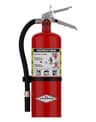
Most extinguishers sold for garages cannot touch a wood fire. What the letters and numbers on the label mean, six things that make a shop survivable, and the fire a beginner is most likely to start.
A woodworking shop is a room where you keep a large quantity of dry fuel, cut it into smaller and more flammable pieces, and then introduce heat, sparks and solvents to it. That is not alarmism — it is a plain description of the hobby. The strange part is how many first shops get a workbench, a dust collector and a pegboard before they get a fire extinguisher, and how many of the ones that do have an extinguisher own the wrong one.
Here is the lens this page compares on, in order of how much it matters. The A number — the first figure in a rating like 2-A:10-B:C. It is the only part of the label that says anything about wood, paper and sawdust, and a startling number of extinguishers sold for garages do not have one at all. Reach and discharge time — how far the stream throws and how many seconds it lasts, because those two numbers together decide whether you get one attempt or two. Whether it will be mounted where you can reach it — an extinguisher behind a stack of plywood is a decoration, so a bracket in the box is worth more than a slightly better rating. And what the extinguisher cannot do — which is where the heat alarm, the fire blanket and the oily-rag can on this page come in, because the two fires most likely to start in a beginner’s shop will both start when nobody is standing there.
One thing this page is not: a claim that we have discharged these units. We have not, and neither has anyone honest writing a page like this. Every specification below was read from the seller’s own listing on the date shown on each card, and where a listing does not state a figure the card says “Not listed” rather than guessing — including when the missing figure is the one that matters most. Here is exactly what we do instead of testing.
How this is funded: we earn a commission if you buy through our links, at no extra cost to you. It never changes which tool we recommend, and we’ll tell you plainly when to skip one. Full disclosure.
Quick picks
Ranked on the specs that matter for a beginner and honest buyer fit. Select a row to jump to the full write-up. We haven’t hands-on-tested these — here is exactly what we do instead.
#
Product
Best for
Price
1
First Alert HOME2PRO Rechargeable Fire Extinguisher (FE2A10GR)
The cheapest unit we found that publishes the rating a shop actually needs. The listing states it is UL rated 2-A:10-B:C and meets the minimum 2-A:10-B:C code requirement, with an all-metal valve and a wall hook in the box — which is the whole specification, at a price that removes every excuse for not owning one.
Kidde Pro 210 Commercial Fire Extinguisher, 2-A:10-B:C (PRO-4MP-1)
The unit that tells you how it performs instead of asking you to assume. The listing publishes a 13 to 15 second discharge time, a 12 to 18 foot range and 100 PSI operating pressure alongside the 2-A:10-B:C rating — numbers almost nobody else at this price prints, and the discharge time is the one that decides whether you get a second attempt.
Amerex B402 5 lb ABC Dry Chemical Fire Extinguisher with Wall Bracket
The serviceable one. Amerex builds to the commercial pattern that fire-protection companies refill rather than replace, and the all-metal aluminum valve is the part that makes a twenty-year service life plausible. Buy this if you would rather own one extinguisher for the life of the shop than three in a row.
First Alert Hardwired Rate-of-Rise Heat Alarm with Battery Backup (HD6135FB)
The detector for the room a smoke alarm cannot live in. The listing's own words are that it is a heat detector 'ideal for use in areas unsuitable for smoke alarm installation', which is the exact description of a dusty garage — and it senses both high temperature and a rapid rise, so it triggers before a slow fire becomes a fast one.
Prepared Hero Emergency Fire Blanket, 39 x 39 in (EB1), 2-Pack
The thing to grab when the fire is a bin, a rag pile or a small pan of solvent and you would rather not fill the shop with powder. Two layers of woven fiberglass with a fire-retardant film between them, rated by the listing to isolate temperatures up to 1022 degrees Fahrenheit. It smothers instead of blasting, which means nothing gets scattered.
The purchase that addresses the fire most likely to actually start in a beginner's shop. Oil-finish rags self-heat as they cure, and this is the engineered answer: a self-closing lid the listing says opens no more than 60 degrees, a ventilated raised base so heat disperses instead of building, and OSHA, FM and UL recognition behind it.
First Alert HOME2PRO Rechargeable Fire Extinguisher (FE2A10GR)
The cheapest unit we found that publishes the rating a shop actually needs. The listing states it is UL rated 2-A:10-B:C and meets the minimum 2-A:10-B:C code requirement, with an all-metal valve and a wall hook in the box — which is the whole specification, at a price that removes every excuse for not owning one.
Strengths
+Listing states a UL rating of 2-A:10-B:C — the A number is the one that covers wood, and plenty of cheap units have none
+All-metal construction with a commercial-grade metal valve and trigger, not a plastic head
+Wall hook and a color-coded corrosion-resistant gauge are included, so it can be mounted and checked from across the shop
Trade-offs
−Rechargeable only by a certified professional — at this price most owners will replace it instead, which is wasteful
−A hook is not a strap bracket, so it can be knocked off a wall more easily than a bracketed unit
−Mono ammonium phosphate is a powder: using it means a fine dust through every open tool chest in the shop
Type
ABC dry chemical fire extinguisher
In the set
Single tool
Material / build
All-metal construction, commercial-grade metal valve and trigger
Key spec
UL rated 2-A:10-B:C; mono ammonium phosphate; wall hook included
Best for
The one extinguisher to hang by the shop door
Worth knowing. The listing's own bullet names the model as HOME2PRO and states a 12-year limited warranty. It also lists an item weight of 9.6 lb, which is the packaged figure — the cylinder itself is lighter than that number suggests.
Specs read from the product listing, on August 31, 2026. “Not listed” means the listing doesn’t state that figure.
#2Best published numbers
Kidde Pro 210 Commercial Fire Extinguisher, 2-A:10-B:C (PRO-4MP-1)
The unit that tells you how it performs instead of asking you to assume. The listing publishes a 13 to 15 second discharge time, a 12 to 18 foot range and 100 PSI operating pressure alongside the 2-A:10-B:C rating — numbers almost nobody else at this price prints, and the discharge time is the one that decides whether you get a second attempt.
Strengths
+Rating and performance both published: 2-A:10-B:C, 13-15 second discharge, 12-18 foot range
+All-metal valve assembly with an impact-resistant handle and an easy-pull safety pin
+Rechargeable, so a partial discharge during a small fire does not automatically write the unit off
Trade-offs
−Costs meaningfully more than the First Alert for the same 2-A:10-B:C rating
−The listing does not mention a bracket or wall hook, so budget for a mount
−Thirteen to fifteen seconds sounds generous and is not — it is roughly two attempts, badly aimed
Type
ABC dry chemical fire extinguisher
In the set
Single tool
Material / build
Impact-resistant steel, metal valve assembly
Key spec
2-A:10-B:C; 13-15 s discharge, 12-18 ft range, 100 PSI
Best for
Knowing exactly how long you have and how far it reaches
Worth knowing. Listed weight is 6.5 lb for a 4 lb charge. That matters more than it sounds: an extinguisher you can hold steady one-handed while you aim low is an extinguisher you will actually use properly.
Specs read from the product listing, on August 31, 2026. “Not listed” means the listing doesn’t state that figure.
#3Best buy-it-once
Amerex B402 5 lb ABC Dry Chemical Fire Extinguisher with Wall Bracket
The serviceable one. Amerex builds to the commercial pattern that fire-protection companies refill rather than replace, and the all-metal aluminum valve is the part that makes a twenty-year service life plausible. Buy this if you would rather own one extinguisher for the life of the shop than three in a row.
Strengths
+All-metal valve construction with an aluminum valve — the part that decides whether a shop will refill it
+Wall bracket included, so it mounts properly rather than leaning behind a bin
+The commercial B-series is the pattern local fire-protection firms actually stock parts for
Trade-offs
−The listing states the Class A:B:C letters but no numeric UL rating, so you cannot confirm the 2-A:10-B:C code minimum from the page itself
−Roughly double the price of the First Alert, for a rating the listing does not publish
−A 5 lb charge in a full-size cylinder is more extinguisher than a single-bay garage needs
Type
ABC dry chemical fire extinguisher
In the set
Single tool
Material / build
Steel cylinder, all-metal aluminum valve
Key spec
5 lb ABC dry chemical, Class A:B:C; wall bracket included
Best for
Buying once and having it recharged instead of replaced
Worth knowing. The listing gives the weight in kilograms (3 kg) and the model as B402, part number 90-402. Annual servicing is the reason to buy a commercial unit at all — OSHA requires an annual maintenance check on workplace extinguishers, and the same habit is what keeps a garage unit from being a decoration.
Specs read from the product listing, on August 31, 2026. “Not listed” means the listing doesn’t state that figure.
#4Best early warning
First Alert Hardwired Rate-of-Rise Heat Alarm with Battery Backup (HD6135FB)
The detector for the room a smoke alarm cannot live in. The listing's own words are that it is a heat detector 'ideal for use in areas unsuitable for smoke alarm installation', which is the exact description of a dusty garage — and it senses both high temperature and a rapid rise, so it triggers before a slow fire becomes a fast one.
Strengths
+Rate-of-rise sensing catches a fast-developing fire, not just a temperature threshold
+Sold specifically for spaces where a smoke alarm is unsuitable — sawdust and vehicle exhaust are exactly that
+85-decibel alarm with battery backup, so a tripped breaker does not silence it
Trade-offs
−Hardwired to 120 V — a garage with no ceiling junction box needs an electrician before this is an option
−A heat alarm is slower than a smoke alarm by design; it is the right device here, but it is not an upgrade over a smoke alarm elsewhere in the house
−The remote test and mute feature needs a household remote that is not included
Type
Rate-of-rise heat alarm
In the set
Single tool
Material / build
Not listed
Key spec
Rate-of-rise heat sensing, 85 dB alarm, hardwired with battery backup
Best for
Early warning in a dusty shop where a smoke alarm nuisance-trips
Worth knowing. An extinguisher only helps if you are standing there. Detection is what covers the other twenty-three hours — and it is the cheapest line item on this page.
Specs read from the product listing, on August 31, 2026. “Not listed” means the listing doesn’t state that figure.
#5Best for a small contained fire
Prepared Hero Emergency Fire Blanket, 39 x 39 in (EB1), 2-Pack
The thing to grab when the fire is a bin, a rag pile or a small pan of solvent and you would rather not fill the shop with powder. Two layers of woven fiberglass with a fire-retardant film between them, rated by the listing to isolate temperatures up to 1022 degrees Fahrenheit. It smothers instead of blasting, which means nothing gets scattered.
Strengths
+Smothers rather than scatters — no powder through the tool chest and no cleanup afterwards
+Two in the pack, so one can live by the finishing bench and one by the door
+Costs a fraction of an extinguisher and takes almost no wall space
Trade-offs
−You have to walk up to the fire and lay it on, which an extinguisher's 12-foot range does not require
−The listing cites CE conformity to EN 1896:1997 — a European marking claim, not a UL fire extinguisher rating
−39 inches square covers a waste bin or a rag pile, not a burning bench or a wall
Type
Fire blanket
In the set
2 pieces
Material / build
Two layers of woven fiberglass with a fire-retardant inner film
Key spec
39 x 39 in; listing states isolation of temperatures up to 1022°F (550°C)
Best for
Small contained fires you do not want to spray powder over
Worth knowing. A blanket is an addition to an extinguisher, never a replacement for one. It is the right first reach for a small, contained, reachable fire — and the wrong answer to anything that has already climbed a wall.
Specs read from the product listing, on August 31, 2026. “Not listed” means the listing doesn’t state that figure.
The purchase that addresses the fire most likely to actually start in a beginner's shop. Oil-finish rags self-heat as they cure, and this is the engineered answer: a self-closing lid the listing says opens no more than 60 degrees, a ventilated raised base so heat disperses instead of building, and OSHA, FM and UL recognition behind it.
Strengths
+Self-closing lid limits oxygen to the rags, which is the mechanism that stops the runaway
+Ventilated, elevated bottom lets air circulate to disperse heat — the point of the design
+Foot-operated treadle means you can drop a rag in without putting your hands anywhere near it
Trade-offs
−Costs more than a beginner's first three hand tools put together
−A 15-inch round footprint is real floor space in a single-bay garage
−Pointless if you only ever use water-based finishes — read the label before you spend this
Type
Oily waste safety can
In the set
Single tool
Material / build
Galvanized steel
Key spec
6 gallon; self-closing lid opens no more than 60°; foot treadle
Best for
The oily-rag fire an extinguisher will not be there to stop
Worth knowing. The listing states the can meets OSHA regulations and is certified by FM Global and UL. If the price stops you, the free version of this is NFPA's own advice: never leave rags in a pile, spread them outside to dry weighed down, then put the dried rags in a metal container with a tight cover.
Specs read from the product listing, on August 31, 2026. “Not listed” means the listing doesn’t state that figure.
What the letters and numbers actually mean
The label on an extinguisher is two pieces of information wearing one costume. The letters say what kind of fire it is rated for. The numbers say how much of that fire it can handle.
Class A — the U.S. Fire Administration defines this as ordinary materials like cloth, wood and paper. In a woodworking shop this is almost everything: the offcut bin, the sawdust under the bench, the plywood leaning against the wall, the shop rag on the floor.
Class B — combustible and flammable liquids. Mineral spirits, lacquer thinner, the half-empty can of oil finish, the gas can for the mower that lives in the same garage.
Class C — electrical equipment. Not a fuel so much as a warning: it means the agent will not conduct electricity back up the stream at you, which matters when the thing on fire is a shop vac or an extension cord.
The numbers are the part nobody explains. In a rating like 1-A:10-B:C, the USFA describes the A figure as an equivalence to water — a 1-A unit gives you roughly the equivalent of 1.25 gallons — and the B figure as the square footage of flammable liquid fire it can handle, so 10-B covers up to about ten square feet. Class C never carries a number, because it is a property of the agent rather than a quantity.
Which gives you the single rule this whole page rests on: 2-A:10-B:C is the sensible floor for a woodworking shop. The A number is what covers wood. Something with a 1-A rating will do at a pinch in a small space. Something with no A rating at all is, in a room full of timber, close to useless.
Where it goes, and the rule behind it
OSHA’s portable fire extinguisher standard is written for workplaces, not garages, but the reasoning transfers exactly. 1910.157(c)(1) requires extinguishers to be mounted, located and identified so that they are readily accessible without putting anyone at risk of injury to get to them. 1910.157(d)(2) sets the travel distance to a Class A extinguisher at 75 feet or less, and (d)(4) tightens that to 50 feet from a Class B hazard area.
In a single-bay garage those distances are trivially met by any position in the room, which makes it tempting to ignore the rule. Don’t. The useful part is the phrase “readily accessible”, and the way to apply it in a small shop is this:
Mount it near the exit, not near the hazard. You want to be between the fire and the door when you reach for it, never the other way around. An extinguisher mounted over the bench means walking towards the fire to fetch it.
Mount it, actually mount it. A cylinder standing in a corner ends up behind a sheet of plywood within a month. This is why a bracket in the box is worth more than a marginally better rating.
A second one by the finishing area is not overkill if you use solvent finishes. That is your Class B hazard area, and it is usually the furthest corner from the door.
Keep the gauge visible. Every unit on this page has a color-coded pressure gauge for a reason — you should be able to confirm it is still charged from across the room without touching it.
The fire a beginner is most likely to start
It is not the table saw. It is a pile of rags.
Oil-based finishes cure by oxidation, and oxidation releases heat. A rag laid flat sheds that heat into the air. A rag screwed into a ball and dropped in a bin with three others cannot, so the heat accumulates in the middle of the pile until the cloth reaches its own ignition temperature and starts burning with nothing to set it off. It happens hours after you have gone inside, which is exactly why the extinguisher on the wall is not the thing that saves you.
NFPA’s own tip sheet is unusually blunt about the fix: never leave cleaning rags in a pile; take them outside at the end of the day, spread them out or hang them and weigh them down so they cannot blow into a heap; then put the dried rags in a metal container with a tight cover, kept cool and out of direct sunlight. OSHA’s spray-finishing standard, 1910.107(g)(3), gets to the same place from the workplace side by requiring rags impregnated with finishing material to go into an approved metal waste can.
The Justrite can above is the engineered version of that advice, and it is the most expensive item on this page by some distance. If the price stops you, the free version is genuinely almost as good, as long as you actually do it every single time. What is not acceptable is the third option, which is what most people do: ball the rags up and drop them in the shop bin on the way out. There is more on this in how to apply a wood finish, where the rag warning sits alongside the rest of the finishing process.
Sawdust, and being honest about it
The internet loves a dust explosion. In an industrial mill with a pneumatic conveying system and a dust cloud suspended in an enclosed duct, that is a real and well-documented hazard. In a two-car garage with a shop vac, it is not the thing to worry about, and any page that tells you it is has confused a factory with your house.
What is worth worrying about is much more boring: fine dust settles on everything, including the warm parts of tools, light fittings and space heaters. A layer of sanding dust on a halogen work light or a garage heater element is a slow-motion ignition source, and it costs nothing to avoid. Vacuum the shop rather than blowing it out with compressed air, keep heaters away from the sanding station, and read dust collection for a small shop for the collection side and heating and cooling a garage workshop for where to put a heater and where not to.
The minimum kit, with a real total
Three items cover suppression, detection and the small stuff. Prices come from the live feed, so this is what it costs today rather than what it cost when the page was written.
Tool
Why you need it
Price
First Alert HOME2PRO Rechargeable Fire Extinguisher (FE2A10GR)
The 2-A:10-B:C rating is the part that covers wood. Mount it between the bench and the door.
Live Amazon prices as of October 21, 2026; they change, and we don’t display stale numbers — a tool with no live price shows “Check price” and is left out of the subtotal. #adHow we’re funded.
Before you use it: the decision that comes first
Owning an extinguisher creates a temptation to be brave, and the USFA is clear that fighting a fire is a decision with preconditions rather than a reflex. Its checklist is worth memorizing, because you will not be reading it at the time. Fight the fire only if all of these are true: everyone else has been alerted and the fire service has been called; you are physically capable of using the extinguisher; the fire is small and contained in a single object; you are not being exposed to toxic smoke; and you have a clear escape route behind you. If any one of those is not true, the correct response is to get out and call 911.
The technique is the four-step PASS sequence: Pull the pin and release the locking mechanism, Aim low at the base of the fire, Squeeze the lever in a controlled way, and Sweep side to side across the flames. Aiming at the flames rather than the base is the classic error, and it wastes the whole cylinder in about ten seconds — which is roughly all the Kidde Pro 210 publishes, and the best argument on this page for reading the four steps before you need them.
Keeping it from becoming a decoration
OSHA requires workplace extinguishers to have an annual maintenance check and the date recorded, per 1910.157(e)(3). There is no inspector coming to your garage, so the practical version is a habit:
Look at the gauge every time you do a shop clean-up. Needle in the green, pin in place, seal unbroken. Ten seconds.
Once a year, take it off the wall and turn it upside down a few times. Dry chemical agent can settle and cake over years of sitting still. Handling it once a year is free.
Any discharge means it is spent. Even a one-second burst breaks the seal and the unit will slowly lose pressure. Recharge it or replace it — do not hang it back up.
Rechargeable is not the same as recharged. All three extinguishers here are rechargeable by a certified professional. At the First Alert’s price, replacing is usually cheaper than servicing; at the Amerex’s, servicing is the point.
The one to buy first
Buy the First Alert HOME2PRO. It publishes the 2-A:10-B:C rating that covers wood, it has an all-metal valve rather than a plastic head, and it costs less than a decent set of clamps. Mount it between your bench and the door today.
Then spend a little more on the two things the extinguisher cannot do. The heat alarm covers the twenty-three hours a day you are not standing in the shop, in a room the listing itself describes as unsuitable for a smoke alarm. And if you have any intention of using an oil finish — and almost every beginner does, because wipe-on oil is the easiest good finish there is — decide right now what you are going to do with the rags, before the first can is open.
Frequently asked questions
What size fire extinguisher do I need for a workshop?+
Rating matters more than size. Aim for at least 2-A:10-B:C, which typically means a 4 lb to 5 lb ABC dry chemical unit. The A number is the part that covers wood, paper and sawdust, and it is the number most cheap garage extinguishers do not have. A bigger cylinder only helps if you can still hold it steady one-handed while aiming at the base of a fire.
Will a 10-B:C garage fire extinguisher put out a wood fire?+
Not reliably, and it is not rated to. A 10-B:C unit has no Class A rating at all, which means it has not been tested against ordinary combustibles like wood and paper. Those extinguishers are built for the car half of a garage - fuel spills and electrical fires. In a shop full of timber you want an ABC unit with an A number on the label.
What do the numbers in 2-A:10-B:C mean?+
The letters are the fire classes and the numbers are the capacity. The U.S. Fire Administration describes the A figure as a water equivalence - a 1-A unit is roughly the equivalent of 1.25 gallons of water - and the B figure as the square footage of flammable liquid fire the unit can handle, so 10-B covers up to about ten square feet. C carries no number because it describes the agent being non-conductive rather than an amount.
Where should I mount a fire extinguisher in a garage shop?+
Near the exit, so you are between the fire and the door when you reach for it, and on a bracket rather than standing in a corner where it will end up behind a sheet of plywood. OSHA's workplace standard requires extinguishers to be mounted and identified so they are readily accessible, with a travel distance of 75 feet or less for Class A. In a one-bay garage the distance is easy; the accessibility is what people get wrong.
Do I need a smoke alarm in my workshop?+
A garage shop is usually the wrong room for a standard smoke alarm - sawdust, vehicle exhaust and temperature swings cause nuisance alarms, and an alarm you have disconnected protects nothing. A rate-of-rise heat alarm is the device designed for spaces unsuitable for smoke alarms, and it is what belongs in a dusty shop. Keep smoke alarms in the house, where they work as intended.
How do I dispose of oily rags from a wood finish?+
Never leave them in a pile. NFPA's guidance is to take them outside at the end of the day, spread them out or hang them and weigh them down so they cannot blow into a heap, then put the dried rags in a metal container with a tight cover kept cool and out of sunlight. Soaking them in water in a sealed container works too. Balling them up and dropping them in the shop bin is how shops burn down hours after everyone has gone inside.
Is a fire blanket a substitute for an extinguisher?+
No. A blanket is an addition. It is the better first reach for a small, contained, reachable fire - a bin, a rag pile, a pan of solvent - because it smothers instead of scattering, and it leaves no powder through your tool chest. But you have to get close enough to lay it on, and a 39-inch square covers a bin rather than a burning bench. Own both; use the blanket when the fire is small enough for it and the extinguisher when it is not.
Should I worry about a sawdust explosion in my garage?+
Realistically, no. Dust explosions are a documented hazard in industrial settings with dust suspended in enclosed ducts and conveying systems, not in a two-car garage with a shop vac. The genuine, boring risk is settled dust on warm surfaces - a layer of sanding dust on a work light, a heater element or a motor housing. Vacuum rather than blowing dust around with compressed air, and keep heaters away from the sanding station.
How often should a fire extinguisher be checked or replaced?+
Check the gauge whenever you tidy the shop - needle in the green, pin in place, seal unbroken. OSHA requires an annual maintenance check on workplace extinguishers, and once a year is a sensible habit at home too. Any discharge at all, even a one-second test burst, means the unit needs recharging or replacing; a broken seal loses pressure slowly and silently.
Sources
U.S. Fire Administration — Fire extinguishers — The federal explainer for extinguisher classes (A for ordinary materials like cloth, wood and paper; B for flammable liquids; C for electrical equipment), the PASS technique, and the checklist for deciding whether to fight a fire at all or get out and call 911 (accessed August 31, 2026)
OSHA — 1910.157, Portable fire extinguishers — Paragraph (c)(1): extinguishers must be mounted, located and identified so they are readily accessible. Paragraph (d)(2): travel distance to a Class A extinguisher must be 75 feet or less; (d)(4) sets 50 feet for a Class B hazard area. Paragraph (e)(3) requires an annual maintenance check (accessed August 31, 2026)
NFPA — Safety with oily rags (tip sheet) — NFPA's own wording: never leave cleaning rags in a pile; take them outside to dry, spread out and weighed down; put dried rags in a metal container with a tight cover, kept cool and out of direct sunlight (accessed August 31, 2026)