Minwax tells you to use natural bristle or foam for its oil-based polyurethane and synthetic bristle for its water-based one. That one pair of sentences is the whole decision. Eight applicators compared on what you are actually putting on the wood.
Almost every argument about finishing brushes is settled on the back of the can, and almost nobody reads it. Minwax’s own instruction for its oil-based Fast-Drying Polyurethane is to “Apply a THIN coat ... using a high-quality, natural bristle or foam brush”. Its instruction for Polycrylic, the water-based equivalent, is to “Apply a thin coat of Polycrylic Finish with a high-quality, synthetic bristle brush”. Same company, same shelf, opposite bristle.
That is not brand preference, it is physics. Natural bristle is hair, and hair absorbs water — put a China-bristle brush in a water-based finish and the bristles swell, go limp and stop laying a film. Synthetic filament does not absorb water, which makes it right for water-based finishes and merely adequate in oil, where a tapered natural bristle releases the finish more smoothly. So the honest answer to “which brush should I buy” is two brushes, and happily the two cheapest picks on this page are exactly that pair.
Before any of that: for a genuine first project, we still recommend wiping a finish on with a cloth rather than brushing it. Runs, sags and brush marks become nearly impossible, and mistakes wipe back. That page keeps that verdict and this one does not argue with it. This page is for the jobs where a brush is actually the right tool: a film finish that needs to be laid on and left, a vertical surface, shellac, a gel stain on a door, or paint.
The lens, in order. Bristle material first, because it is the only criterion with a manufacturer’s instruction behind it. Then shape: chisel-tipped bristle releases finish off a tapered edge and a blunt block drags it, and an angled sash head reaches inside corners a flat brush loads up. Then width, which is a speed-versus-control trade and nothing more. Then whether you intend to clean it, which is the quiet criterion that decides more first finishes than any other — a half-cleaned brush ruins the next coat, and a foam brush you throw away cannot.
One safety item belongs on a page about brushes and it is not optional. Minwax’s own label says to “immediately place rags, steel wool, other waste soaked with this product and sanding residue in a sealed, water-filled, metal container”. Oil-based finishes cure by oxidation, which generates heat, and a bundled rag can reach its own ignition temperature. What that container looks like, and the rest of shop fire safety, is a page of its own.
Prices are live and brackets in the prose are qualitative, because they move. Every spec on every card was read from that seller’s own listing on the date shown on the card, and brush listings publish remarkably little — one brush at the upper end of this page has a single feature bullet, which the card says plainly rather than filling in from elsewhere. Here is exactly what we do instead of testing.
How this is funded: we earn a commission if you buy through our links, at no extra cost to you. It never changes which tool we recommend, and we’ll tell you plainly when to skip one. Full disclosure.
Quick picks
Ranked on the specs that matter for a beginner and honest buyer fit. Select a row to jump to the full write-up. We haven’t hands-on-tested these — here is exactly what we do instead.
#
Product
Best for
Price
1
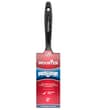
Wooster Z1120-2 White China Bristle Varnish Brush, 2 in
The brush the finish manufacturer tells you to use, at the lowest price on this page. Minwax's own instruction for its oil-based polyurethane is "a high-quality, natural bristle or foam brush" - this is natural white China bristle with chisel construction, which is the shape that lays a film off the tip instead of dragging it.
Wooster 5221-2 Silver Tip Angle Sash Paintbrush, 2 in
The other half of the pair, and the cheapest pick on this page. Minwax's water-based Polycrylic says to use "a high-quality, synthetic bristle brush" - this is 100% polyester, angled for cutting in, with a stainless ferrule that will not rust from the water it is about to spend its life in.
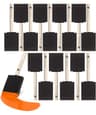
The pick that makes a beginner's first finish go right, because it removes the step most beginners get wrong: cleaning a brush. Minwax's oil-based polyurethane page names "natural bristle or foam" - foam is explicitly sanctioned, it leaves no brush marks, and at this price you throw it away and open another.
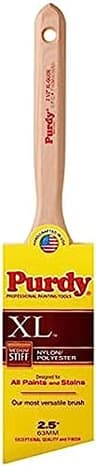
Purdy XL Glide 2 in Angular Trim Brush (144152320)
The one-brush answer if you refuse to own two: a nylon-polyester blend handles water-based finishes properly and oil-based ones acceptably, and the angular head covers both flat panels and inside corners. It is a compromise, chosen deliberately, and it costs about twice the Wooster pair's cheaper half.
Purdy White Bristle Adjutant Brush, 2-1/2 in (144024425)
The upgrade for anyone finishing tabletops rather than boxes: natural bristle in a 2-1/2 inch width, which covers a panel in noticeably fewer strokes than a 2 inch brush and therefore leaves fewer laps to blend. The listing names oil-based stains, polyurethanes and clears directly, which is unusually specific for a brush.
Natural bristle at throwaway prices. A chip brush is not the brush for a final clear coat on a tabletop - it sheds and it leaves marks - but it is the right brush for shellac, dye, a first sealing coat, and for spreading glue, and nine of them cost less than one good brush.
Not a brush, and that is the point. Stain is not meant to be laid on in a film - it is meant to be flooded on and wiped back - and a lambskin pad on a block does that across a wide panel far faster and more evenly than any brush, with no brush marks to blend out.
The reason a good brush lasts years instead of one project. Finish dries in the heel of a brush where the bristles meet the ferrule, the brush stiffens and splays, and it never lays a clean film again. A comb reaches the heel and reshapes the tip before storage, and it costs less than the brush it saves.
Wooster Z1120-2 White China Bristle Varnish Brush, 2 in
The brush the finish manufacturer tells you to use, at the lowest price on this page. Minwax's own instruction for its oil-based polyurethane is "a high-quality, natural bristle or foam brush" - this is natural white China bristle with chisel construction, which is the shape that lays a film off the tip instead of dragging it.
Strengths
+Natural white China bristle, which is exactly what the oil-based polyurethane label calls for
+Chisel construction - the bristle ends are tapered, so the brush releases finish off a line rather than a blunt block
+The listing names "alkyd and oil-based varnishes as well as marine paints or stains and urethanes" specifically, so its intended use is not inferred
+Costs less than most of this page and less than a single quart of the finish it applies
Trade-offs
−Natural bristle is the WRONG choice for a water-based finish - it absorbs water, goes limp and leaves marks; use the synthetic brush below instead
−Flat rather than angled, so it is less controlled than a sash brush on an inside corner or a narrow rail
−A black solid plastic handle, which is less comfortable over a long session than the hardwood handles on the Purdy brushes
−No published bristle length or filament count, so brush quality has to be taken on the brand's reputation
Type
Natural-bristle varnish brush
In the set
Single tool
Material / build
White China bristle; brass-plated steel ferrule; plastic handle
Key spec
2 in flat; natural China bristle, chisel construction; for oil-based varnish, urethane and stain
Best for
Best overall for oil-based polyurethane and varnish
Worth knowing. The listing states "Finest results with alkyd and oil-based varnishes as well as marine paints or stains and urethanes", "White China bristle with chisel construction", "Soft formulation and velvet feel", "Round brass-plated steel ferrule" and "Black solid plastic handle". Part number and model Z1120-2; product-info size field "2-Inch"; manufacturer The Wooster Brush Company. No bristle length or filament count is published. The reason this brush is the top pick is the FINISH maker's instruction, not the brush maker's: Minwax specifies "a high-quality, natural bristle or foam brush" for its oil-based Fast-Drying Polyurethane.
Specs read from the product listing, on October 30, 2026. “Not listed” means the listing doesn’t state that figure.
#2Best for water-based finish
Wooster 5221-2 Silver Tip Angle Sash Paintbrush, 2 in
The other half of the pair, and the cheapest pick on this page. Minwax's water-based Polycrylic says to use "a high-quality, synthetic bristle brush" - this is 100% polyester, angled for cutting in, with a stainless ferrule that will not rust from the water it is about to spend its life in.
Strengths
+100% polyester filaments, which is the synthetic bristle a water-based finish label asks for
+Angled sash head, so it reaches into an inside corner and along a narrow rail without loading the adjacent face
+Stainless steel ferrule - the right choice for a brush washed in water after every use
+Cheapest brush here by a clear margin, which makes owning both bristle types painless
Trade-offs
−Polyester is the wrong bristle for oil-based polyurethane and varnish; it will apply them, but not as well as natural bristle
−Sold and marketed as a paint brush - the bullets talk about latex and oil paints and coatings, not about clear finishes on furniture
−2 in angled is a trim brush, so it is slow going on a tabletop where a 3 in flat brush would be quicker
−No published filament length, taper or density, so the "soft, flexible" claim is unquantified
2 in angle sash; 100% polyester bristle; for water-based finishes, latex and oil paint
Best for
Best for water-based polyurethane and Polycrylic
Worth knowing. The listing states "SOFT POLYESTER FILAMENTS: Features 100% CT polyester bristles designed to deliver smooth, even coverage with minimal brush marks", "Soft, flexible filaments provide excellent leveling and controlled paint application", "WORKS WITH ALL PAINTS: Suitable for latex and oil-based paints", "PRECISION ANGLE SASH DESIGN: Angled brush head allows for accurate cutting-in along edges, corners, trim, and detailed surfaces" and "a corrosion-resistant stainless-steel ferrule and comfortable hardwood handle". Part number E5221-2, model 5221-2. The water-based pairing is the FINISH maker's instruction: Minwax specifies "a high-quality, synthetic bristle brush" for Polycrylic.
Specs read from the product listing, on October 30, 2026. “Not listed” means the listing doesn’t state that figure.
#3Best beginner-proof choice
Bates FB02 Foam Paint Brushes, 2 in (16 pack)
The pick that makes a beginner's first finish go right, because it removes the step most beginners get wrong: cleaning a brush. Minwax's oil-based polyurethane page names "natural bristle or foam" - foam is explicitly sanctioned, it leaves no brush marks, and at this price you throw it away and open another.
Strengths
+Foam is named on the oil-based polyurethane label itself, so this is not a budget substitute - it is one of the two sanctioned applicators
+No bristles means no brush marks, which is the commonest visible defect on a first clear coat
+Sixteen in the pack: one per coat, thrown away, so a half-cleaned brush never ruins the next coat
+Also the right applicator for spreading glue on a joint face, which is the other job on this page
Trade-offs
−Foam dissolves in lacquer thinner and some solvent finishes - fine with polyurethane and water-based finishes, not with everything
−It holds less finish than a bristle brush, so a tabletop takes more trips to the can and more chance of a lap mark
−Single use in practice: cleaning a foam brush properly costs more in solvent than the brush is worth
−Cheap foam can shed and the tips are glued on, so a long session occasionally ends with foam in your finish
Type
Foam brushes, disposable
In the set
16 pieces
Material / build
Foam; wooden handles
Key spec
2 in foam, 16 pack; for stain, varnish, polyurethane and glue
Best for
Best disposable applicator, and the beginner-proof choice
Worth knowing. The listing states "Bates foam brushes 16 pieces with 2 inch brush size", "Designed to cover the surface evenly with fewer strokes", "These foam brushes work with any type of paint or varnish, on virtually any surfacing", and "Absorbent foam cells to reduce from dripping and foam tips are securely glued to sturdy wooden handles". Part number and model FB02; unit count 16; weight 0.39 lb. No foam density or cell rating is published, and the "any type of paint or varnish" claim is the seller's - foam is not solvent-proof, which is why the card says so.
Specs read from the product listing, on October 30, 2026. “Not listed” means the listing doesn’t state that figure.
#4Best single do-everything brush
Purdy XL Glide 2 in Angular Trim Brush (144152320)
The one-brush answer if you refuse to own two: a nylon-polyester blend handles water-based finishes properly and oil-based ones acceptably, and the angular head covers both flat panels and inside corners. It is a compromise, chosen deliberately, and it costs about twice the Wooster pair's cheaper half.
Strengths
+Nylon-polyester blend bristle, which works with water-based finishes and paint and is tolerable with oil-based ones
+Angular trim shape covers both open panels and inside corners, so one brush does more of the job
+Hardwood handle, which is more comfortable than plastic over a long finishing session
+Made in the United States per the listing, and from the brand most painters reach for by default
Trade-offs
−The Amazon listing has exactly ONE feature bullet - "Made in United States" - so everything else here comes from the title and product-info block
−A blend bristle is second best in both directions: natural bristle lays oil-based finish better, pure polyester handles water-based better
−Costs roughly twice the Wooster synthetic, which for a first shop buys both specialist brushes instead
−Angular heads waste a little finish on a wide flat panel compared with a flat brush of the same width
Type
Blended-bristle angular trim brush
In the set
Single tool
Material / build
Nylon-polyester bristle; hardwood handle
Key spec
2 in angular trim; nylon-polyester blend bristle; water-based and oil-based
Best for
Best single brush if you will only own one
Worth knowing. The listing's ONLY feature bullet is "Made in United States". The bristle material, shape and handle come from the listing title - "Purdy XL Glide 2 in. Angular Trim Paint Brush ... Nylon Polyester Bristles, Purdy 152320 Trim Brush, Hardwood Handle, 2 in W" - and the product-info block (size "2 Inch", weight 0.22 lb). Part number and model 144152320. No bristle length, filament count or recommended-finish list is published on this listing, which is unusually thin for a brush at this price.
Specs read from the product listing, on October 30, 2026. “Not listed” means the listing doesn’t state that figure.
#5Best for large panels
Purdy White Bristle Adjutant Brush, 2-1/2 in (144024425)
The upgrade for anyone finishing tabletops rather than boxes: natural bristle in a 2-1/2 inch width, which covers a panel in noticeably fewer strokes than a 2 inch brush and therefore leaves fewer laps to blend. The listing names oil-based stains, polyurethanes and clears directly, which is unusually specific for a brush.
Strengths
+Names its intended finishes outright - "oil-based stains, polyurethanes, wood thinners, lacquer thinners and clears"
+2-1/2 in width covers a tabletop in fewer passes, which means fewer wet edges to keep alive
+A soft natural bristle blend aimed at an "ultra-smooth finish", which is the right ambition on a clear coat
+Moisture-wicking alderwood handle and US handcrafting, both stated on the listing
Trade-offs
−Natural bristle again, so it is no use for water-based polyurethane - that is what the Wooster synthetic is for
−The dearest brush on this page, for a width most furniture parts do not need
−Wider brushes hold more finish and drip more if you overload them, which is the commonest beginner mistake with a clear coat
−No bristle length or filament data published, so the "soft, natural bristle blend" claim is unquantified
Type
Natural-bristle flat brush
In the set
Single tool
Material / build
Natural white bristle blend; alderwood handle
Key spec
2-1/2 in flat; natural white bristle; for oil-based stains, polyurethane and clears
Best for
Best natural-bristle brush for larger panels
Worth knowing. The listing states "NATURAL BRISTLE BRUSH - Purdy White Bristle Paint Brushes are made with a soft, natural bristle blend that provide an ultra-smooth finish", "DESIGNED FOR OIL-BASED PROJECTS - These painting brushes are best for oil-based stains, polyurethanes, wood thinners, lacquer thinners and clears", "Designed with lightweight and moisture-wicking alderwood handles", and "Handcrafted in the USA with global materials ... ideal for decks, siding, floors, furniture and antiques". Part number and model 144024425; product-info size field "2-1/2 inch". No bristle length or filament count is published.
Specs read from the product listing, on October 30, 2026. “Not listed” means the listing doesn’t state that figure.
#6Best for shellac, dye and glue
Bates BSH09 Chip Paint Brushes, 2 in (9 pack)
Natural bristle at throwaway prices. A chip brush is not the brush for a final clear coat on a tabletop - it sheds and it leaves marks - but it is the right brush for shellac, dye, a first sealing coat, and for spreading glue, and nine of them cost less than one good brush.
Strengths
+Natural bristle, so unlike foam it is solvent-proof and works with shellac, lacquer and dye as well as oil finishes
+Nine in the pack, so there is always a clean one for glue and a different one for finish
+Thick bristle holds a good load, which suits flooding a sealing coat on rather than laying a thin film
+Cheap enough to be genuinely disposable, which is the honest way to use a chip brush
Trade-offs
−Chip brushes shed bristles - that is the trade, and it is why these are not the pick for a final coat on a show surface
−No chisel-tipped bristle, so they drag finish rather than release it off a tapered edge
−Loosely bound ferrules on cheap chip brushes let bristles splay as the brush wets out, which shows as a streaky line
−Marketed for walls, trim, decks and fences rather than for furniture finishing
Type
Natural-bristle chip brushes, disposable
In the set
9 pieces
Material / build
Natural bristle; wood handles
Key spec
2 in natural bristle, 9 pack; for stains, varnishes, shellac and glue
Best for
Best cheap natural bristle for shellac, dye and glue
Worth knowing. The listing states "Package includes 9 chip paint brushes with thick natural bristles designed to hold more paint, save time, leave with fewer streaks", "Our chip paint brushes are perfect for latex and oil-based paints and stains", that they are "economical enough for cleanup and reuse", and that they "can serve as utility brushes for most paints, stains, varnishes, acrylics, and plaster". Part number and model BSH09; product-info size "2 Inch, 9 Pack". NOTE A CONFLICT IN THE PRODUCT DATA: the size field says 9 pack while the unit count field reads 1 - the 9 pack figure in the title and bullets is the one used here. No bristle type beyond "natural" and no ferrule material is published.
Specs read from the product listing, on October 30, 2026. “Not listed” means the listing doesn’t state that figure.
#7Best for stain on wide panels
Tru Lamb 5 in Lambskin Hand Stainer Block and Pad
Not a brush, and that is the point. Stain is not meant to be laid on in a film - it is meant to be flooded on and wiped back - and a lambskin pad on a block does that across a wide panel far faster and more evenly than any brush, with no brush marks to blend out.
Strengths
+A pad covers a panel in a fraction of the strokes a 2 in brush needs, so the whole surface stays wet while you work
+Natural lambskin holds a lot of stain and releases it evenly, which is what stops a lap mark becoming a dark stripe
+The hardwood block gives you a flat reference and a handle, so pressure stays even instead of following your wrist
+Reusable per the listing, unlike the disposable foam and chip brushes above
Trade-offs
−Wrong tool for a clear film finish - a pad cannot lay polyurethane the way a brush can and will leave a thick, uneven coat
−5 in is too wide for a rail, a spindle or anything with an inside corner, so it is a second applicator and not a replacement
−No published pile depth, backing material or washing instruction, and natural lambskin needs real cleaning to be reused
−Costs more than any individual brush here except the Purdys, for a tool that does one job
Type
Lambskin stain applicator pad and block
In the set
Single tool
Material / build
100% natural lambskin; hardwood block and handle
Key spec
5 in lambskin pad on a hardwood block; for stain, polyurethane and faux finishes
Best for
Best applicator for stain on wide flat panels
Worth knowing. The listing states it is "Crafted from 100% Natural Lambskin, ensuring superior absorption and a smooth, even application of stains and polyurethane", is "Ideal for both interior and exterior projects, perfect for staining hardwood surfaces, applying polyurethane, and executing faux finish painting techniques", is "Equipped with a quality hardwood block and handle", "Delivers a streak-free, uniform finish" and is "Durable and Reusable". Product-info size field "5"; weight 0.4 lb; no manufacturer part number or model is published. No pile depth, backing material or cleaning instruction is published. The listing's claim that it suits polyurethane is the seller's; this card recommends it for STAIN, because a pad cannot lay a thin film the way a brush can.
Specs read from the product listing, on October 30, 2026. “Not listed” means the listing doesn’t state that figure.
#8Best brush-saver
Wooster 1831 Painters Brush Comb
The reason a good brush lasts years instead of one project. Finish dries in the heel of a brush where the bristles meet the ferrule, the brush stiffens and splays, and it never lays a clean film again. A comb reaches the heel and reshapes the tip before storage, and it costs less than the brush it saves.
Strengths
+Two-sided: brass bristles to remove heavy buildup, and a 12-pin stainless comb to speed the wash and rinse
+Reshapes the brush before storage, which is what keeps a chisel tip chiselled instead of splayed
+Non-rusting brass and stainless, so it survives being left wet in a shop sink
+Costs less than either Purdy brush on this page, and both of them depend on it
Trade-offs
−Does nothing a stiff wire brush and patience cannot, which is why many shops never buy one
−Pointless if your applicators are the foam and chip brushes above - those are meant to be thrown away
−The listing repeats three of its own bullets verbatim, so the feature list is shorter than it appears
−Will not rescue a brush already hardened with cured oil-based finish; this is maintenance, not repair
Two-sided; brass bristle side plus 12-pin stainless comb; 8-1/4 in overall
Best for
The tool that makes a good brush last
Worth knowing. The listing states "2 Side Painters Comb", "Non-Rusting Brass Bristles Gently Remove Heavy Paint Buildup", "Stainless Steel Comb Has 12 Pins To Speed Wash & Rinse Steps", "Also Reshapes The Paint Brush Prior To Storage", "Durable polypropylene handle" and "Overall 8 1/4-Inch length". Part number 1831, model 1831 (the title carries "1832/1831"). Three of the listing's bullets are duplicated verbatim in its own feature list. No tooth spacing and no brass gauge is published.
Specs read from the product listing, on October 30, 2026. “Not listed” means the listing doesn’t state that figure.
Natural, synthetic or foam: the rule and the reason
Natural bristle — usually described as China bristle or white bristle — is animal hair. It is tapered along its length and split at the tip, which is why a good natural brush holds a lot of finish and lets it go smoothly. It is the right choice for oil-based polyurethane, alkyd varnish, oil stain, shellac and lacquer. Put it in water and it fails: hair absorbs water, swells, loses its spring and stops laying a film.
Synthetic filament — polyester, nylon, or a blend — does not absorb water, so it keeps its stiffness in a water-based finish. That is the whole argument, and it is the reason the Polycrylic label specifies it. Pure polyester, like the Wooster Silver Tip here, is the softer and better-leveling option; a nylon-polyester blend like the Purdy XL Glide trades a little of that for stiffness and durability and will also handle oil-based work.
Foam is the one most people assume is the cheap option, and the manufacturer disagrees: Minwax names “natural bristle or foam” in the same sentence for oil-based polyurethane. A foam brush has no bristles, so it cannot leave brush marks at all, which is the most visible defect on a first clear coat. Its limits are real though: it holds less finish than bristle, so a wide panel takes more trips to the can, and foam is attacked by strong solvents — it is fine with polyurethane and water-based finishes, and not something to put in lacquer thinner.
One shape detail is worth more than its share of attention. Chisel construction, which the Wooster Z1120-2 listing calls out, means the bristle block is tapered to an edge rather than cut square. A chiselled tip releases finish off a line, which lays an even film; a blunt block drags it and leaves ridges. It is the single feature that separates a brush worth cleaning from one worth throwing away.
Brush or wipe or pad: match the tool to the product
These three applicators are not interchangeable, and knowing which one a product wants saves more trouble than any upgrade.
Stain is flooded on and wiped back. It is not a film, it is a colorant that soaks in, and the final appearance depends on how long you leave it before wiping. That makes speed the priority on a wide surface: everything has to stay wet until you wipe. A 2 in brush is slow for this, which is exactly what the Tru Lamb lambskin pad on a block fixes — it covers a panel in a handful of passes. A rag does the same job for nothing on smaller work. Which stain to use, and the conditioner that stops pine blotching is the matching page.
A film finish is laid on and left. Polyurethane, varnish, shellac and Polycrylic build a layer, so the goal is an even thin coat with no laps and no brush marks, and the instruction on both labels above is the same word: thin. This is brush or foam territory, and the brush type is the one decided by the bristle rule. Both Minwax labels also say, in capitals, not to shake the can — “NEVER SHAKE” on the oil-based polyurethane, “DO NOT SHAKE” on the Polycrylic — because shaking puts bubbles in the finish, and a bubble that dries is a crater you have to sand out. Stir instead.
A wiping finish is applied with cloth and nothing else. Wiping varnish and oil-varnish blends go on in thin coats with a rag and need no brush at all. That is why our finishing guide recommends them for a first project, and why a beginner can get a genuinely good result before owning anything on this page.
And glue is its own job. A foam brush or a chip brush spreads glue on a joint face far more evenly than a squeeze bottle nozzle does, and yellow PVA gives you only a few minutes of open time to get it done. The glue roundup covers the open and clamp times that make speed matter.
Cleaning, which is the part that decides whether a brush was worth it
A good brush is a tool with a maintenance routine, not a consumable, and the routine is short. Finish hardens in the heel — where the bristles disappear into the ferrule — long before it hardens at the tip, and once the heel is loaded the brush splays and never lays a clean film again. That is why the Wooster brush comb is a pick on this page: the brass side reaches buildup at the heel and the 12-pin stainless side speeds the wash and reshapes the tip before storage.
Solvent follows the finish. Oil-based polyurethane and varnish clean up with mineral spirits, which Minwax states on the Fast-Drying Polyurethane page; Polycrylic and other water-based finishes clean up with water. Shellac wants denatured alcohol. The practical sequence is to work the solvent into the heel, comb the bristles out, repeat until the solvent runs clear, then shape the tip and hang or lay the brush flat — never standing on its bristles in a jar.
Two notes that save money. First, if you are coming back to the same finish within a few hours, you do not have to clean the brush at all — wrap it tightly in plastic and it will be usable for the next coat. Second, if the honest answer is that you will not do any of this, buy the foam brushes and throw them away. A thrown-away foam brush produces a better finish than a badly cleaned good brush, every time.
What to buy, in one paragraph
Buy the Wooster Z1120-2 and the Wooster Silver Tip, which between them cover every finish this site recommends and cost less together than one mid-price brush. Add the Bates foam brushes and use them until you are confident cleaning a brush properly. Add the brush comb at the same time, because it is the difference between those two Woosters lasting a decade and lasting a season. If your projects are tabletops rather than boxes, the Purdy Adjutant at 2-1/2 in and the lambskin pad for stain are the two upgrades that actually change the result.
Frequently asked questions
What kind of brush should I use for polyurethane?+
It depends on which polyurethane, and the maker states it on the product page. For oil-based polyurethane, Minwax says to apply a thin coat "using a high-quality, natural bristle or foam brush". For its water-based Polycrylic, it says to use "a high-quality, synthetic bristle brush". The reason is that natural bristle is hair, and hair absorbs water - in a water-based finish it swells and goes limp, while synthetic filament keeps its spring. If you own both types you are covered either way, and the two cheapest brushes on this page are exactly that pair.
Are foam brushes good enough for a wood finish?+
Better than their price suggests, and explicitly sanctioned: Minwax names "natural bristle or foam" in the same instruction for its oil-based polyurethane. A foam brush has no bristles, so it cannot leave brush marks - the commonest visible defect on a first clear coat. Its real limits are that it holds less finish than bristle, so a wide panel takes more trips to the can, and that foam is attacked by strong solvents like lacquer thinner. For polyurethane and water-based finishes on a beginner project, it is a genuinely good choice.
What is the best brush for staining wood?+
For a wide flat panel, often not a brush at all. Stain is flooded on and wiped back rather than laid on as a film, so what matters is covering the surface fast enough that it is all still wet when you start wiping - which is what a lambskin pad on a block does far better than a 2 inch brush. On smaller parts a rag does the same job for nothing. Where a brush helps is rails, spindles, inside corners and gel stain on a vertical surface like a door, and there a natural bristle brush is right for an oil-based stain.
Can I use the same brush for oil-based and water-based finishes?+
You can own one blended-bristle brush and use it for both, which is what the Purdy XL Glide's nylon-polyester bristle is for, but it is second best in both directions. The bigger practical problem is cleaning: a brush used in oil-based finish and cleaned with mineral spirits will carry traces of both the finish and the solvent into the next job, and water-based finishes are less forgiving of contamination. Two cheap brushes cost less than one mid-price one, which is why that is the recommendation here.
Why does my polyurethane have bubbles in it?+
Most often because the can was shaken. Both Minwax labels say so in capitals - "NEVER SHAKE" on the oil-based Fast-Drying Polyurethane, "DO NOT SHAKE" on Polycrylic - and both say to stir instead, before and during use. Shaking whips air into the finish, and a bubble that dries is a crater you then have to sand out. The other causes are overworking the brush on a surface that has started to set, and brushing too thick a coat, which is why the instruction on both labels is a THIN coat.
How do I clean a brush after using polyurethane?+
Match the solvent to the finish: mineral spirits for oil-based polyurethane and varnish, water for Polycrylic and other water-based finishes, denatured alcohol for shellac. The part that decides whether the brush survives is the heel, where the bristles enter the ferrule - finish hardens there first, and once it does the brush splays. Work solvent into the heel, comb the bristles out, repeat until the solvent runs clear, reshape the tip and store the brush hanging or lying flat, never standing on its bristles.
Do I have to clean the brush between coats?+
Not if the next coat is going on the same day. Wrap the loaded brush tightly in plastic so no air reaches it and it will be ready for the next coat - the recoat window on Minwax's oil-based polyurethane is three to four hours and Polycrylic's is two, so this is the normal case rather than a trick. Clean it properly when the project is finished. If you expect to leave it longer than that, clean it, because a brush with set finish in the heel is a brush you have thrown away without meaning to.
Is an expensive brush worth it for a beginner?+
Not as a first purchase. The two brushes this page recommends are among the cheapest on it, and they are the two the finish labels actually call for - price is not what makes a brush right for a finish, bristle material is. What an expensive brush buys is bristle quality, a better chisel tip and a longer life if you maintain it, and maintenance is precisely the thing a beginner has not learned yet. Buy the cheap correct brushes and a brush comb, learn to clean them, and upgrade when you know you will.
How should I dispose of rags used with oil-based finish?+
Not in a bin, not in a pile, and not draped over the bench. Minwax's own label instruction is to "immediately place rags, steel wool, other waste soaked with this product and sanding residue in a sealed, water-filled, metal container". Oil-based finishes cure by oxidation, which releases heat, and a bundled rag insulates that heat well enough to reach its own ignition temperature. This is the single most under-respected hazard in a home shop finishing session, and our shop fire safety page covers the container and the rest of it.
Sources
Minwax — Fast-Drying Polyurethane (oil-based) — The manufacturer's own instruction for applying an OIL-BASED film finish, and the sourced basis for this site's bristle rule: "Apply a THIN coat of Minwax Fast-Drying Polyurethane using a high-quality, natural bristle or foam brush." Dry time 24 hours, recoat time "3 hour - 4 hour", coverage "125 ft2/quart", 2 recommended coats, mineral spirits cleanup. On handling: "Stir Minwax Fast-Drying Polyurethane before and during use to eliminate settling on the bottom of the can", and in capitals, "NEVER SHAKE." On waste, the label instruction a brush page has to carry: "Immediately place rags, steel wool, other waste soaked with this product and sanding residue in a sealed, water-filled, metal container" (accessed October 30, 2026)
Minwax — Polycrylic Protective Finish (water-based) — The same manufacturer's instruction for a WATER-BASED film finish, and the other half of the bristle rule: "Apply a thin coat of Polycrylic Finish with a high-quality, synthetic bristle brush." Dry time "3 hour - 24 hour", recoat time 2 hours, coverage "125 ft2/quart", "Three coats are recommended", water cleanup. On handling: "Stir well before and regularly during use. DO NOT SHAKE." Read against the oil-based polyurethane page, these two are the published reason a shop needs two brushes rather than one good one (accessed October 30, 2026)
Minwax — Wood Finish Oil-Based Penetrating Stain — The manufacturer's own page for the default beginner stain. Dry time "2 hour - 3 hour" and recoat time "2 hour - 3 hour". Coverage "500 ft²/gal - 600 ft²/gal" - no per-quart figure is published. "Available in 36 beautiful colors." The preparation step reads "Apply Minwax® Pre-Stain Wood Conditioner — especially on soft woods — for best, even color." On dwell before wiping the page gives no time, only "The longer you wait, the darker/richer the color." On topcoating it says "If happy with the color, let dry completely before applying a protective topcoat" and states no wait figure (accessed October 16, 2026)
Minwax — PolyShades Oil-Based Stain & Polyurethane Finish — The one-step product, and the only one here that goes over an existing finish: it "Can be used over polyurethane finishes" and can change the color of finished wood without removing the existing finish. Dry time "6 hour - 8 hour", recoat time "6 hour", coverage "120 ft²/quart - 150 ft²/quart", 2 recommended coats with a third suggested to deepen the color. Application is by brush - the page specifies a "natural bristle brush" and never mentions wiping. Oil-based, mineral spirits cleanup. Its label warnings are the strongest of any product cited here: "VAPOR HARMFUL. Use only with adequate ventilation"; rags, steel wool and sanding residue soaked with the product may "spontaneously catch fire if improperly discarded"; the product is combustible and must be kept away from heat and open flame; and it contains chemicals known to the State of California to cause cancer and birth defects (accessed October 16, 2026)
NFPA — Safety with oily rags (tip sheet) — NFPA's own wording: never leave cleaning rags in a pile; take them outside to dry, spread out and weighed down; put dried rags in a metal container with a tight cover, kept cool and out of direct sunlight (accessed August 31, 2026)