Best Tools and Gear for a Basement Woodworking Shop
A basement has four problems a garage doesn't: damp, dust that goes upstairs, noise through the floor, and no door wide enough. Six picks that solve them.
If you only buy one thing before you start woodworking in a basement, buy a dehumidifier — and if the space is small and dry-ish, the Eva-Dry E-500 is the cheapest way to find out whether you have a damp problem at all. That is the top pick here not because it cuts anything, but because rust is the tax a basement charges on every other tool you own, and it is charged quietly, over months, on the tools you use least.
A basement is genuinely a good place to make furniture. It is warm in January, cool in July, dark enough that you control the light, and nobody needs to move a car out of it. Those are real advantages over a garage and they are why so many hobby shops end up down there.
But it has four problems a garage does not, and all four are about the building rather than the woodworking:
Moisture. Below grade, surrounded by soil, often with no cross-ventilation at all. Cast iron and steel rust; wood you store there takes on moisture and moves after you build with it.
Dust goes into the house. A garage leaks dust into a garage. A basement shares an air handler, a stairwell and a ceiling with the rooms people sleep in.
Noise travels through the structure. A joist is a very good loudspeaker. A miter saw in a detached garage is annoying; the same saw under a living room is a household negotiation.
Nothing wide gets in or out. No roll-up door, a turn in the stairs, and a finished tabletop that has to make it up them.
The six picks below are chosen against that list, in that order. This page is deliberately not a tool list — for the saws, drills and benches that suit a small footprint, start with the small-shop tool roundup and the beginner kit. Prices below are live and dated.
How this is funded: we earn a commission if you buy through our links, at no extra cost to you. It never changes which tool we recommend, and we’ll tell you plainly when to skip one. Full disclosure.
Quick picks
Ranked on the specs that matter for a beginner and honest buyer fit. Select a row to jump to the full write-up. We haven’t hands-on-tested these — here is exactly what we do instead.
#
Product
Best for
Price
1
Eva-Dry E-500 Renewable Silica Gel Dehumidifier
A cordless silica cartridge for a toolbox or a closed cabinet. It will do nothing for a whole garage, and it works well in the enclosed space where your chisels actually live.
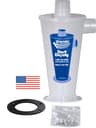
Oneida Air Systems Dust Deputy DIY Anti-Static Cyclone Separator
The single best upgrade to any shop vacuum. A cyclone drops the overwhelming majority of the dust into a bucket before it ever reaches the filter, so suction stays constant and filters last for years instead of weeks.
Craftsman CMXEVBE17584 6-Gallon 3.5 Peak HP Wet/Dry Vac
More tank for less money — the sensible middle if the vacuum will live in one corner of the garage rather than being carried around. A bigger drum simply means fewer interruptions.
The hearing protection you will actually wear, which beats better protection you leave on the shelf. Bluetooth music or a podcast turns ear defenders from a chore into something you put on before you even switch a tool on.
High-output linkable tubes at 5000K — bright, neutral-white light that shows grain and pencil lines honestly. Two of these over a bench transforms a garage more than any tool purchase of the same price.
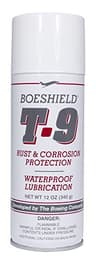
Boeshield T-9 Rust and Corrosion Protection, 12 oz
A waxy film that dries rather than staying oily, which is why it belongs on a table saw top and a plane sole where a wet oil would transfer straight onto your workpiece.
A cordless silica cartridge for a toolbox or a closed cabinet. It will do nothing for a whole garage, and it works well in the enclosed space where your chisels actually live.
Strengths
+No power, no batteries, no drain hose — it just sits there
+Recharges by plugging it in for a few hours, so there is nothing to replace
+Indicator window tells you when it is saturated
Trade-offs
−Only works in a sealed or nearly sealed space
−Useless as a room dehumidifier, whatever the packaging implies
Type
Renewable desiccant dehumidifier
In the set
Single tool
Material / build
Silica gel
Key spec
Cordless, renewable by plug-in recharge
Best for
Toolboxes, drawers and closed cabinets
Worth knowing. Desiccant lowers humidity in a fixed volume of air. In a leaky garage that volume is effectively the whole outdoors, which is why these belong inside a closed box.
Specs read from the product listing, on August 19, 2026. “Not listed” means the listing doesn’t state that figure.
#2Best for keeping dust out of the house
Oneida Air Systems Dust Deputy DIY Anti-Static Cyclone Separator
The single best upgrade to any shop vacuum. A cyclone drops the overwhelming majority of the dust into a bucket before it ever reaches the filter, so suction stays constant and filters last for years instead of weeks.
Strengths
+Keeps suction constant through a whole session instead of fading as the filter loads
+Filter life goes from a consumable to an afterthought
+Anti-static construction reduces the shocks a plastic cyclone can build up
Trade-offs
−Needs a bucket and hose to complete it — this is a component, not a finished product
−Takes up floor space next to the vac and adds another thing to wheel around
Type
Cyclone dust separator
In the set
Single tool
Material / build
Anti-static molded polymer
Key spec
Retrofits standard wet/dry vacs
Best for
Best add-on for any shop vac
Worth knowing. Cyclonic separation uses the air's own spiral to fling heavy particles outward and down. It is the same principle as a bagless household vacuum, just scaled to the volume a sander produces.
Specs read from the product listing, on August 11, 2026. “Not listed” means the listing doesn’t state that figure.
#3Best dust source to pair it with
Craftsman CMXEVBE17584 6-Gallon 3.5 Peak HP Wet/Dry Vac
More tank for less money — the sensible middle if the vacuum will live in one corner of the garage rather than being carried around. A bigger drum simply means fewer interruptions.
Strengths
+6 gallons means longer between empties on a big sanding session
+Cheaper than the 5-gallon 5.0 peak HP models
+Onboard accessory storage keeps the nozzles with the vac instead of lost
Trade-offs
−3.5 peak HP is a step down in suction from the 5.0 models
−Bigger drum is more awkward to carry up steps or into a car
Type
Wet/dry shop vacuum
In the set
Single tool
Material / build
Polypropylene tank
Key spec
6 gal, 3.5 peak HP
Best for
Best value on capacity
Worth knowing. Tank capacity affects convenience, not performance. Suction comes from the motor and a clean filter, so a bigger drum with a clogged filter still performs worse than a small vac with a clean one.
Specs read from the product listing, on August 11, 2026. “Not listed” means the listing doesn’t state that figure.
#4Best for noise through the floor
3M WorkTunes Connect Bluetooth Hearing Protector
The hearing protection you will actually wear, which beats better protection you leave on the shelf. Bluetooth music or a podcast turns ear defenders from a chore into something you put on before you even switch a tool on.
Strengths
+Bluetooth audio removes the main reason people take hearing protection off
+Rechargeable, with a battery that lasts a long shop session
+Built-in mic lets you take a call without removing them
Trade-offs
−Lower noise reduction rating than a dedicated passive muff like the Optime 105
−Music at high volume inside earmuffs is its own hearing risk — keep it modest
Type
Bluetooth earmuffs
In the set
Single tool
Material / build
ABS cups, foam cushions
Key spec
Bluetooth, rechargeable
Best for
The protection you'll actually keep on
Worth knowing. Compliance beats specification with PPE. The pair with a 30 dB rating in a drawer protects nobody; the pair with a lower rating on your head for every cut protects you every time.
Specs read from the product listing, on August 11, 2026. “Not listed” means the listing doesn’t state that figure.
High-output linkable tubes at 5000K — bright, neutral-white light that shows grain and pencil lines honestly. Two of these over a bench transforms a garage more than any tool purchase of the same price.
Strengths
+5500 lumens per fixture is genuinely bright, not 'shop light' bright
+5000K reads as daylight — colors and grain look true
+Linkable, so one outlet runs a whole row
Trade-offs
−Plug-and-chain mounting looks utilitarian
−No dimming — it is on, at full output, or off
Type
Linkable LED shop light
In the set
2 pieces
Material / build
Aluminum housing
Key spec
4 ft, 40W, 5500 lm, 5000K
Best for
Best overall ceiling lighting
Worth knowing. Color temperature matters more than most people expect. Warm 3000K light hides pencil marks and makes every species look the same; 4000-5000K is close enough to daylight to judge both a line and a finish.
Specs read from the product listing, on August 11, 2026. “Not listed” means the listing doesn’t state that figure.
#6Best rust insurance for tool steel
Boeshield T-9 Rust and Corrosion Protection, 12 oz
A waxy film that dries rather than staying oily, which is why it belongs on a table saw top and a plane sole where a wet oil would transfer straight onto your workpiece.
Strengths
+Dries to a waxy film instead of staying wet, so it does not stain wood
+Doubles as a lubricant for adjusters, screws and slides
+One can lasts a very long time at the coverage a home shop needs
Trade-offs
−Needs reapplying after a deep clean or a wet season
−Solvent smell means you want the door open when you spray it
Type
Rust inhibitor spray
In the set
Single tool
Material / build
Not listed
Key spec
12 oz aerosol, dries to a waxy film
Best for
Cast iron tops and tool bodies
Worth knowing. Anything you put on a cast iron top eventually ends up on a board and then under a finish. That is the whole argument for a drying film over a wet oil in a woodworking shop.
Specs read from the product listing, on August 19, 2026. “Not listed” means the listing doesn’t state that figure.
Problem one: moisture, and what it actually costs you
Rust is not a cosmetic problem on woodworking tools. A plane sole with pitting drags; a chisel back with rust cannot be honed flat without grinding past the damage; a saw plate that has started to bloom binds in the cut. And the tools that rust worst are the ones you use least, which tend to be the ones you spent the most on.
The mechanism is condensation, not rain. Warm, humid air meets cold steel and drops its moisture onto the surface — which is exactly what happens in a basement in summer, when the air coming down the stairs is warmer than the slab and the cast iron sitting on it. That is why basements often rust tools in July rather than January, and why sealing the tool up with a desiccant beats heating the whole room.
Three defences, in order of cost: keep the humid air off the steel (a closed chest with a desiccant), keep a film between steel and air (a rust inhibitor — see the sixth pick), and keep the air itself dry (a real dehumidifier). Our guide to stopping tools rusting goes through all three in full, including what to do about a cast-iron table saw top you cannot put in a box, and wood movement explained covers the other half of the damp problem: lumber stored in a humid basement is wetter than the house it is destined for, and will shrink after you build.
Store lumber flat, and acclimatise it upstairs
The practical rule for a basement shop is that lumber bought today is not ready today. Stack it flat on stickers with air around it, and if the piece is going to live in a heated room, bring the boards up into that room for a week or two before you cut joinery. A moisture meter takes the guesswork out — see how to store lumber, which applies below grade with the damp turned up.
Problem two: dust that goes upstairs
This is the one that ends basement shops. Not a dramatic failure — a slow accumulation of fine dust on the furniture of people who did not take up woodworking, and a conversation that follows.
Three things make the difference, and only one of them is a purchase. First, capture at the tool: a shop vacuum hooked to the sander and the saw, every time, rather than sweeping afterwards. Sweeping re-suspends the fine fraction, which is the fraction that travels and the fraction that reaches your lungs. Second, do not let the HVAC distribute it— if there is a cold-air return in the shop area, that return is a delivery service to every bedroom in the house, and covering or sealing it while you work is free. Third, a cyclone in front of the vacuum, which is the Dust Deputy pick: it drops the bulk of the waste into a bucket before it reaches the filter, so suction stays high through a long sanding session instead of collapsing after ten minutes.
For the full argument about what a small shop actually needs — and why a shop vacuum plus a cyclone beats a budget dust collector for a basement footprint — read dust collection for a small shop. The respirator case is in the safety gear roundup; a basement makes it more pressing, not less, because the air you are breathing is not being blown out through an open garage door.
Problem three: noise through the structure
Basement noise is mostly structure-borne, not airborne. The saw is bolted to a stand, the stand is on a slab or a joist, and the joist is the ceiling of the room above. Two cheap moves help more than anything you can buy: put the machine on something that breaks the path — a rubber mat, a scrap of carpet, anti-vibration pads — and do the loud work at civilised hours. Hand tools are quieter than people expect, which is one real reason a basement shop drifts towards them. See the hand tool set roundup if that appeals.
For your own ears, the number to know is that hearing damage is cumulative and permanent. The hearing protection pick here is the Bluetooth version because the muffs you actually wear are the ones that are doing something else you want — but a plain pair of Optime 105s protects more, costs less, and is the right answer if you would rather have the attenuation than the audio.
Problem four: nothing wide gets in or out
Measure the stairs before you design anything. A 4×8 sheet of plywood does not negotiate a turn in a stairwell, and neither does a finished dining table. Three ways round it, none of which needs a purchase:
Break sheets down where you buy them, or in the driveway. Home centers will cut sheet goods to rough size, and a cut list that arrives as manageable pieces is a cut list that fits down the stairs. How to buy lumber at the home center covers asking for that without annoying anyone.
Design in parts that assemble upstairs.Knock-down joinery — bolts into threaded inserts, bed-rail hardware, a screwed-on top — is not a compromise, it is how most furniture that has ever been delivered is built.
Keep the finishing somewhere ventilated. Oil-based finishes in an unventilated basement are genuinely unpleasant and oil-soaked rags are a real fire risk, which is why the rag disposal rule in shop fire safety matters more down here. Finish outside, in the garage, or pick a water-based product.
Lighting a basement: more than you think, cooler than you think
A basement starts at zero. No window, no daylight, often a single bulb on a pull-chain, and frequently a ceiling under eight feet. That combination makes linkable 4-foot LED battens the obvious answer: they mount flat against a low ceiling without taking headroom, link together off one socket, and a 5000 K colour temperature keeps the room looking like a workshop rather than a basement.
Two rules worth more than the fixture choice. Put light on both sides of where you stand, because one overhead source puts your own shadow exactly where you are cutting. And add a task light at the bench and one at the sharpening station — garage shop lighting works through the layout and the lumen arithmetic, and the work light roundup covers the movable ones.
The order to buy them in
The desiccant, in the box with your chisels and planes. It is also a measurement.
A shop vacuum, if you do not already own one. It is the single most-used thing in a basement shop and it is also how you avoid the conversation about dust.
The cyclone, as soon as you notice suction dropping off mid-session.
Lighting. Cheap, transformative, and it makes every other tool more accurate.
Hearing protection,before the first loud cut — not after.
Rust inhibitor, on everything flat and unpainted, twice a year.
Then stop buying building solutions and start building furniture. A basement shop that holds a bench, a vacuum and good light is a better shop than most people ever get, and the beginner project list is a better next step than any further purchase. If the basement turns out to be unworkable — genuinely wet, genuinely too loud — woodworking without a garage covers the alternatives honestly.
Frequently asked questions
Can you do woodworking in a basement?+
Yes, and it is one of the better hobby shop spaces: warm in winter, cool in summer, and nobody has to move a car. The four things you have to manage are humidity (which rusts tools), dust travelling into the living space, noise through the floor joists, and the fact that nothing wide fits down the stairs. Each has a cheap fix, and none of them is a reason not to start.
How do you keep tools from rusting in a basement?+
Keep humid air off the steel rather than trying to dry the whole room first. Store chisels, planes and measuring tools in a closed chest or cabinet with a renewable desiccant inside, wipe a rust inhibitor onto anything flat and unpainted twice a year, and watch the desiccant's indicator window — if it saturates in days rather than weeks, the basement is wet enough to justify a plug-in dehumidifier sized for the room.
How do I stop basement woodworking dust from getting into the house?+
Capture it at the tool instead of sweeping it up afterwards: a shop vacuum connected to the sander and the saw every time. Sweeping re-suspends the fine dust, which is the part that travels and the part you breathe. Then check for a cold-air return in the shop area and cover it while you work, because an HVAC return will distribute shop dust to every room in the house.
Is a basement too damp for woodworking?+
Some are. The cheap way to find out is a renewable silica-gel desiccant with a colour indicator left in a closed tool chest for a month. If it is still dry, the basement is fine and ordinary rust prevention is enough. If it saturates quickly, you have a real moisture problem and the answer is a compressor dehumidifier sized for the room before you store lumber or cast iron down there.
How do you get finished furniture out of a basement shop?+
Plan for it before you cut. Break sheet goods down to size before they go downstairs, design pieces with knock-down joinery so they assemble in the room they will live in, and measure the stairwell's turn — a dining table top and a 4x8 sheet both lose arguments with a landing. This constraint is the single biggest reason to think about a project's parts, not just its finished size.
How much light does a basement workshop need?+
More than a garage, because it starts at zero daylight, and placed so it comes from both sides of where you stand — a single overhead fixture puts your own shadow on the cut line. Linkable 4-foot LED battens at 5000 K are the usual answer because they mount flat on a low ceiling and chain off one socket, and a separate task light at the bench and the sharpening station does the rest.
Sources
OSHA — 1926.56, Illumination — Minimum foot-candle levels by area — 10 foot-candles for carpenter shops (Table D-3) (accessed August 11, 2026)
OSHA — 1910.304, Wiring design and protection — Paragraph (b)(3)(ii)(A): temporary 125-volt 15, 20 and 30 amp receptacle outlets in use by personnel require GFCI protection — an extension cord connector counts as a receptacle outlet (accessed August 19, 2026)
The Wood Database — Wood and moisture — How boards take on and give up moisture, and why lumber must acclimate before it is built with (accessed August 19, 2026)
NFPA — Safety with oily rags (tip sheet) — NFPA's own wording: never leave cleaning rags in a pile; take them outside to dry, spread out and weighed down; put dried rags in a metal container with a tight cover, kept cool and out of direct sunlight (accessed August 31, 2026)
OSHA — Woodworking eTool — OSHA guidance on woodworking hazards, guarding and safe work practices (accessed July 24, 2026)