The cheapest upgrade in any garage shop. Five lights compared — linkable ceiling fixtures, aimable tripods, bench task lamps and the magnetic light for awkward spaces.
Nobody puts lighting on a beginner tool list, and it is very often the change that improves someone’s work the most. A typical attached garage ships with one bulb in the middle of the ceiling: enough to find the car, nowhere near enough to see a knife line, judge a surface before finishing, or keep your hands confidently clear of a spinning blade.
OSHA’s construction illumination standard puts a floor of 10 foot-candles on carpenter shops. That is a legal minimum, not a target — detail work wants several times more. In practical terms a two-car garage wants somewhere around 15,000–20,000 lumens of general light plus task lighting at the bench, which is four or five 4-foot fixtures rather than one bulb.
Here is what we compare on. Outputin real lumens rather than “equivalent” wattage claims. Color temperature— 4000–5000K reads as daylight and shows grain and pencil lines honestly, while warm light hides both. Whether it is linkable, since one plug feeding a row of fixtures is what makes this a no-electrician job. Whether you can aim it, because raking light is a technique, not a luxury. And mounting— ceiling, tripod, clamp or magnet solve genuinely different problems.
How this is funded: we earn a commission if you buy through our links, at no extra cost to you. It never changes which tool we recommend, and we’ll tell you plainly when to skip one. Full disclosure.
Quick picks
Ranked on the specs that matter for a beginner and honest buyer fit. Select a row to jump to the full write-up. We haven’t hands-on-tested these — here is exactly what we do instead.
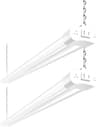
High-output linkable tubes at 5000K — bright, neutral-white light that shows grain and pencil lines honestly. Two of these over a bench transforms a garage more than any tool purchase of the same price.
Hykolity 4 ft Linkable LED Shop Light, 4400 lm 5000K
One fixture, one plug, immediate improvement. This is the light to buy first — hang it over the bench, see how much better everything is, then add more along the same chain when the budget allows.
Vevor Dual-Head LED Work Light with Tripod Stand, 10,000 Lumen, 2-Pack
Portable, aimable and very bright — the light you point at the thing you are working on rather than the room. Also the answer for finishing, where raking light across a surface reveals every flaw before you commit.
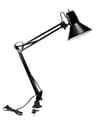
Bostitch VLF100 LED Swing Arm Lamp with Clamp Mount, 36 in Reach
Clamps to the edge of a bench and swings light in over close work — marking out, chopping a joint, sharpening. Overhead light is for the room; this is for the six inches in front of your hands.
Coquimbo Rechargeable Magnetic LED Work Light, 2-Pack
The light you stick to the underside of a workbench, inside a cabinet carcass, or behind the machine you are trying to adjust. Cordless and magnetic beats bright when the problem is access, not lumens.
High-output linkable tubes at 5000K — bright, neutral-white light that shows grain and pencil lines honestly. Two of these over a bench transforms a garage more than any tool purchase of the same price.
Strengths
+5500 lumens per fixture is genuinely bright, not 'shop light' bright
+5000K reads as daylight — colors and grain look true
+Linkable, so one outlet runs a whole row
Trade-offs
−Plug-and-chain mounting looks utilitarian
−No dimming — it is on, at full output, or off
Type
Linkable LED shop light
In the set
2 pieces
Material / build
Aluminum housing
Key spec
4 ft, 40W, 5500 lm, 5000K
Best for
Best overall ceiling lighting
Worth knowing. Color temperature matters more than most people expect. Warm 3000K light hides pencil marks and makes every species look the same; 4000-5000K is close enough to daylight to judge both a line and a finish.
Specs read from the product listing, on August 11, 2026. “Not listed” means the listing doesn’t state that figure.
#2Best budget
Hykolity 4 ft Linkable LED Shop Light, 4400 lm 5000K
One fixture, one plug, immediate improvement. This is the light to buy first — hang it over the bench, see how much better everything is, then add more along the same chain when the budget allows.
Strengths
+Cheapest route to a real 4-foot fixture over a bench
+Linkable, so it becomes the first of a row rather than a dead end
+Includes hanging chain and plug — nothing else to buy
Trade-offs
−4400 lumens covers a bench, not a whole double garage
−Plastic diffuser yellows very slowly over years
Type
Linkable LED shop light
In the set
Single tool
Material / build
Aluminum and polycarbonate
Key spec
4 ft, 4400 lm, 5000K
Best for
Best budget single fixture
Worth knowing. A single ceiling fixture directly above you puts your own shadow on the work. Two fixtures spaced either side of the bench solve that for the price of one extra light.
Specs read from the product listing, on August 11, 2026. “Not listed” means the listing doesn’t state that figure.
#3Best portable task light
Vevor Dual-Head LED Work Light with Tripod Stand, 10,000 Lumen, 2-Pack
Portable, aimable and very bright — the light you point at the thing you are working on rather than the room. Also the answer for finishing, where raking light across a surface reveals every flaw before you commit.
Strengths
+Aimable heads put light exactly where the work is
+Telescoping tripod adjusts from bench height to overhead
+Doubles as the light for any job outside the garage
Trade-offs
−Corded — the stand plus cable is another trip hazard to route
−Bright enough to be genuinely unpleasant if aimed at eye level
Type
Tripod LED work light
In the set
2 pieces
Material / build
Aluminum housing, steel tripod
Key spec
10,000 lm, adjustable tripod
Best for
Best portable task lighting
Worth knowing. Raking light — a lamp set low and almost parallel to a surface — shows sanding scratches and glue residue that overhead light hides completely. Check every panel this way before finishing.
Specs read from the product listing, on August 11, 2026. “Not listed” means the listing doesn’t state that figure.
#4Best bench task lamp
Bostitch VLF100 LED Swing Arm Lamp with Clamp Mount, 36 in Reach
Clamps to the edge of a bench and swings light in over close work — marking out, chopping a joint, sharpening. Overhead light is for the room; this is for the six inches in front of your hands.
Strengths
+Clamp mount takes up zero bench surface
+36-inch reach puts light close without you working in your own shadow
+Cheap, and the arm holds position for years
Trade-offs
−An office lamp in a dusty shop — wipe it occasionally
−Clamp needs a bench edge under about two inches thick
Type
Clamp-on LED task lamp
In the set
Single tool
Material / build
Steel arm, polymer head
Key spec
36 in reach, clamp mount
Best for
Best bench task light
Worth knowing. Detail work fails in dim light long before it fails from lack of skill. A knife line is a tenth of a millimeter wide — if you cannot see it clearly, you cannot cut to it.
Specs read from the product listing, on August 11, 2026. “Not listed” means the listing doesn’t state that figure.
#5Best for awkward spaces
Coquimbo Rechargeable Magnetic LED Work Light, 2-Pack
The light you stick to the underside of a workbench, inside a cabinet carcass, or behind the machine you are trying to adjust. Cordless and magnetic beats bright when the problem is access, not lumens.
Strengths
+Magnet and hook mean it stays wherever you put it
+Rechargeable — no shop batteries to keep buying
+Small enough to live in an apron pocket
Trade-offs
−Modest output — this is a work light, not room lighting
−Micro-sized batteries mean an hour or two of real runtime
Type
Rechargeable magnetic work light
In the set
2 pieces
Material / build
Aluminum and ABS
Key spec
Rechargeable, magnetic base and hook
Best for
Best cordless light for awkward spaces
Worth knowing. Assembly is where these earn their keep. Getting a screw started inside a dark cabinet with one hand holding the driver is an entirely different job with a light stuck to the panel beside you.
Specs read from the product listing, on August 11, 2026. “Not listed” means the listing doesn’t state that figure.
How much light do you actually need?
Lumens are the measure of light produced. A useful working target for a home shop:
Single-car garage (about 200 sq ft): 8,000–10,000 lumens — two to three 4-foot fixtures.
Two-car garage (about 400 sq ft): 15,000–20,000 lumens — four to five fixtures.
Plus task lighting at the bench, the saw and the sharpening station.
Those numbers sound enormous next to a 1,600-lumen household bulb, and they are correct. A garage has dark walls, a dark floor and often an open ceiling, so very little light bounces back — you need more of it than the same square footage indoors.
Ignore “250W equivalent” claims on packaging. Read the lumen figure and the color temperature; those are the two numbers that describe what you will actually get. Our shop lighting guide covers layout and placement in detail.
Color temperature and CRI
Color temperature, in kelvin, changes what you can see — not just how the room feels. Warm 2700–3000K light blurs pencil marks into the wood and flattens the differences between species. Above about 6500K the light reads blue and gets tiring over a long session. 4000K to 5000K is the shop range, and 5000K is the sweet spot: close enough to daylight that both a marked line and a finish color read honestly.
Use onecolor temperature throughout. Mixing a 5000K ceiling fixture with a 3000K task lamp makes color judgment genuinely difficult. And glance at CRI (color rendering index) if it is listed — 80+ is fine for a shop, 90+ is noticeably better if you match stains.
The four kinds of light a shop needs
General (ceiling)
Linkable 4-foot LED fixtures. These do the bulk of the work: even, bright, cheap to run, and they plug into a normal outlet with a chain or clip mount, so there is no electrician and no permanence. Run them perpendicular to the long axis of the garage for the most even coverage.
Task (bench)
A clamp-on swing-arm lamp. It takes no bench surface, moves to where the work is, and puts light on the six inches in front of your hands. Detail work fails in dim light long before it fails from lack of skill — a knife line is a fraction of a millimeter wide, and if you cannot see it clearly, you cannot cut to it.
Portable and aimable
A tripod light you can point. This is what you use for raking light: set the lamp low and shine it almost parallel across a surface, and every sanding scratch, dent and glue smear throws a long shadow. Flaws that overhead light hides completely become obvious. Do this on every panel before finishing — it is the single best habit for avoiding a blotchy first project.
Cordless and magnetic
Small rechargeable lights with magnets and hooks. They go inside a cabinet carcass, under a bench, or behind a machine you are adjusting. When the problem is access rather than brightness, nothing else works.
Mounting without an electrician
Modern shop lights are designed for exactly this. Each fixture has a pass-through connector, so you hang three or four in a row, join them with short jumper cables, and run one plug to an existing outlet. Chains, S-hooks or simple clips mount them to joists or a finished ceiling. The whole job is a screwdriver and an afternoon, and it comes down with you if you move.
Two cautions. Check the total wattage of a linked run against what that outlet circuit is carrying — especially if a shop vacuum and a saw share it. And clip the cabling up along a joist; a cable hanging across a work area is exactly the thing you catch with a board you are carrying.
Light is a safety feature
This gets treated as a comfort issue and it is not. You cannot avoid what you cannot see: the blade line on a miter saw, the position of the guard, where the offcut is going to fall, whether your hand is where you think it is. Good lighting is genuinely part of the same category as eye and ear protection, and it is cheaper than either.
Frequently asked questions
How many lumens do I need in a garage workshop?+
Roughly 8,000 to 10,000 lumens of general lighting for a single-car garage and 15,000 to 20,000 for a two-car garage — that is two to five 4-foot LED fixtures — plus task lighting at the bench. Garages have dark surfaces that reflect very little, so they need more light than the same floor area indoors.
What color temperature is best for a workshop?+
4000K to 5000K. Warm 3000K light hides pencil marks and flattens the differences between wood species; above 6500K the light reads blue and becomes tiring. 5000K is close enough to daylight to judge both a layout line and a finish color. Use one temperature throughout the shop.
Do I need an electrician to install shop lights?+
Usually not. Most 4-foot LED shop lights are linkable and plug into a standard outlet — you hang several in a row on chains or clips, join them with jumper cables, and run one plug to the wall. Check the total wattage against the circuit, and route the cabling up out of the way.
What is raking light and why does it matter?+
A lamp set low and shone almost parallel across a surface. It throws long shadows from every scratch, dent and glue smear, revealing flaws that overhead light hides completely. Checking a panel with raking light before applying finish is the single most useful lighting habit in woodworking.
Are LED shop lights worth it over fluorescent tubes?+
Yes. LEDs start instantly in a cold garage where fluorescent tubes flicker and take minutes to reach full output, they use less power for the same light, they last far longer, and they contain no mercury. There is no remaining practical argument for new fluorescent shop fixtures.
Sources
OSHA — 1926.56, Illumination — Minimum foot-candle levels by area — 10 foot-candles for carpenter shops (Table D-3) (accessed August 11, 2026)
OSHA — Woodworking eTool — OSHA guidance on woodworking hazards, guarding and safe work practices (accessed July 24, 2026)