Four products that keep cast iron and plane irons clean in an unheated garage - a drying film for machine tops, camellia oil for blades, a block for the rust you already have, and a desiccant for the toolbox.
How this is funded: we earn a commission if you buy through our links, at no extra cost to you. It never changes which tool we recommend, and we’ll tell you plainly when to skip one. Full disclosure.
The short answer. Buy Boeshield T-9. It dries to a waxy film rather than staying oily, which makes it the right product for cast iron machine tops and tool bodies — anything you put on a table saw top eventually ends up on a board and then under a finish, and a drying film does not. Our budget pick is the Lodge Rust Eraser at a fraction of the price: it is the thing that takes off rust that has already happened, and it is what most people end up using on a rusty plane sole.
The order that works is always the same: remove the rust, clean off the residue, then apply protection. Skipping the last step means doing the first two again next spring, which is why this page recommends buying a remover and a protectant together rather than either alone. The method is in how to stop tools rusting in a garage.
Here is the lens we compare on. Whether it dries or stays wet, which decides whether it can go on a surface wood touches. What it is actually for— a machine top, a blade, or the inside of a closed box are three different problems. How often it needs reapplying. And whether it will mark your work, because a rust treatment that contaminates a surface before finishing has cost you more than the rust would have.
Quick picks
Ranked on the specs that matter for a beginner and honest buyer fit. Select a row to jump to the full write-up. We haven’t hands-on-tested these — here is exactly what we do instead.
#
Product
Best for
Price
1
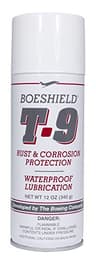
Boeshield T-9 Rust and Corrosion Protection, 12 oz
A waxy film that dries rather than staying oily, which is why it belongs on a table saw top and a plane sole where a wet oil would transfer straight onto your workpiece.
Kurobara 100% Pure Tsubaki Camellia Oil, 8.3 oz Dispenser
The traditional answer for blades. A thin, non-drying plant oil that goes onto a chisel back or a saw plate with a rag and keeps humidity off the steel.
A rubber block loaded with abrasive that takes surface rust off steel without gouging it. Sold for cast iron cookware, and the same block is what most people end up using on a rusty plane sole.
A cordless silica cartridge for a toolbox or a closed cabinet. It will do nothing for a whole garage, and it works well in the enclosed space where your chisels actually live.
Boeshield T-9 Rust and Corrosion Protection, 12 oz
A waxy film that dries rather than staying oily, which is why it belongs on a table saw top and a plane sole where a wet oil would transfer straight onto your workpiece.
Strengths
+Dries to a waxy film instead of staying wet, so it does not stain wood
+Doubles as a lubricant for adjusters, screws and slides
+One can lasts a very long time at the coverage a home shop needs
Trade-offs
−Needs reapplying after a deep clean or a wet season
−Solvent smell means you want the door open when you spray it
Type
Rust inhibitor spray
In the set
Single tool
Material / build
Not listed
Key spec
12 oz aerosol, dries to a waxy film
Best for
Cast iron tops and tool bodies
Worth knowing. Anything you put on a cast iron top eventually ends up on a board and then under a finish. That is the whole argument for a drying film over a wet oil in a woodworking shop.
Specs read from the product listing, on August 19, 2026. “Not listed” means the listing doesn’t state that figure.
#2Best for chisels, plane irons and saws
Kurobara 100% Pure Tsubaki Camellia Oil, 8.3 oz Dispenser
The traditional answer for blades. A thin, non-drying plant oil that goes onto a chisel back or a saw plate with a rag and keeps humidity off the steel.
Strengths
+Very thin, so it does not gum up a plane mouth or a saw kerf
+Non-toxic and odorless, which matters for tools you handle constantly
+Dispenser bottle makes it easy to put a few drops on a rag
Trade-offs
−Stays wet, so it can mark a bare workpiece if you are careless
−Needs reapplying more often than a drying film
Type
Blade protection oil
In the set
Single tool
Material / build
Not listed
Key spec
8.3 oz, 100% camellia (tsubaki) oil
Best for
Chisels, plane irons and saw plates
Worth knowing. Camellia oil is what Japanese toolmakers have put on blades for centuries, largely because it is thin, stable and does not go rancid or sticky the way some kitchen oils do.
Specs read from the product listing, on August 19, 2026. “Not listed” means the listing doesn’t state that figure.
#3Best budget pick, and for rust you already have
Lodge Rust Eraser Restoration Cleaning Block
A rubber block loaded with abrasive that takes surface rust off steel without gouging it. Sold for cast iron cookware, and the same block is what most people end up using on a rusty plane sole.
Strengths
+Removes light surface rust without the deep scratches a wire wheel leaves
+No solvents, no soaking, no mess
+Cheap, and lasts through several tool rescues
Trade-offs
−Only touches surface rust — pitting is permanent
−Slow going on a large cast iron top compared with an abrasive pad on a sander
Type
Rust removal block
In the set
Single tool
Material / build
Not listed
Key spec
Abrasive rubber block for surface rust
Best for
Removing rust that has already happened
Worth knowing. The order that works: remove the rust, clean off the residue, then apply protection. Skipping the last step means doing the first two again next spring.
Specs read from the product listing, on August 19, 2026. “Not listed” means the listing doesn’t state that figure.
#4Best for closed toolboxes and cabinets
Eva-Dry E-500 Renewable Silica Gel Dehumidifier
A cordless silica cartridge for a toolbox or a closed cabinet. It will do nothing for a whole garage, and it works well in the enclosed space where your chisels actually live.
Strengths
+No power, no batteries, no drain hose — it just sits there
+Recharges by plugging it in for a few hours, so there is nothing to replace
+Indicator window tells you when it is saturated
Trade-offs
−Only works in a sealed or nearly sealed space
−Useless as a room dehumidifier, whatever the packaging implies
Type
Renewable desiccant dehumidifier
In the set
Single tool
Material / build
Silica gel
Key spec
Cordless, renewable by plug-in recharge
Best for
Toolboxes, drawers and closed cabinets
Worth knowing. Desiccant lowers humidity in a fixed volume of air. In a leaky garage that volume is effectively the whole outdoors, which is why these belong inside a closed box.
Specs read from the product listing, on August 19, 2026. “Not listed” means the listing doesn’t state that figure.
Why rust is the garage shop’s default state
Rust needs iron, oxygen and water. A detached unheated garage supplies all three for most of the year, and it adds the one condition that does the real damage: temperature swings. When the air warms faster than a cast iron table saw top does, moisture condenses on the cold metal. That is why a saw top can be wet on a mild morning after a cold night, with no rain anywhere near it.
Nothing on this page stops that happening. What these products do is put a barrier between the water and the iron, which is the only practical answer short of heating and dehumidifying the space. Our heating and cooling guide covers the expensive version of the same problem.
Three different jobs, three different products
Machine tops and tool bodies — a drying film. Table saw tops, planer beds, plane soles and vise castings. Boeshield T-9 is the pick, because what you need here is protection that does not transfer onto wood.
Blades — a thin oil. Chisels, plane irons, saw plates and marking knives. Camellia oil is what Japanese toolmakers have put on blades for centuries, largely because it is thin, stable, and does not go rancid or sticky the way some kitchen oils do. Thin is the operative word: a thick oil gums up a plane mouth and clogs a saw kerf. A few drops on a rag, wiped along the steel, is the whole job. It stays wet, so be careful with it near a bare workpiece.
Closed spaces — a desiccant. The Eva-Dry E-500 is a cordless silica gel cartridge with an indicator window, recharged by plugging it in for a few hours rather than replaced. It works in a toolbox, a closed cabinet or a drawer — and it will do essentially nothing for a whole garage, whatever the packaging implies. Desiccant lowers humidity in a fixed volume of air, and in a leaky garage that volume is effectively the outdoors. If your chisels live in a closed box, this is a genuinely good purchase. If they hang on a pegboard, it is not.
Rust that has already happened
The Lodge Rust Eraser is a rubber block loaded with abrasive. It is sold for cast iron cookware and it is what most woodworkers end up using on a rusty plane sole, because it takes surface rust off without the deep scratches a wire wheel or a coarse abrasive pad leaves behind. No solvents, no soaking, no mess, and one block survives several tool rescues.
Its honest limit: it only touches surface rust. Pitting — where the rust has eaten into the metal — is permanent, and no product reverses it. On a plane sole, pitting away from the mouth is cosmetic; on a plane iron’s cutting edge it is not, and that is a blade you regrind or replace. It is also slow going on a large cast iron top compared with an abrasive pad on a sander, so for a whole table saw table use the block for the detail and a pad for the acreage.
This matters most for second-hand tools, where surface rust is normal and pitting is the thing to check before you buy. See buying used woodworking tools for the two-minute inspection.
The free habits that beat any product
Never put a tool away damp. Sweat from your hands is salty and is the single most common starting point for rust on a chisel back.
Get bare steel off concrete. A concrete floor wicks moisture continuously. A shelf and a scrap of plywood cost nothing.
Close the box. A tool in a closed box with a desiccant in it is in a different climate from a tool on an open rack.
Wax the plane sole. Paste wax on a plane sole makes it glide and keeps flash rust off between sessions — ten seconds, and it is the one case where a non-drying product is fine because you buff it off.
The one to buy
Boeshield T-9 and the Lodge block together — that pair covers removing what is there and stopping it coming back, which is the whole job for most shops. Add camellia oil if you own chisels and planes you care about, and the Eva-Dry only if those tools live in a closed box.
Frequently asked questions
What is the best rust prevention for woodworking tools?+
Boeshield T-9 for cast iron machine tops and tool bodies, because it dries to a waxy film rather than staying oily — a wet oil on a table saw top transfers onto every board you push across it and causes blotching under a finish. For blades, camellia oil is the traditional answer because it is thin enough not to gum up a plane mouth.
Why do my tools rust in the garage when it never rains in there?+
Condensation, not rain. When the air warms faster than a cast iron surface does — a mild morning after a cold night — moisture condenses directly onto the cold metal. Temperature swing, not leaks, is what makes an unheated garage hard on tools.
Does WD-40 prevent rust on woodworking tools?+
Not well, as a long-term protectant. WD-40 is a water-displacing solvent that largely evaporates, which makes it genuinely useful for driving water off a tool that has got wet, and poor at staying in place for a season. For protection you want something that dries to a film, like Boeshield T-9, or a stable thin oil on blades.
Will a dehumidifier stop my tools rusting?+
Only in a sealed space. A desiccant like the Eva-Dry E-500 works well inside a closed toolbox or cabinet and does essentially nothing for a whole garage, because it can only lower humidity in a fixed volume of air. A room dehumidifier in a leaky garage runs permanently and loses to the air coming under the door — seal and insulate first.
Can rust be removed from a hand plane or chisel?+
Surface rust, yes — an abrasive rubber block like the Lodge Rust Eraser takes it off without the deep scratches a wire wheel leaves. Pitting, where the rust has eaten into the metal, is permanent. On a plane sole away from the mouth that is cosmetic; on a cutting edge it means regrinding past the pits or replacing the blade.
Sources
The Wood Database — Wood and moisture — How boards take on and give up moisture, and why lumber must acclimate before it is built with (accessed August 19, 2026)
OSHA — Woodworking eTool — OSHA guidance on woodworking hazards, guarding and safe work practices (accessed July 24, 2026)
The Wood Database — Reference data on species, hardness, workability and movement (accessed July 24, 2026)