Woodworking vs Metalworking
Two workshop crafts compared on cost, space, noise, safety and how long before you build something good — plus what welding adds to a wood shop.
How this is funded: we earn a commission if you buy through our links, at no extra cost to you. It never changes which tool we recommend, and we’ll tell you plainly when to skip one. Full disclosure.
A surprising number of people arrive at woodworking having also considered metalwork, or arrive at metalwork wondering whether wood would have been easier. They are the two classic garage crafts, they use the same space and often the same person, and the honest comparison is rarely made.
Here it is, on the terms that actually decide it for a beginner: what it costs to reach a first useful result, what the space and the neighbors will tolerate, what can go wrong, and how long before you build something you are pleased with.
The one-line version
Woodworking is cheaper to start, faster to a good-looking result, and more forgiving of mistakes. Metalworking is stronger, more precise, and better at making things that hold other things. Most people who do both started with wood.
Cost to a first useful result
In woodworking, the entry point is genuinely small: a saw, a square, a set of chisels, clamps and something to sharpen with. You can be cutting joints the same day, and there is no minimum machine.
| Tool | Why you need it | Price |
|---|---|---|
 | The saw. A pull saw tracks a line far more easily for a beginner than a push saw. | $42.80 |
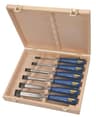 | Six sizes that clean up every joint. The single tool that most defines hand woodworking. | $69.99 |
 | Four clamps is the realistic minimum for a first glue-up, and glue is what joins wood. | $36.99 |
 | Edge tools arrive blunt. This is the skill that makes everything else work. | $15.99 |
| Starter kit subtotal | $165.77 | |
Live Amazon prices as of October 21, 2026; they change, and we don’t display stale numbers — a tool with no live price shows “Check price” and is left out of the subtotal. #ad How we’re funded.
Metalwork has a higher floor. The cheapest genuine entry is usually an angle grinder plus a stick or wire-feed welder, plus a helmet rated for the process, plus welding gloves, plus a fire-safe surface to work on. None of those is optional, and none of them individually is expensive — but you need all of them before the first project exists.
Materials reverse the picture over time. Mild steel stock is often cheaper per useful piece than furniture-grade hardwood, and offcut steel is easy to come by. Our cost to start woodworking page has the wood-side numbers priced from live data.
Space and services
Both fit in a single garage bay. They ask for different things from it.
- Woodworking wants floor space and clear runs for long boards, a bench you can put weight on, and dust management. Power demand is modest until you own a planer — see how much space you need.
- Metalworking wants a non-combustible work area, real ventilation, and often a heavier electrical supply. A serious welder may want a 240-volt circuit, which is an electrician’s job.
The combination is the interesting case: sparks and sawdust are a bad pairing. If you do both in one space, the practical rule is to separate them in time — sweep up, put the finishing rags in their metal can, and let the air clear before anything throws a spark.
Noise, mess and neighbors
Woodworking is loud in bursts and dusty continuously. A planer or a router is genuinely antisocial; hand tools are near-silent, which is one of the underrated reasons hand-tool woodworking suits a shared garage.
Metalworking is loud in a more penetrating way — an angle grinder cuts through walls in a way a saw does not — and it smells. Welding fume needs ventilating rather than filtering, and arc welding produces ultraviolet light bright enough to burn skin and eyes at a distance.
Both produce airborne particles you should not breathe. Woodworking dust and welding fume both call for real respiratory protection rather than a paper nuisance mask — see best safety gear for woodworking.
Safety: different failure modes
Neither craft is dangerous when done properly, and they go wrong in characteristically different ways.
Woodworking risks are mostly fast and mechanical: contact with a blade, and kickback throwing a workpiece. They are prevented by guards, riving knives, push sticks and technique. OSHA’s portable tool standard, 1910.243(a)(1), exists for exactly this — it requires a circular saw’s lower guard to return automatically to the covering position when the tool leaves the work. The slow risks are dust and noise, both cumulative.
Metalworking risks are thermal, optical and chemical: burns from hot metal and sparks, arc eye from ultraviolet exposure, fume inhalation, and fire. Sparks from a grinder travel a surprising distance and stay hot, which in a shop with sawdust in the corners is a serious combination.
The honest difference is in the equipment threshold. You can start woodworking with eye protection and a sensible attitude; you cannot start welding without a correctly rated helmet, and there is no partial version of that.
Learning curve and time to a good result
Woodworking gives you a presentable object quickly. A shelf, a box or a cutting board is an afternoon, and it looks like a real thing. The skills that take years — hand-cut joinery, flawless finishing — are refinements on top of a foundation you can lay in a weekend.
Metalwork inverts this. The first useful things you make are functional rather than attractive, because a tidy weld bead takes real practice. On the other hand, functional is often exactly what you wanted: a stand, a bracket, a frame.
Precision also behaves differently. Metal holds a dimension — it does not move with the seasons — so metalwork can be genuinely accurate in a way wood never quite is. Wood is always in negotiation with humidity, which is why wood movement is a design constraint rather than a footnote.
What welding actually adds to a wood shop
This is the practical version of the question for most people reading this, and it has a real answer: welding is the best way to make the things that hold your woodworking.
- Mobile bases and machine stands that fit your specific machines and your specific floor.
- Clamp racks and lumber racks that carry serious weight off a wall.
- Outfeed and assembly tables with steel frames and wooden tops — flat, rigid and thin.
- Steel-and-wood furniture, which is a whole design language a wood-only shop cannot reach.
- Repairs. A cracked bracket on a tool is a five-minute job rather than a spare-parts search.
None of that is necessary. All of it is genuinely useful, and it explains why so many long-running wood shops eventually acquire a small welder in the corner.
Which to start with
Start with wood if you want to build furniture, boxes, shelving or anything for the house; if you have a modest budget; if you share the space with a car; if you want a result this weekend.
Start with metal if what you actually want to make is brackets, frames, stands, trailers or repairs; if precision and strength matter more to you than appearance; if you already have somewhere fire-safe to work.
Do both, eventually, if you enjoy the shop as much as the output. They complement each other unusually well — and the crossover projects, where a steel frame carries a wooden top, are among the most satisfying things a garage can produce.
If wood is the answer, our how to start woodworking plan covers the first ninety days, and the beginner tool roundup has the shopping list with live prices.
One safety note. Power tools deserve respect, not fear. Read the manual, keep the guards on, wear ANSI-rated eye protection every time, and never rush a cut. When something feels wrong, stop and reset — there is no deadline in a home shop.
Frequently asked questions
Is woodworking or metalworking easier to start?
Woodworking, by a wide margin. A saw, a chisel and four clamps get you building the same afternoon, the tools are cheap, the material is forgiving, and mistakes are usually repairable. Metalworking asks for more equipment before the first useful thing exists, and the entry-level processes have a steeper safety curve.
Is metalworking more expensive than woodworking?
To start, generally yes. A usable wood kit is a handful of hand tools; a usable metal kit means at minimum a welder or a way to cut and join steel, plus grinding, plus a fire-safe place to work. Once running, steel stock is often cheaper than good hardwood, so the gap narrows over time.
Can you do metalworking in a garage?
Yes, with more precautions than woodworking needs. Grinding and welding throw sparks a long way, so you need a non-combustible area, no sawdust or finishing rags anywhere nearby, ventilation, and the right eye protection for the process. Doing both crafts in one garage is common and it means keeping them apart in time, not just in space.
Do I need welding for woodworking?
No. It is a genuinely useful adjacent skill — shop-made machine stands, mobile bases, clamp racks and steel-and-wood furniture all become possible — but nothing in normal woodworking requires it. Treat it as a second craft that happens to make good shop fixtures, not as a missing piece.
Which is safer, woodworking or metalworking?
They fail differently. Woodworking's serious risks are fast and mechanical — blade contact and kickback — plus the slow ones of dust and noise. Metalworking's are burns, UV exposure from arc welding, fume inhalation and fire. Neither is inherently safer; metalwork demands more protective equipment before the first attempt.
Which gives faster results for a beginner?
Woodworking. You can build a shelf or a box in an afternoon that looks like a real object. Metalwork's early projects tend to be functional rather than presentable, because a good-looking weld takes practice that a good-looking glue joint does not.
Sources
- OSHA — Woodworking eTool — OSHA guidance on woodworking hazards, guarding and safe work practices (accessed July 24, 2026)
- OSHA — 1910.133, Eye and face protection — The standard requiring ANSI-rated eye protection against flying particles (accessed July 24, 2026)
- American Academy of Ophthalmology — Home workshop eye safety — AAO guidance on protecting your eyes with power and hand tools at home (accessed July 24, 2026)
Keep reading
Woodworking vs carpentry
The other 'which craft is this?' question, with a table of the real differences.
Read the comparisonHow much does it cost to start woodworking?
Three starter budgets priced from live data — the number to compare against.
See the budgetsHow to start woodworking
If you land on wood: a first-90-days plan for an empty garage.
Read the planShop safety basics for beginners
The habits and equipment that apply whichever material you end up cutting.
Read the guideWoodworking vs wood carving
A closer relative, and a genuinely different set of tools and skills.
Read the comparisonGarage shop power and extension cords
Both crafts run into the same 15-amp ceiling. What a garage circuit can actually do.
Read the guide