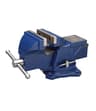
A vise is the difference between holding wood and working it. Five compared — front vises, quick-release, clamp-on and the metal vise every wood shop still needs.
There is a moment most beginners hit within their first month: you are trying to saw a line, and the board is moving. You hold it with one hand, kneel on it, brace it against your hip, and every one of those makes the cut worse. Hand-tool woodworking is essentially impossible without work-holding, and a vise is the most direct answer to it.
A vise is also the single most transformative thing you can add to a mediocre bench. A heavy bench with no vise is a table; a light bench with a good vise is a workshop. If you are still choosing a bench, read this alongside our workbench guide — the two decisions are really one.
Here is what we compare on. Jaw width, which decides how much of a board edge you can grip. Whether it is a woodworking or a metalworking vise— they look similar and are built for opposite jobs. Racking resistance— whether the jaws stay parallel when you clamp off-center. Quick release, which changes how often you bother using it. And installation, because a vise that needs a drilled, bolted benchtop is not an option for everybody.
How this is funded: we earn a commission if you buy through our links, at no extra cost to you. It never changes which tool we recommend, and we’ll tell you plainly when to skip one. Full disclosure.
Quick picks
Ranked on the specs that matter for a beginner and honest buyer fit. Select a row to jump to the full write-up. We haven’t hands-on-tested these — here is exactly what we do instead.
#
Product
Best for
Price
1
Yost Vises F9WW Woodworker's Front Vise, 9 Inch
A proper woodworking front vise at a price that does not require justifying to anyone. Wide cast-iron jaws you line with wood, guide bars so it does not rack, and enough capacity for real work held on edge.
The cheapest honest route to a real vise on a homemade bench. A single screw with guide rods, chrome-plated, no frills — and a vise you actually have beats a better vise you are still saving for.
Eclipse Professional Tools EWWQR7 7-Inch Quick Release Woodworking Vise
Quick-release changes how often you use a vise. Flick the lever, slide the jaw to roughly the right place, spin the handle a half turn to tighten — instead of thirty turns of screw for every board.
WorkPro Dual Jaws Clamp-On Table Vise, 2.5 in and 1.5 in, 360° Swivel
For the very common case where you cannot drill your bench — it is a folding table, a rented garage, or the kitchen counter. Clamps on, swivels, comes off again, and stores in a drawer.
Wilton 11104 General Purpose Bench Vise, 4 in Jaw Width
Not a woodworking vise, and every wood shop should still have one. Holding a blade while you file it, gripping a bolt, straightening a bracket — the metal vise handles all the jobs a wood vise would be ruined by.
A proper woodworking front vise at a price that does not require justifying to anyone. Wide cast-iron jaws you line with wood, guide bars so it does not rack, and enough capacity for real work held on edge.
Strengths
+9-inch jaws hold a board on edge for planing or sawing
+Guide bars either side of the screw keep the jaws parallel under load
+Cast-iron body on a solid steel main screw, at nine pounds a shop-built bench can carry
Trade-offs
−Installation means drilling and bolting through your benchtop
−9 in of jaw is narrower than the big pattern-maker's vises, so wide boards want extra support
Type
Woodworking front vise
In the set
Single tool
Material / build
Cast iron body, solid steel main screw
Key spec
9 in jaw width
Best for
Best overall woodworking vise
Worth knowing. Always line a metal wood vise with wooden jaws. Bare cast iron bruises everything it grips, and a pair of hardwood or plywood liners screwed to the faces takes ten minutes and solves it permanently.
Specs read from the product listing, on August 27, 2026. “Not listed” means the listing doesn’t state that figure.
#2Best budget
HFS Heavy Duty Front Screw Woodworking Bench Vise
The cheapest honest route to a real vise on a homemade bench. A single screw with guide rods, chrome-plated, no frills — and a vise you actually have beats a better vise you are still saving for.
Strengths
+A fraction of the cost of a name-brand front vise
+Simple screw mechanism with very little to go wrong
+Light enough for a modest homemade bench to carry
Trade-offs
−Castings and finish are basic — expect to clean up burrs
−Single screw will rack if you clamp far off-center
Type
Woodworking front vise
In the set
Single tool
Material / build
Chrome-plated steel and cast iron
Key spec
Front screw, bench-mounted
Best for
Best budget vise
Worth knowing. Racking is what happens when you clamp at one end of the jaw and the other end gapes. The fix costs nothing: put a scrap of the same thickness at the opposite end of the jaw to balance it.
Specs read from the product listing, on August 11, 2026. “Not listed” means the listing doesn’t state that figure.
#3Best quick-release
Eclipse Professional Tools EWWQR7 7-Inch Quick Release Woodworking Vise
Quick-release changes how often you use a vise. Flick the lever, slide the jaw to roughly the right place, spin the handle a half turn to tighten — instead of thirty turns of screw for every board.
Strengths
+Quick-release lever makes repeated clamping genuinely fast
+Solid, well-finished castings from a long-established maker
+Front dog lets you clamp long boards along the benchtop
Trade-offs
−More expensive than the plain-screw options
−Quick-release mechanisms dislike sawdust — blow it out occasionally
Type
Quick-release woodworking vise
In the set
Single tool
Material / build
Cast iron
Key spec
7 in jaw width, quick release
Best for
Best quick-release vise
Worth knowing. A bench dog is a peg that rises above the benchtop. Paired with a vise dog it lets you clamp a long board flat along the bench — the setup you need for hand planing a wide panel.
Specs read from the product listing, on August 11, 2026. “Not listed” means the listing doesn’t state that figure.
#4Best no-install option
WorkPro Dual Jaws Clamp-On Table Vise, 2.5 in and 1.5 in, 360° Swivel
For the very common case where you cannot drill your bench — it is a folding table, a rented garage, or the kitchen counter. Clamps on, swivels, comes off again, and stores in a drawer.
Strengths
+No permanent installation — clamps to almost any edge
+Swivels to bring the work to a comfortable angle
+Two jaw sizes cover small parts and awkward shapes
Trade-offs
−Small capacity — this holds parts, not boards on edge
−Only as solid as the table you clamp it to
Type
Clamp-on swivel table vise
In the set
Single tool
Material / build
Cast metal with rubber jaw pads
Key spec
2.5 in and 1.5 in jaws, 360° swivel
Best for
Best if you can't drill into your bench
Worth knowing. This is the vise for a shop that has to disappear. If the bench is a folding table that lives against a wall between sessions, a clamp-on vise is the only kind that makes sense.
Specs read from the product listing, on August 11, 2026. “Not listed” means the listing doesn’t state that figure.
#5Best metal vise
Wilton 11104 General Purpose Bench Vise, 4 in Jaw Width
Not a woodworking vise, and every wood shop should still have one. Holding a blade while you file it, gripping a bolt, straightening a bracket — the metal vise handles all the jobs a wood vise would be ruined by.
Strengths
+Serrated hardened jaws grip metal that a wood vise would slip on
+Anvil surface for the occasional bit of persuasion
+Wilton castings have a long reputation for not cracking
Trade-offs
−Serrated jaws will destroy wood unless you fit soft jaw covers
−Small 4-inch jaws limit it to parts, not panels
Type
General purpose metal bench vise
In the set
Single tool
Material / build
Cast iron with hardened steel jaws
Key spec
4 in jaw width, 3 in max opening
Best for
Best metal vise for the corner of the bench
Worth knowing. Mount the metal vise at the corner of the bench, not the middle of a long edge. The corner is the stiffest point, and it keeps the center of your bench free for the wood vise and for actual work.
Specs read from the product listing, on August 11, 2026. “Not listed” means the listing doesn’t state that figure.
Woodworking vise or metal vise?
These look related and are built for opposite purposes. Getting this distinction right saves a lot of frustration.
A woodworking (front) visehas wide, flat, smooth jaws designed to be lined with wood. It mounts under and flush with the benchtop, so the jaw and the bench edge form one continuous surface. It grips large areas gently — exactly what a board needs.
A metalworking (engineer’s) vise has narrow, serrated, hardened jaws and sits on top of the bench. It grips small things extremely hard and leaves teeth marks in anything softer than steel.
You want the woodworking vise for woodworking. You will also, eventually, want a small metal vise in a corner — for holding a plane iron while you file it, gripping a bolt, or straightening a bracket. It is a genuinely useful second vise and a poor first one.
Racking, and the free fix
Racking is what happens when you clamp a workpiece at one end of the jaw: the far end of the movable jaw gapes open, the grip is uneven, and the piece twists. It is the most common complaint about single-screw vises.
The fix costs nothing. Put a scrap of the same thickness at the opposite end of the jaw before you tighten, so the jaw closes evenly on two points. Keep a few offcuts of common thicknesses within reach and this stops being a problem. Twin-guide-rod vises rack far less, but even they benefit from the habit on wide work.
Jaw width and capacity
Jaw width is the length of the gripping surface; capacity (or opening) is how far the jaws separate. For general beginner work:
7 inches— comfortable for boards, drawer sides and most joinery. A sensible default.
9–10 inches— better for wide panels and long boards held on edge. Heavier, and needs a bench that can carry it.
Under 5 inches— parts and small work only.
Bigger is not automatically better. A large cast-iron vise on a light folding bench will simply drag the bench around, and the bench is then the limiting factor.
Mounting it properly
A front vise mounts under the benchtop, with the fixed jaw flush with the front edge, so the bench itself acts as the back jaw. Get this wrong and the vise fights the bench.
Position it at the front-left corner for right-handed users, so a board held in it can be planed along the bench edge.
Pack it down if needed so the top of the jaws finishes flush with, or a hair below, the benchtop surface. A vise jaw proud of the bench will catch a plane.
Bolt through the benchtop with washers, into a solid area. Screws into a thin top will pull out under real clamping force.
Add jaw liners— hardwood or plywood, screwed from behind so no fastener head can meet a plane blade.
If your bench is a folding table, a rented garage fixture or anything you cannot drill, the clamp-on option exists for exactly this reason. It has a fraction of the capacity and it is infinitely better than nothing.
Bench dogs and the second holding trick
A vise holds work at the edge of the bench. To hold a wide panel flaton the bench — which is what you need for planing or sanding a surface — you use bench dogs: pegs that rise above the benchtop out of a row of holes, with a matching dog in the vise jaw. Close the vise slightly and the panel is trapped between them, flat, with nothing clamped over the surface you are working.
Not every vise has a dog. If yours does, drill a row of dog holes in your bench aligned with it — it roughly doubles what the vise can do.
Cheaper ways to hold work
A vise is not the only answer, and if the budget is tight these do a lot:
Clamps. Two F-clamps hold a board to a benchtop for most sawing and chiseling. Slower than a vise; costs a tenth as much.
A bench hook. A scrap board with a lip at each end, one hooking over the bench edge and one stopping the work. Costs nothing, takes fifteen minutes to make, and handles most crosscutting with a hand saw.
A planing stop. A batten clamped or screwed across the bench that a board pushes against while you plane it.
Plenty of good woodworking has been done with those three. A vise is faster and more versatile, and it is the upgrade to make when clamping and unclamping has become the slow part of your day.
Frequently asked questions
What size bench vise should a beginner buy?+
A 7-inch woodworking front vise suits most beginner work comfortably — boards, drawer sides and general joinery. Step up to 9 or 10 inches if you regularly hold wide panels on edge, and only if your bench is solid enough to carry it. A vise heavier than the bench just drags the bench around.
What is the difference between a woodworking vise and a metal vise?+
A woodworking front vise has wide, smooth jaws meant to be lined with wood, and mounts under the benchtop flush with its edge. A metalworking vise has narrow serrated hardened jaws and bolts on top of the bench. The first grips large areas gently; the second grips small things very hard and marks wood badly.
Can I fit a vise if I can't drill into my bench?+
Yes — a clamp-on swivel vise attaches to almost any table edge and comes off again, which makes it the right answer for a folding bench, a rented garage or a shared space. The capacity is much smaller, so it holds parts rather than boards on edge, but it is far better than no work-holding at all.
Why does my vise jaw open unevenly?+
That is racking, and it happens on any single-screw vise when you clamp near one end of the jaw. Put a scrap of the same thickness at the opposite end before tightening, so the jaw closes on two points. Vises with twin guide rods rack much less, but the scrap-block habit still helps on wide work.
Do I need to line my vise jaws with wood?+
Yes, if it is a cast-iron woodworking vise — bare metal bruises everything it grips. Screw hardwood or plywood liners to both faces from behind, so no fastener head can meet a plane blade. It takes ten minutes, costs a scrap, and the liners are replaceable when they get chewed up.
Sources
OSHA — Woodworking eTool — OSHA guidance on woodworking hazards, guarding and safe work practices (accessed July 24, 2026)